
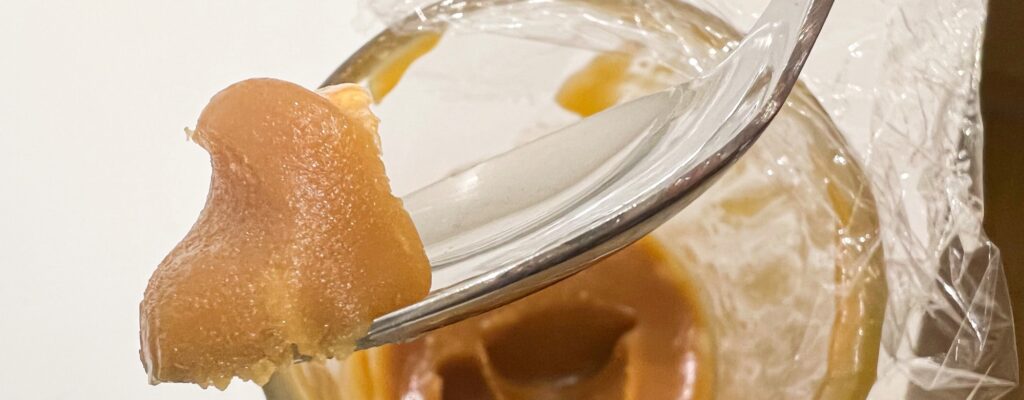
Salted Caramel Sauce and Macaron Filling: 2 Recipes
Published February 26, 2022 · Updated September 8, 2026
This guide gives you two consistent salted caramel recipes for different jobs: a smooth pourable sauce for desserts and a whipped caramel filling that is easier to contain between macaron shells. Both are gram-first, with corrected volume equivalents and a moderate salt level.
Which salted caramel recipe should you use?
| Recipe | Best for | Texture when cool |
|---|---|---|
| Pourable salted caramel sauce | Ice cream, cakes, pancakes, churros and drizzling | Thick but spoonable; loosens gently when warmed |
| Whipped salted caramel filling | Macarons, sandwich cookies and piped desserts | Lighter and more stable than plain sauce |
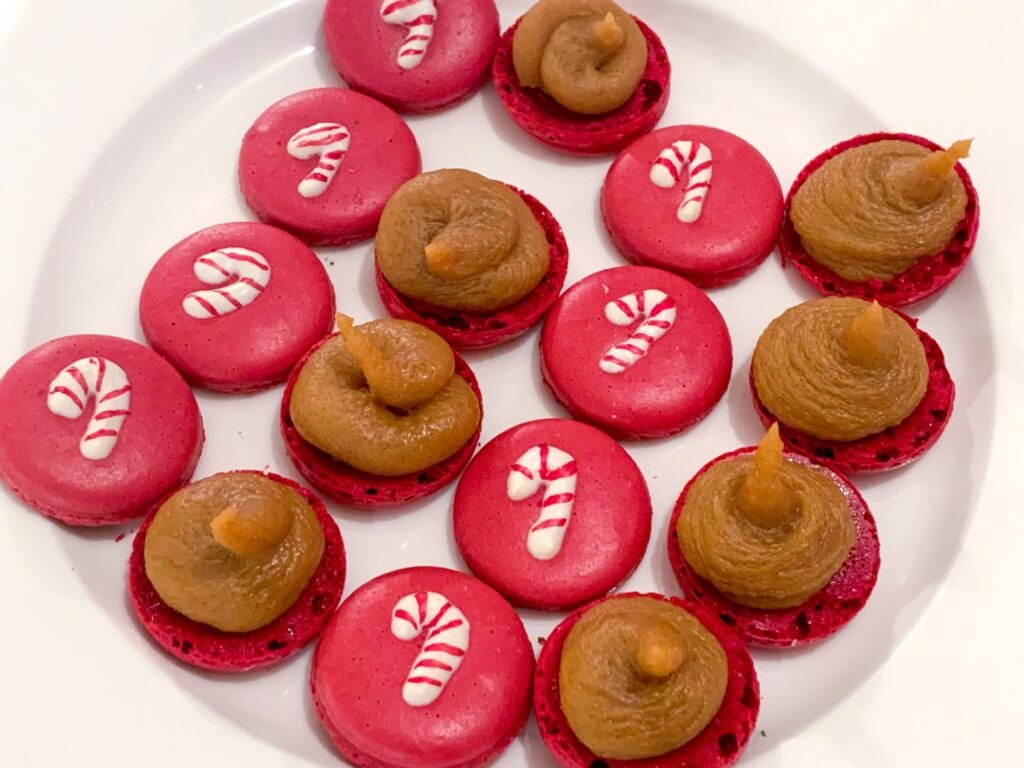
Plain caramel sauce can squeeze out of macarons as it warms. For cleaner shells, use the whipped filling or pipe a buttercream or ganache dam around a small caramel center. More background is available in Everything About Salted Caramel.
Important caramel safety
Caramelized sugar is far hotter than boiling water and sticks to skin. Use a deep, heavy-bottomed saucepan, long heatproof utensils and oven mitts. Keep children and pets away, add butter and cream gradually, and never taste or pour hot caramel into a piping bag. Let it cool in a heatproof container.
Recipe 1: Pourable salted caramel sauce
This formula follows the tested proportions in King Arthur Baking’s caramel sauce, using its salted-caramel variation. Yield: about 1½ cups.
Ingredients
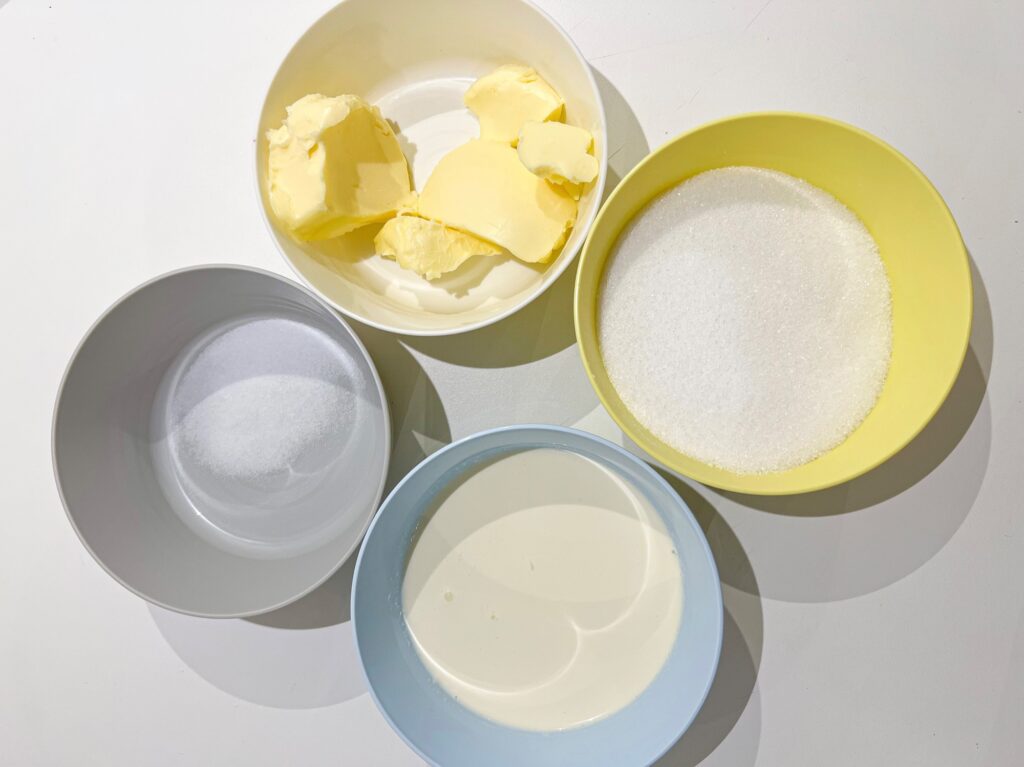
- 198 g granulated sugar (1 cup)
- 28 g cold water (2 tablespoons)
- 1/8 teaspoon cream of tartar (optional, to discourage crystallization)
- 1/2 teaspoon table salt (about 3 g)
- 85 g unsalted butter (6 tablespoons), at room temperature and cut into pieces
- 113 g heavy cream (1/2 cup)
- 2 teaspoons vanilla extract (optional)
Method
- Prepare first. Measure every ingredient before heating the sugar. Put a heatproof container on a stable surface for the finished sauce.
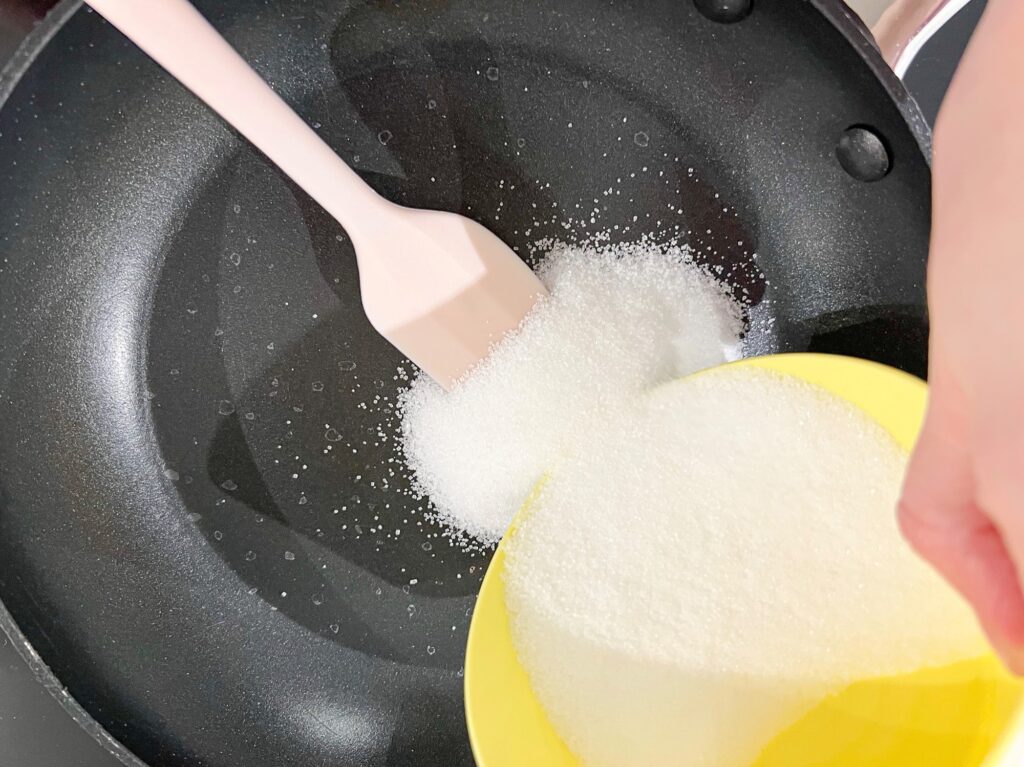
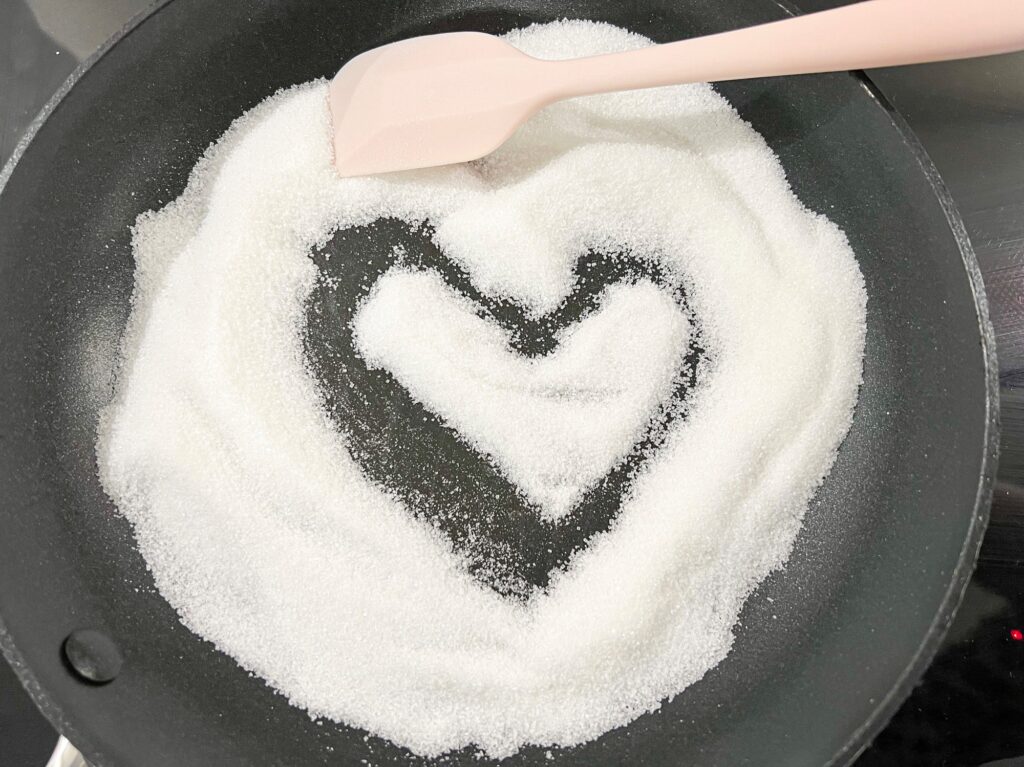
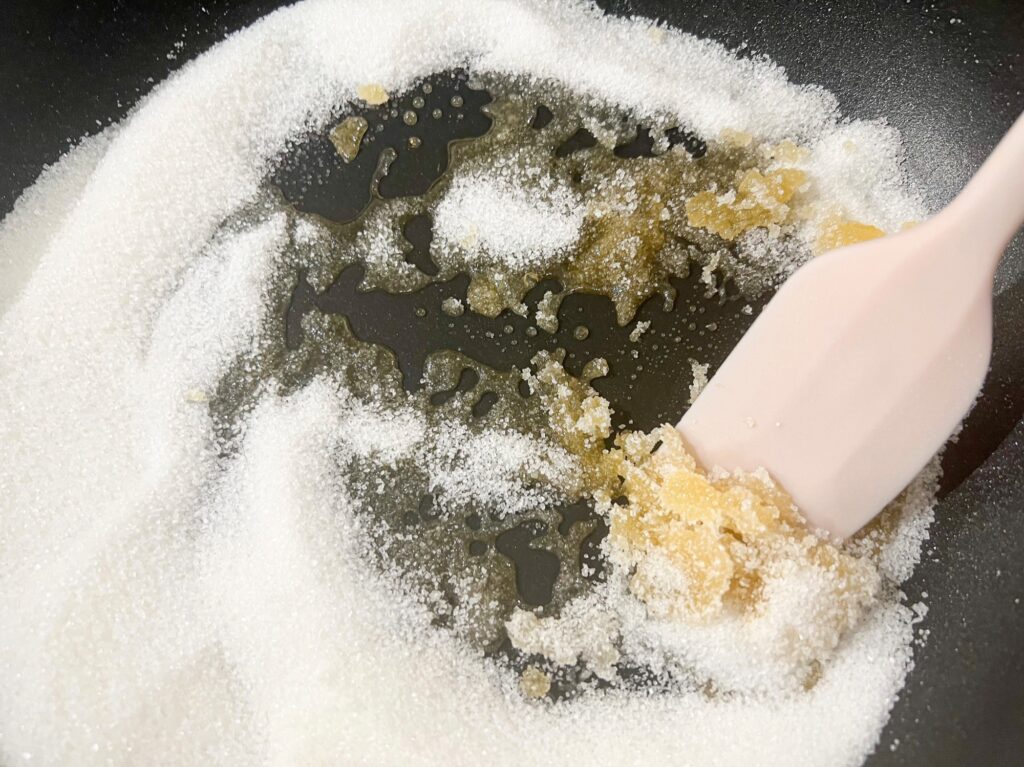
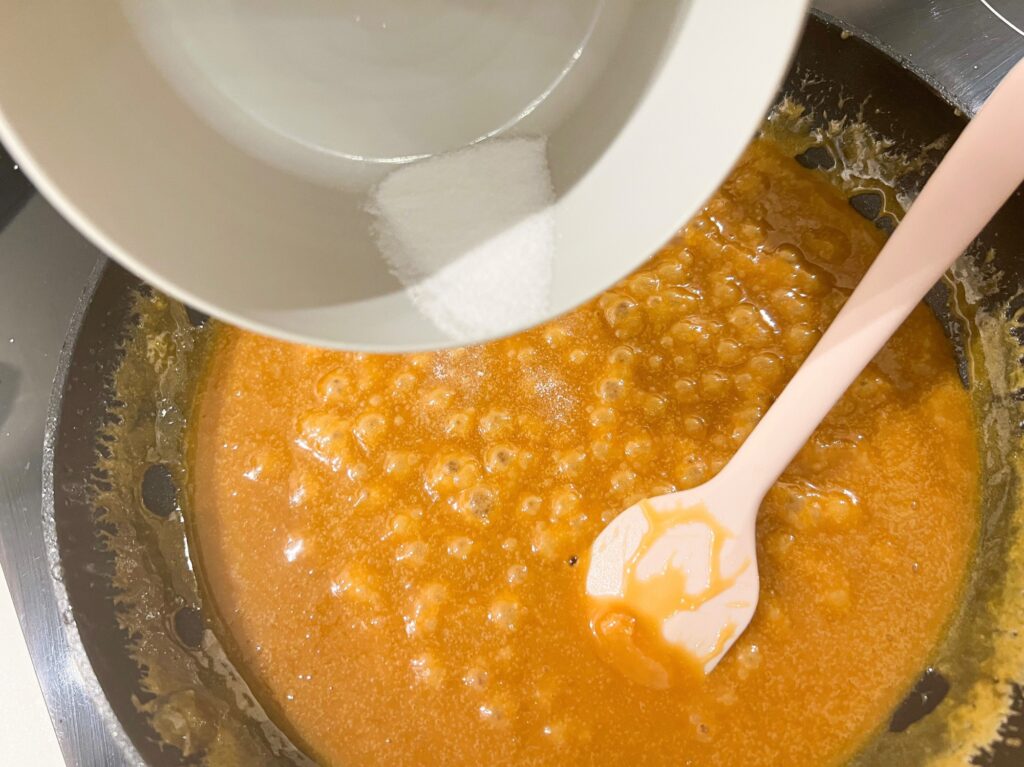
- Start the syrup. In a deep saucepan of at least 1.5 quarts, briefly stir together the sugar, water, salt and optional cream of tartar.
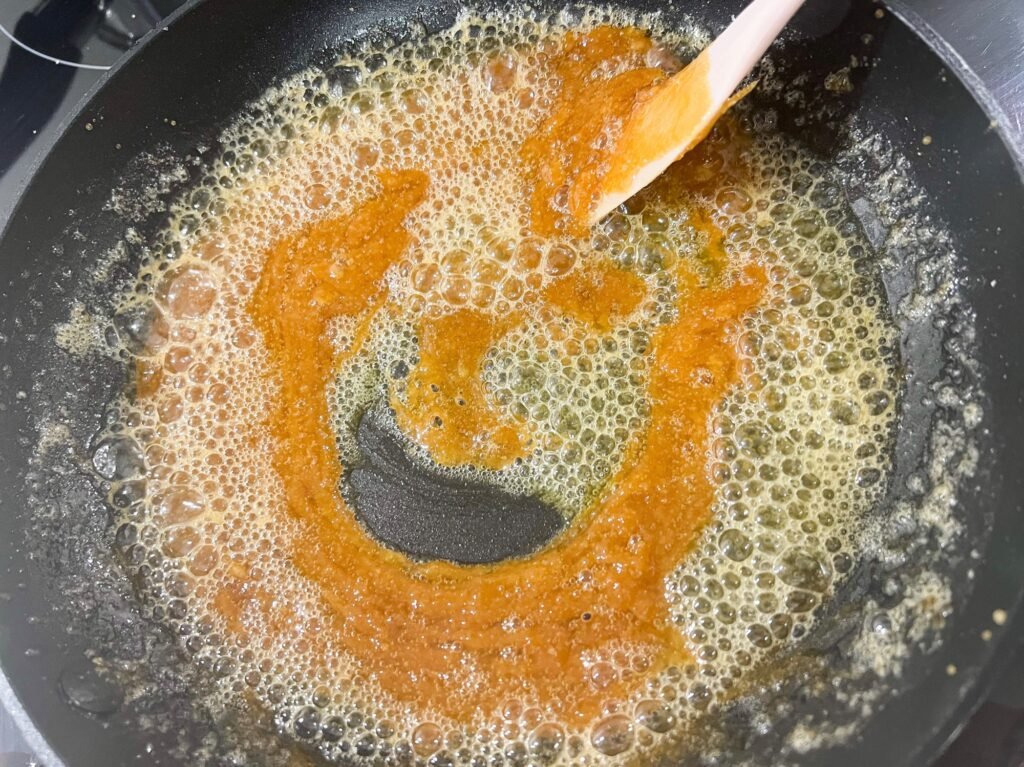
- Stop stirring. Cook over medium-high heat until boiling, then reduce to medium. Swirl the pan gently instead of stirring so crystals are less likely to form.
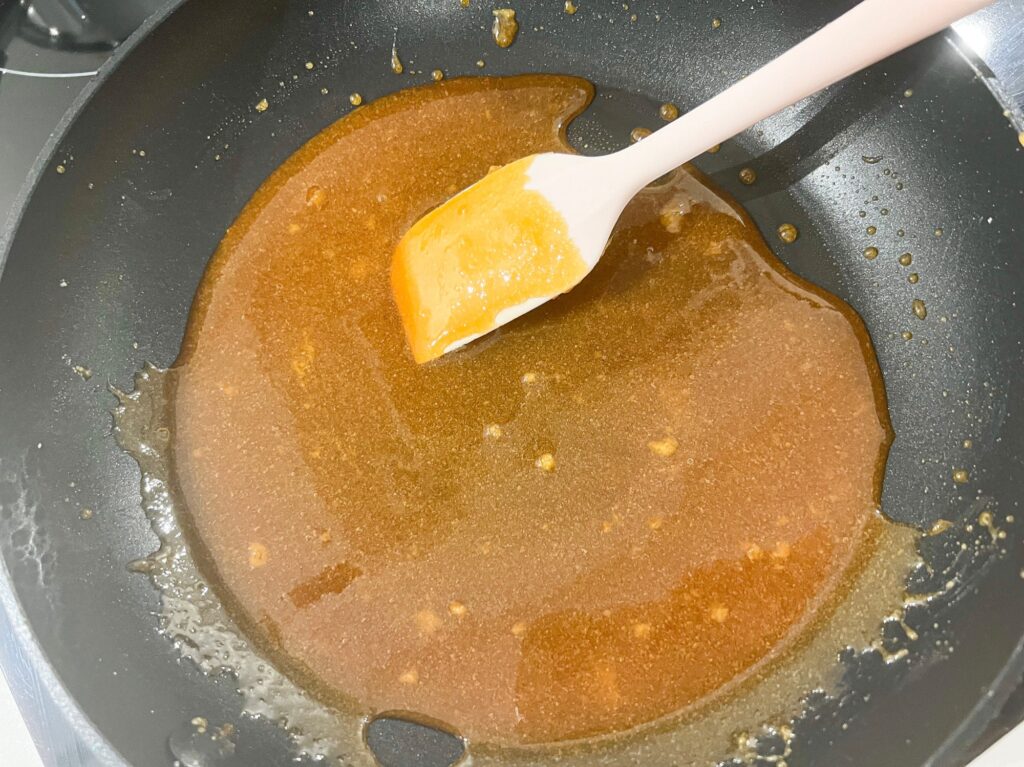
- Watch the color. When the syrup turns evenly light-to-medium amber, remove the pan from the heat. It will continue darkening from residual heat.
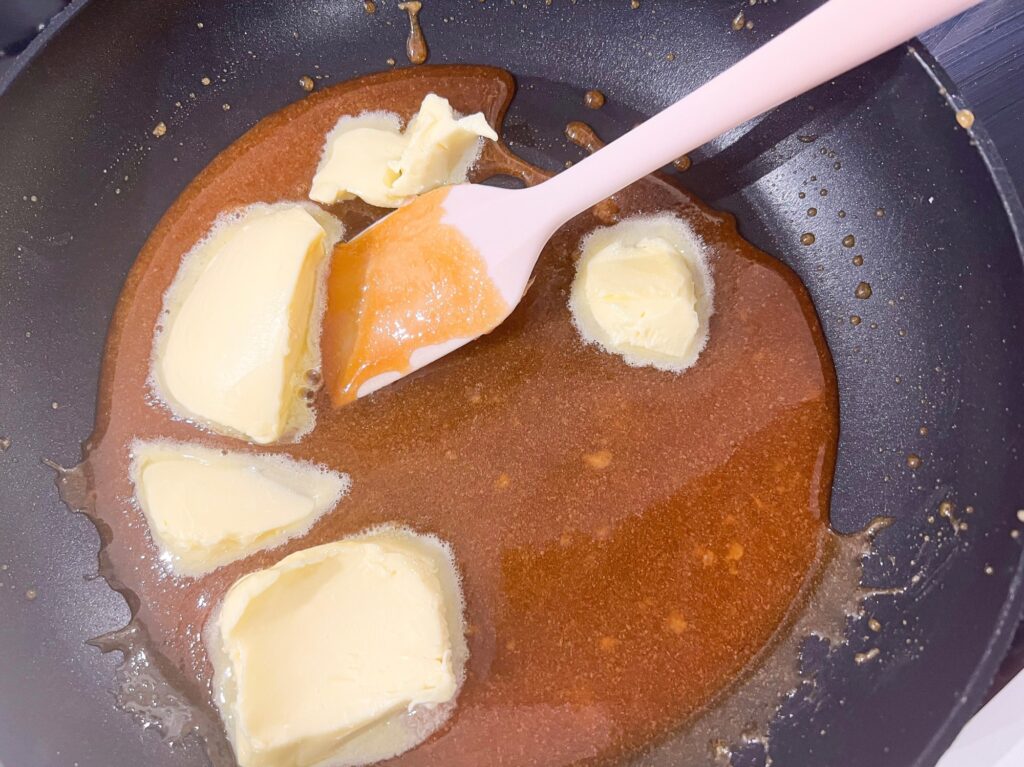
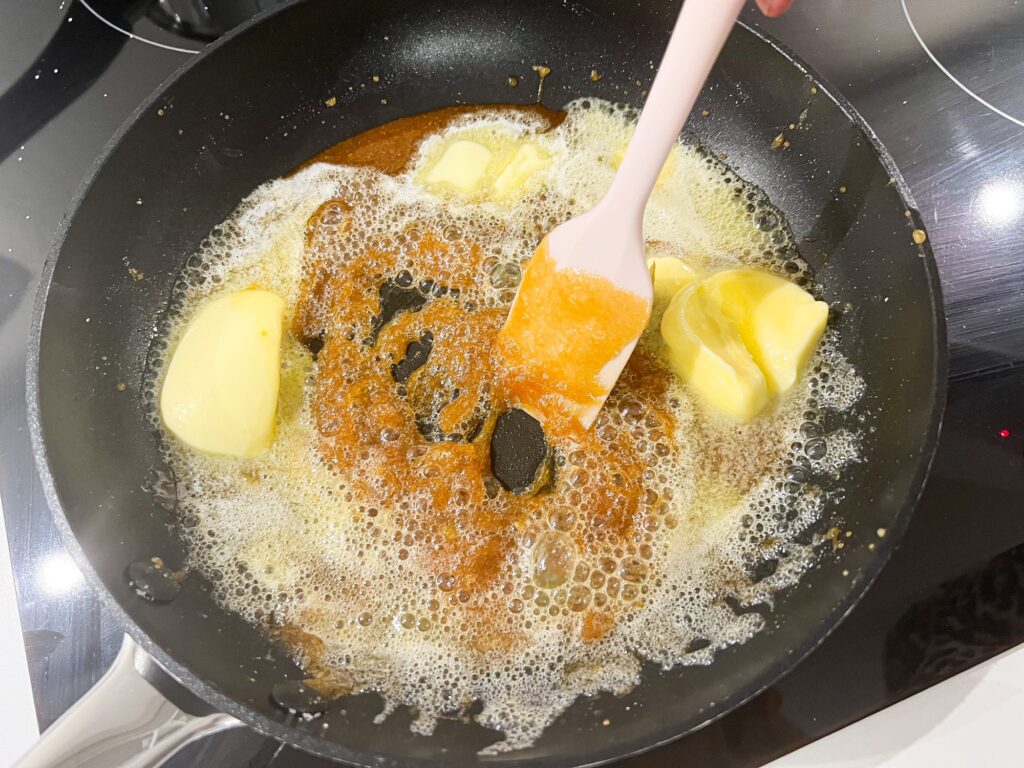
- Add the butter gradually. Stir in one piece at a time. The mixture will bubble vigorously.
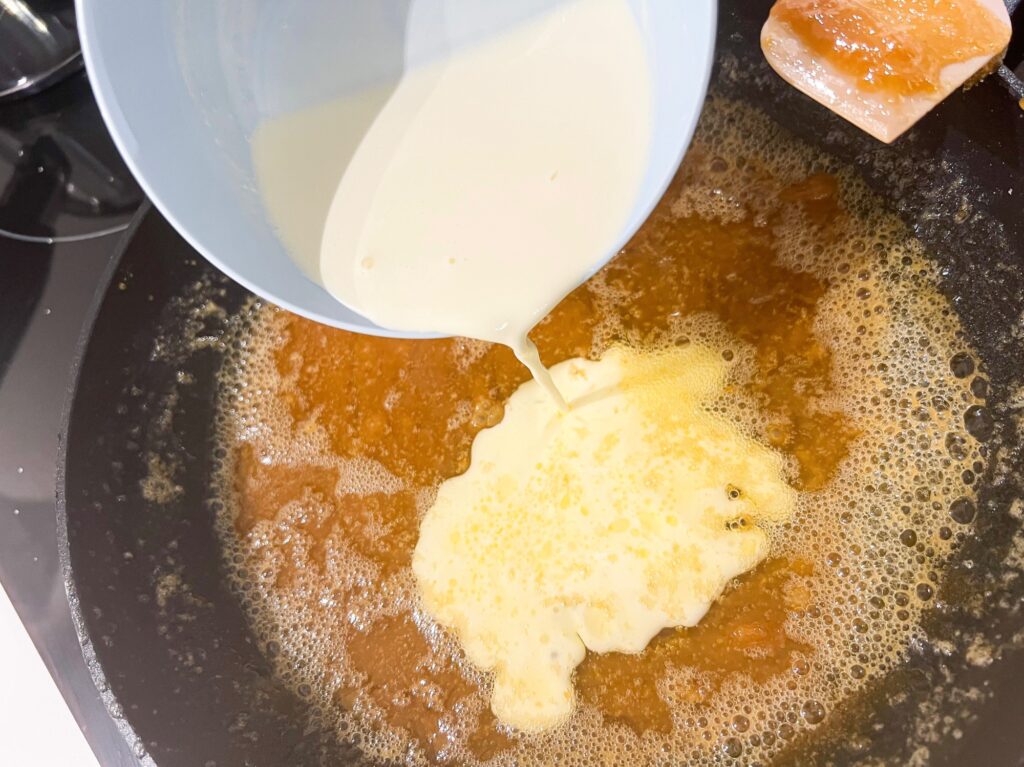
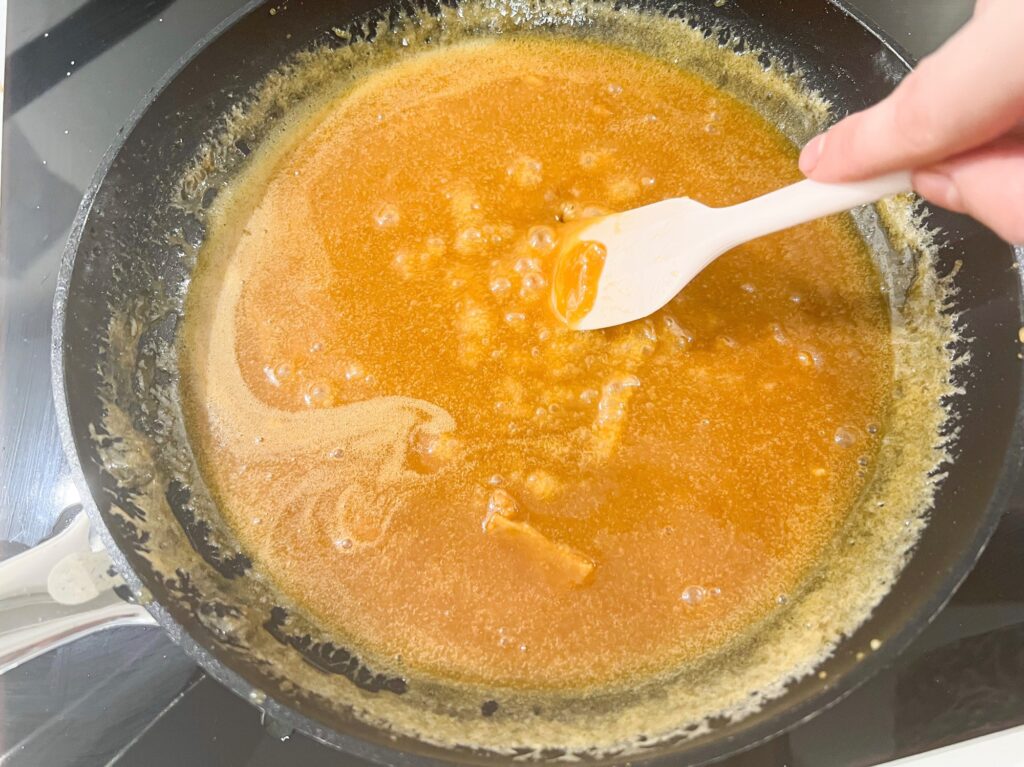
- Add the cream slowly. Pour in a little at a time while stirring. If the caramel tightens, return it to low heat briefly and stir until smooth.
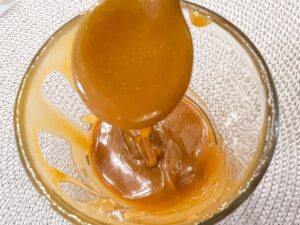
- Finish and cool. Stir in vanilla if using. Cool for several minutes, then transfer to the heatproof container. The sauce thickens substantially as it cools.
Do you need to strain caramel sauce?
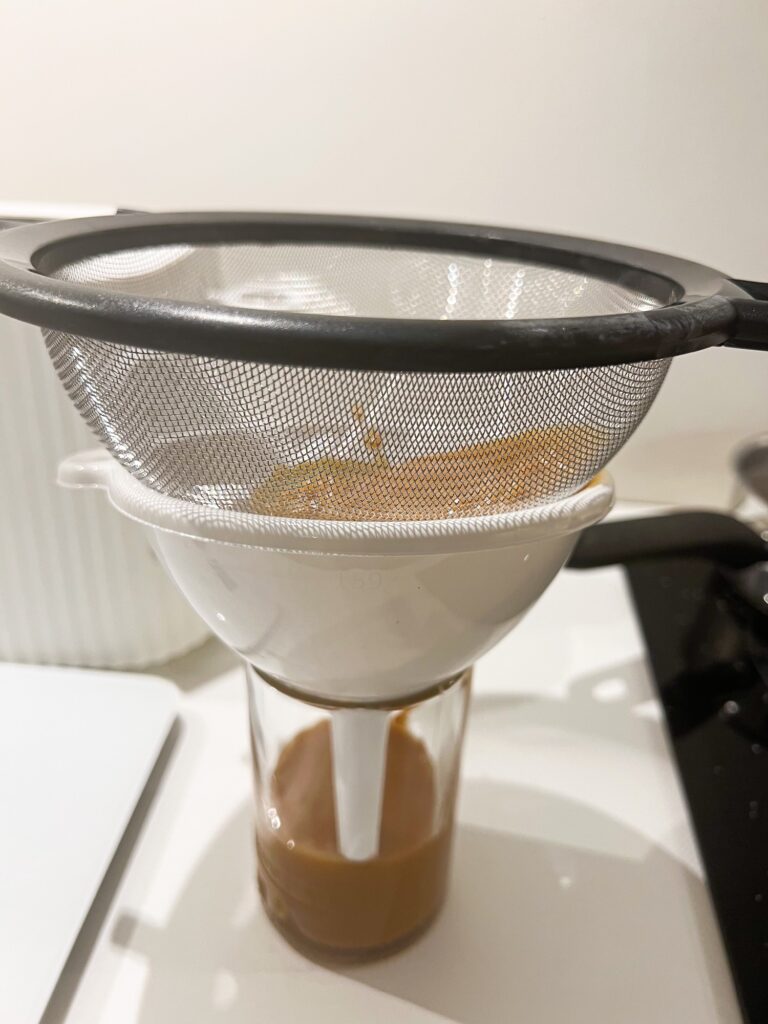
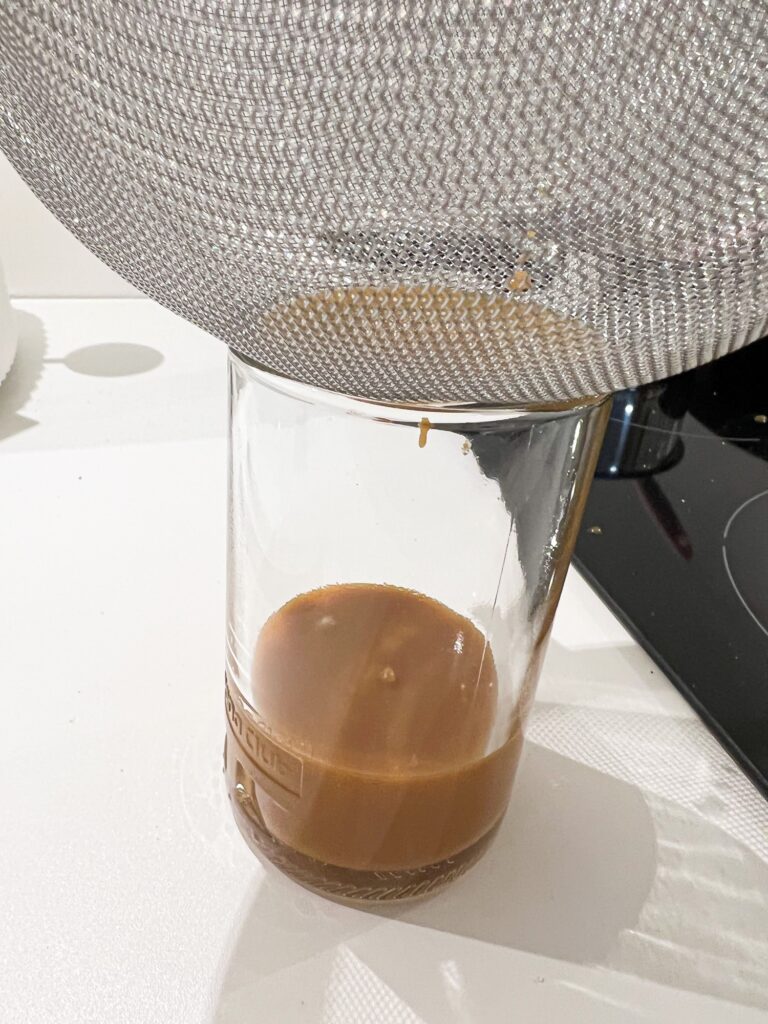
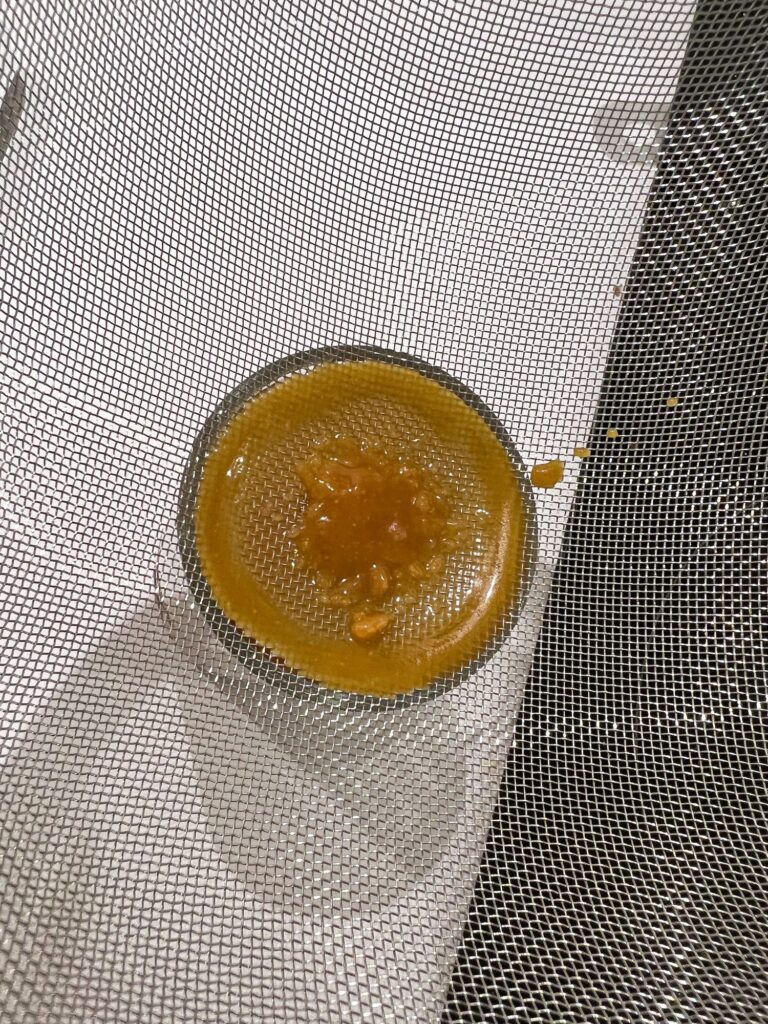
Straining is optional when the sauce is smooth. If a few harmless firm bits remain, pour the cooled-enough sauce carefully through a clean heatproof sieve into a heatproof container. Do not force hard burnt pieces through; a bitter or scorched batch is better remade.
Recipe 2: Whipped salted caramel macaron filling
This filling follows the proportions and method in King Arthur Baking’s whipped caramel frosting. It makes about 1½ cups—enough for a typical home batch, depending on shell size and how generously you pipe.
Ingredients
- 264 g granulated sugar (1⅓ cups)
- 57 g water (1/4 cup)
- 1/2 teaspoon table salt
- 1/8 teaspoon cream of tartar
- 85 g unsalted butter (6 tablespoons), at room temperature
- 113 g heavy cream (1/2 cup)
- 1 tablespoon vanilla extract or vanilla paste (optional)
- 57 g additional unsalted butter (4 tablespoons), at room temperature, for whipping
Method
- Cook the sugar, water, salt and cream of tartar with the same no-stir caramel method described above.
- Remove the amber caramel from the heat. Carefully add the first 85 g butter, then the cream and optional vanilla.
- Transfer to a heatproof container and cool completely. Warm caramel will melt the finishing butter and produce a loose filling.
- Measure 285 g cooled caramel sauce into a mixing bowl. You will have some sauce left for another use.
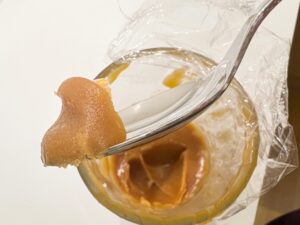
- Add the remaining 57 g room-temperature butter. Mix on low until combined, then whip on high for 2–3 minutes until lighter and pipeable.
- If it looks greasy or curdled, it is probably too cold; warm the bowl very gently and re-whip. If loose, chill for 15–20 minutes and re-whip.
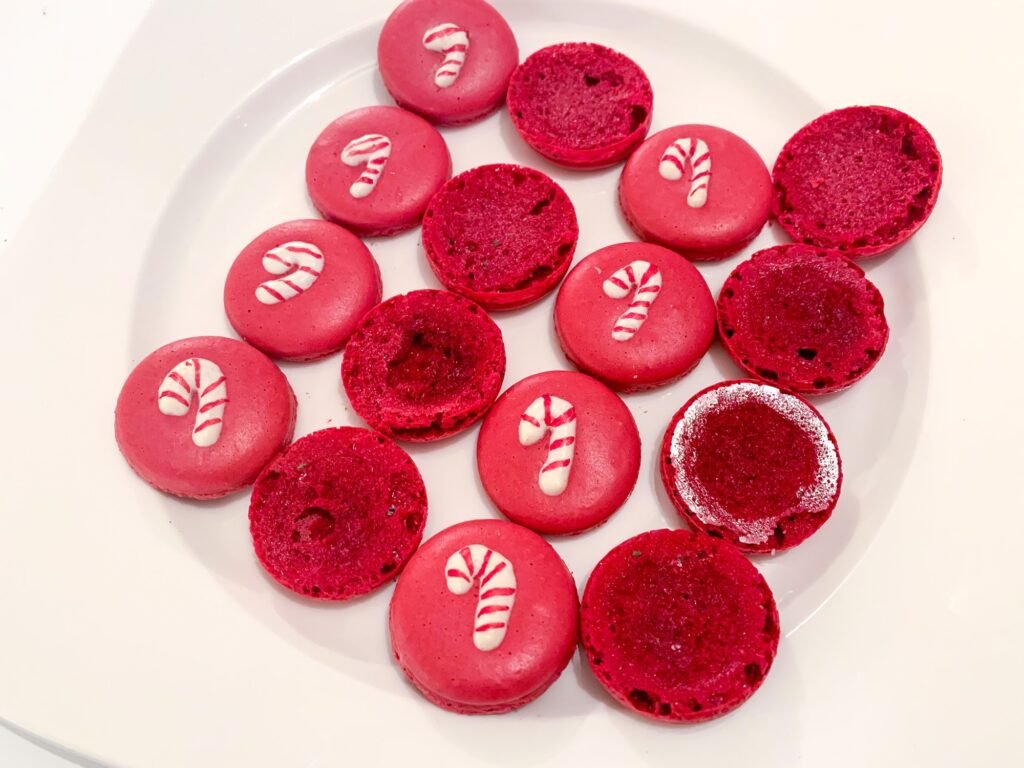
- Transfer only fully cooled filling to a piping bag. Pipe a modest ring or mound on one shell and close with its matching shell.

How to adjust caramel consistency
| If you need… | Use… | Adjustment |
|---|---|---|
| A drizzle | Pourable sauce | Warm gently in short intervals and stir between each one. |
| A dip | Pourable sauce at cool room temperature | Let it cool until it coats a spoon. |
| A macaron center | Whipped filling | Chill briefly if it softens during piping. |
| A liquid caramel center | Sauce inside a buttercream or ganache dam | Use only a small amount so it cannot reach the shell edge. |
Troubleshooting salted caramel
| Problem | Likely cause | What to do |
|---|---|---|
| Grainy sauce | Sugar crystals formed on the pan or the syrup was stirred after boiling | Use the optional cream of tartar, keep utensils clean and swirl instead of stirring. |
| Caramel seized after cream | Cream was added too quickly or was very cold | Return to low heat and stir patiently until smooth; add cream gradually next time. |
| Sauce tastes bitter | Sugar cooked beyond medium amber | Discard and restart; burnt caramel cannot be repaired with more cream. |
| Butter separates | Temperature changed too quickly or emulsion broke | Remove from heat and stir steadily; gently warm if firm caramel prevents it coming together. |
| Macaron filling squeezes out | Filling is warm, overfilled or plain sauce was used without a dam | Chill to pipeable consistency, reduce the amount or use the whipped filling. |
Storage
Cool caramel promptly and store it in a clean airtight container in the refrigerator at 4°C/40°F or colder. King Arthur’s tested sauce guidance allows refrigeration for up to two weeks. For whipped filling and filled macarons, keep them refrigerated and follow the shortest storage limit among all ingredients used. See the macaron storage guide and the guide to freezing macarons and fillings.
Corrected measurements from the original post
The earlier version mixed incompatible weights and cup measures: 70 g butter is about 5 tablespoons, not 5/8 cup; 100 g butter is about 7 tablespoons, not 1/4 cup; and one tablespoon of salt was excessive for both batches. The recipes above replace those formulas rather than trying to guess which old unit was intended.
Use the sauce when you want flow and the whipped filling when you need control between delicate shells. Measure by weight whenever possible, and give every caramel batch time to cool before judging its final texture.
Belli xx