

Common Questions About Macarons
Published October 30, 2022 · Updated August 31, 2026
Macaron questions often start with the same puzzles: Is the batter ready? Why are the shells sticky? Should they feel chewy? The answer usually depends on the recipe, the stage you are checking and your oven, not one universal trick. This guide helps you identify the next useful check without changing everything at once.
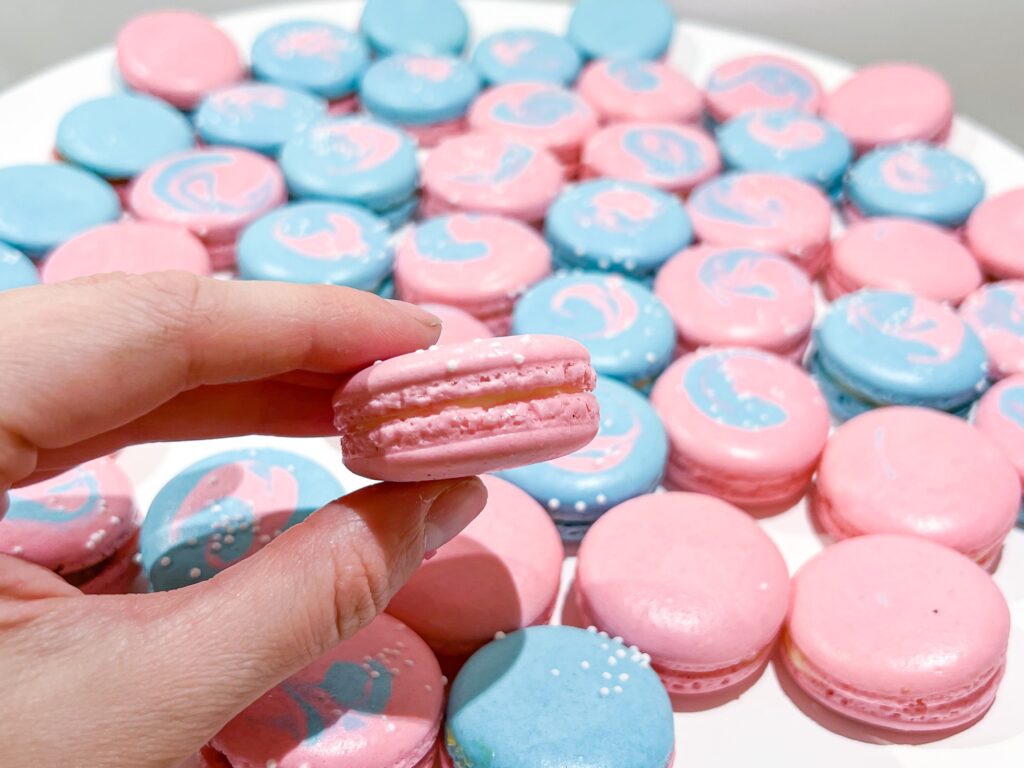
For a full recipe, start with my Italian-method macarons. For a tray that has already gone wrong, use the macaron troubleshooting guide. Keep the same recipe while you learn how its batter behaves.
What should macaron batter look like?
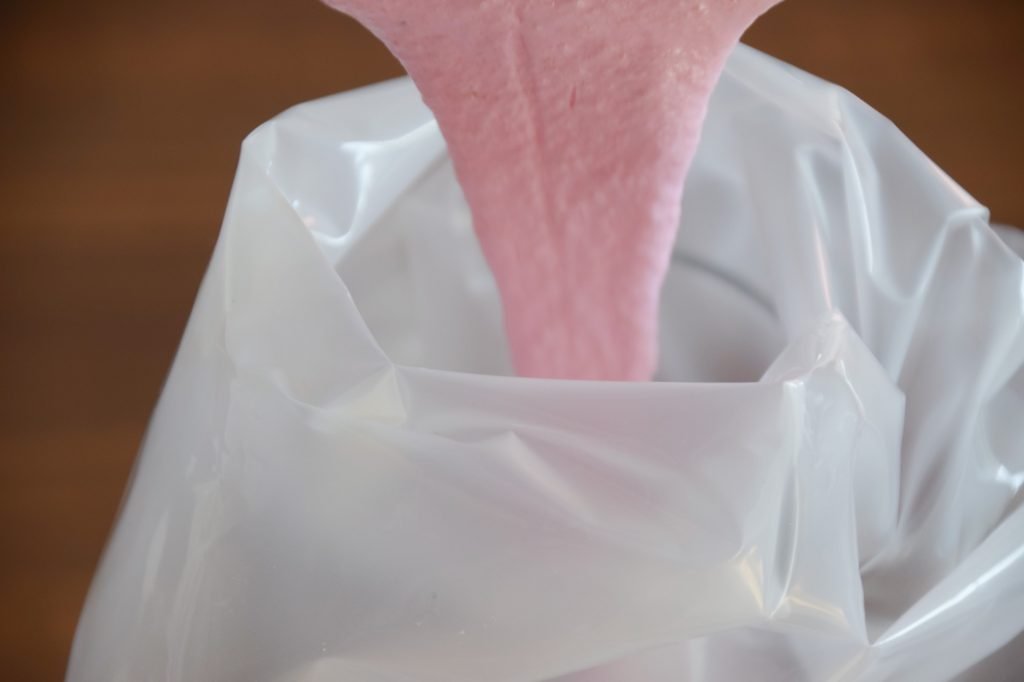
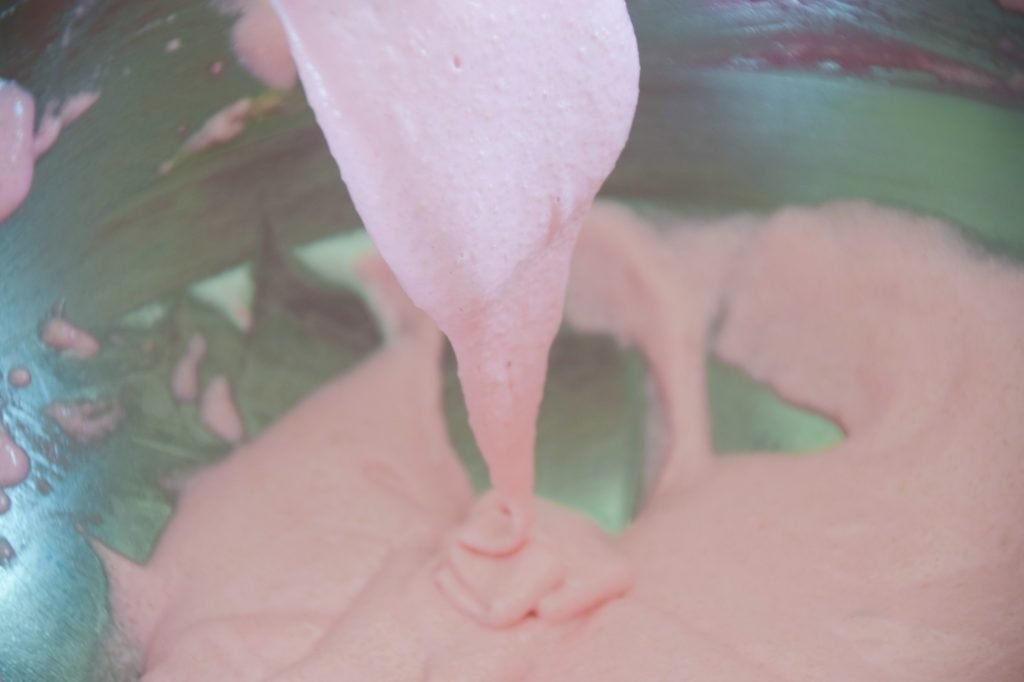
Ready batter should flow off the spatula in a continuous ribbon and gradually blend back into the bowl. A figure-eight test is a useful cue, but it is not the only check: look for a smooth mixture without dry streaks and pipe a small test round to see whether the peak settles without excessive spreading.
Folding deliberately releases some air while keeping enough structure for the shells. King Arthur Baking’s macaronage explanation illustrates this balance. My macaronage guide adds step-by-step checks.

Can I fix batter that is too thick or too runny?
If the ingredients are correctly measured and fully incorporated but the batter is still stiff, a few more folds may be needed. Stop and check frequently. Do not add water to loosen an established recipe. If the batter is already too fluid from overmixing, extra almond flour will change the formula rather than rebuild the lost meringue structure.
Before blaming macaronage, check ingredient weights, meringue consistency and any added coloring or flavoring. Follow the mixing sequence of your chosen method; adding meringue in thirds is not a rule for every macaron recipe.
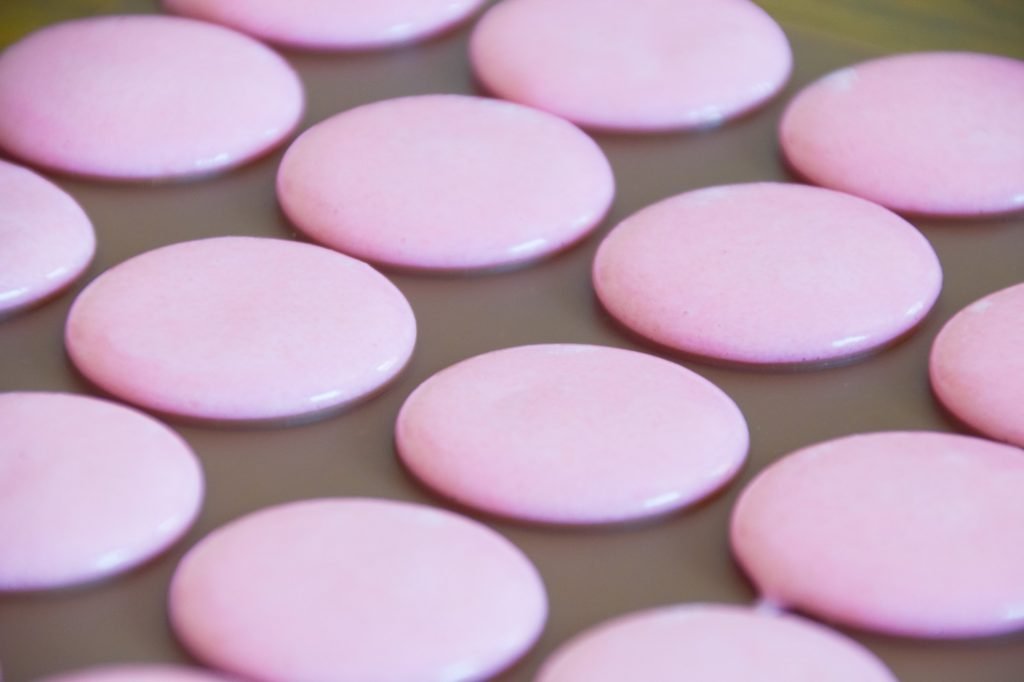
Why are my shells lumpy or pointed?
Persistent peaks can indicate insufficient folding, while roughness can also come from coarse almond particles or poorly incorporated dry ingredients. Do not keep folding indefinitely to chase a few coarse specks: that may make the rest of the batter too runny. Prepare the dry ingredients as the recipe directs and scrape the bowl as you mix.
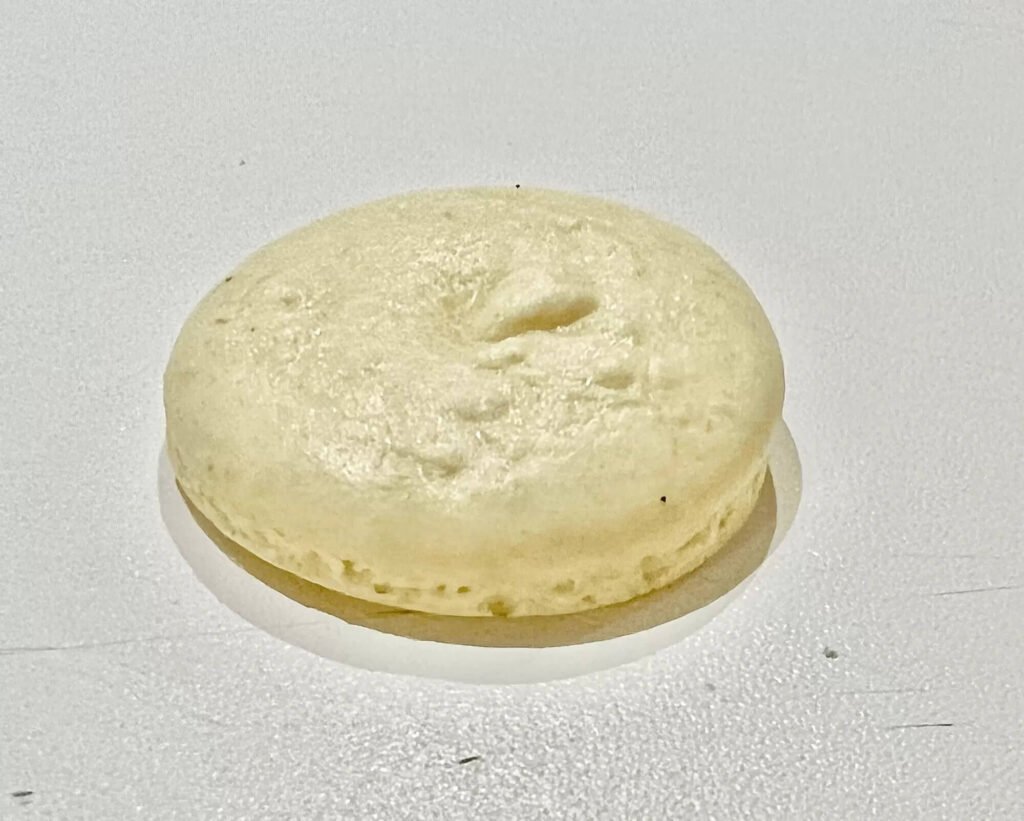
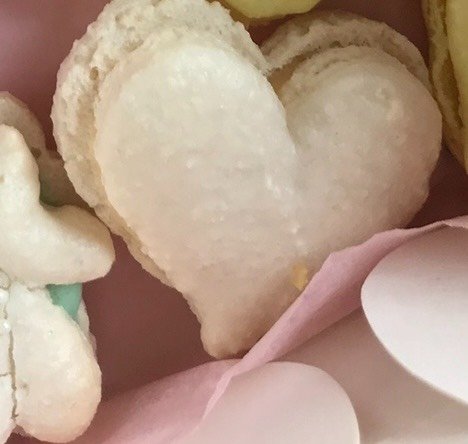
Why are the piped shells not round?
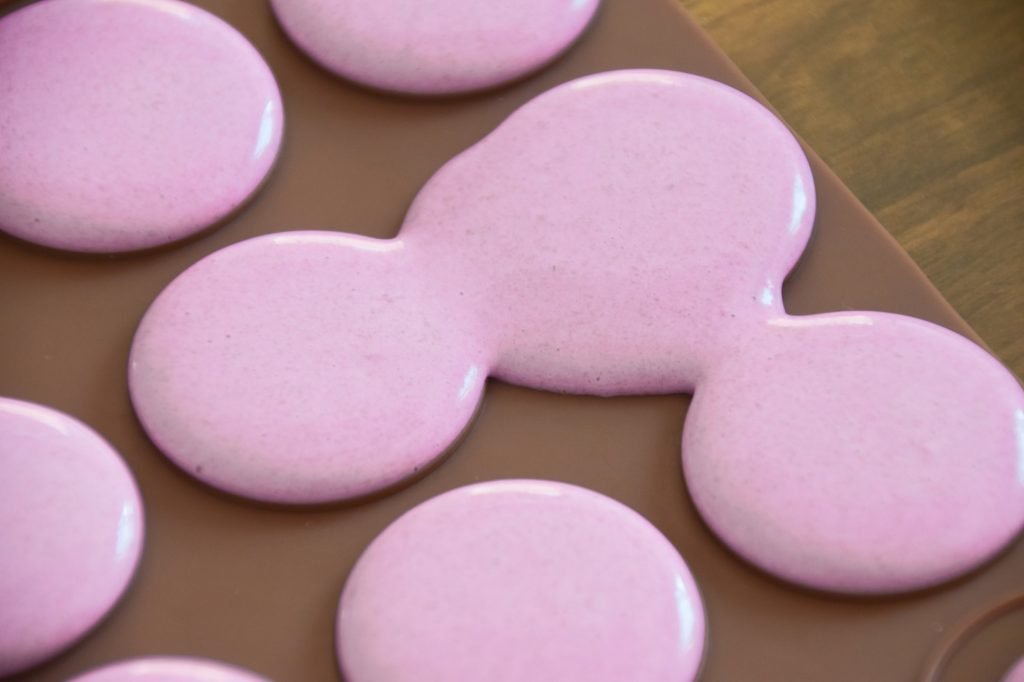
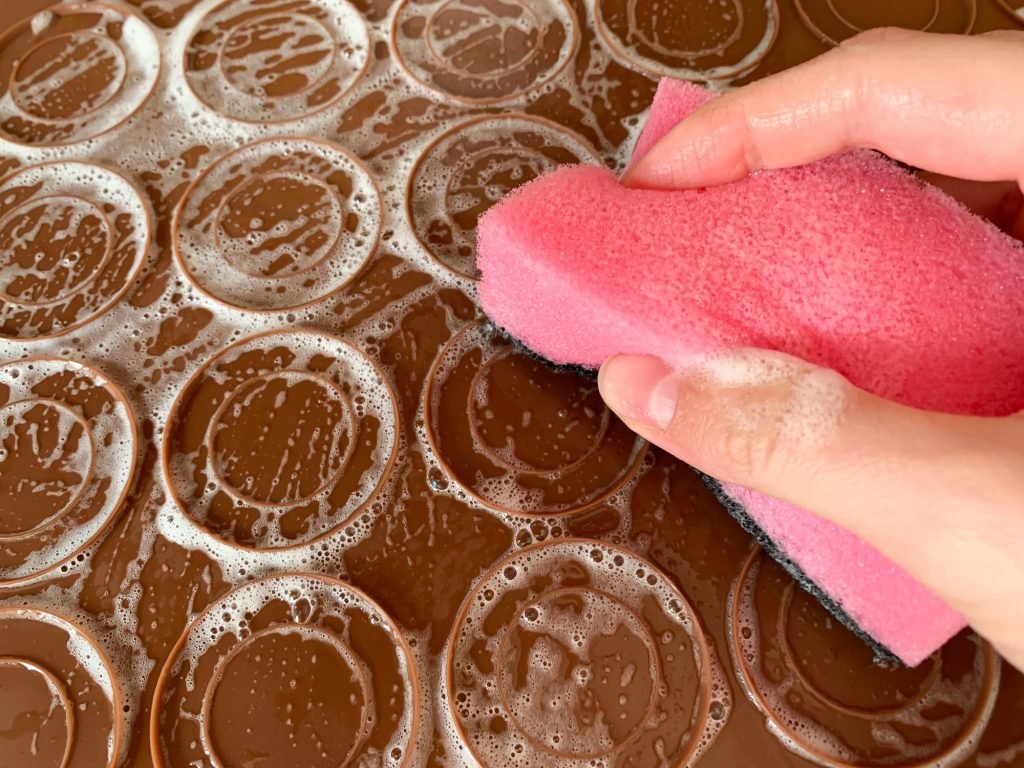
Hold the piping bag upright, keep the tip still while squeezing, and stop pressure before lifting away. Use a flat tray and a baking surface that lies flat. Batter that spreads too far or a wrinkled sheet can distort the shape, but appearance alone does not identify the cause. A template helps with size, not batter consistency.
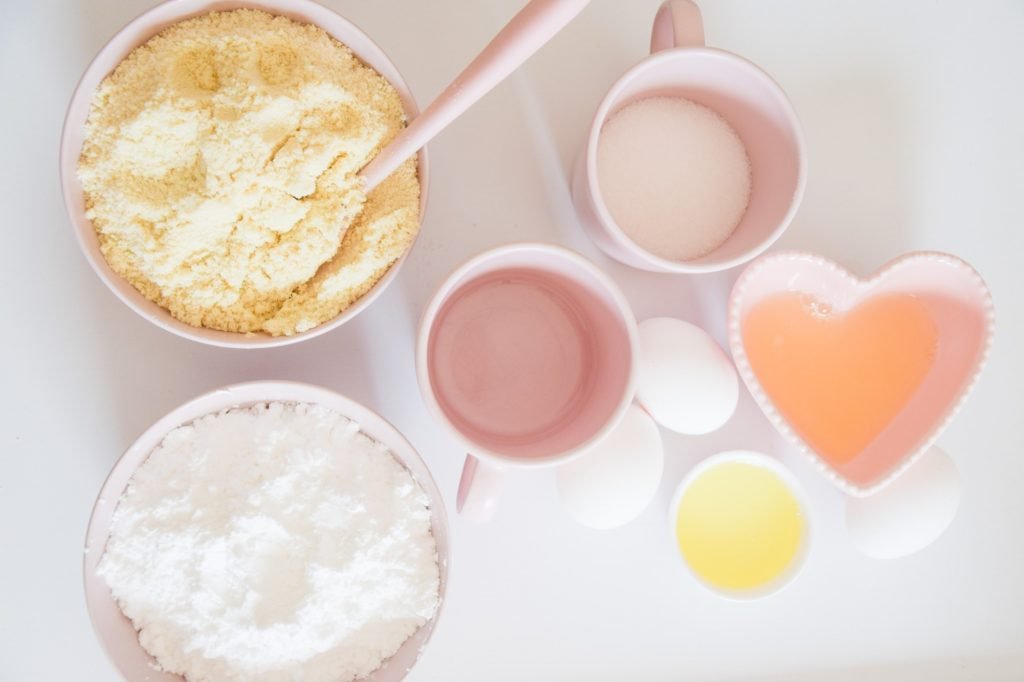
Does drying almond flour remove its oil?
No. Normal almond flour contains almond fat; warming it to remove moisture does not turn it into defatted flour. The Almond Board’s almond-flour guide explains what it is made from. Feeling some oil between your fingers is not a dependable diagnosis of a failed batch.
Use the type of finely ground almond flour specified in your recipe, store it as directed and avoid processing it until it becomes paste-like. If you suspect an ingredient problem, compare a small batch with a fresh bag rather than changing both the flour and technique together.
How long should macarons rest before baking?
Follow your recipe. Resting methods generally look for a dry-looking surface that does not stick to a gentle touch, rather than a fixed 30-minute deadline. Humidity, batter and shell size affect how long this takes. A no-rest method uses a different process; do not casually transfer its oven settings or timing to a resting recipe.
If shells remain wet much longer than usual, check excess liquid, meringue and room conditions. Do not leave egg-white batter sitting out indefinitely in the hope that it will dry. Prepare only as much batter as your trays and oven schedule can handle.
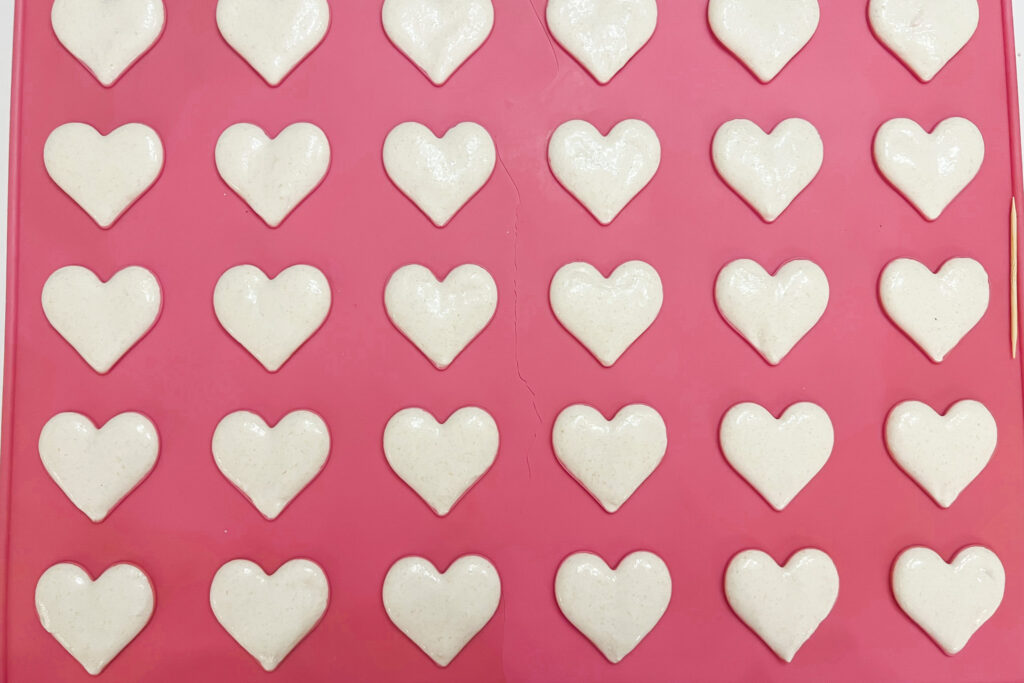
Should I use a hair dryer or the fridge to dry shells?
I do not recommend a household hair dryer for food preparation. Its concentrated airflow is hard to control, and it is not equipment designed for this job. Keep the tray in a clean area away from steam. Do not use the refrigerator as a shortcut for forming a skin: chilling and then warming a tray changes the conditions and can introduce condensation.
Why did my macarons not grow feet?
Feet are the ruffled edges that develop during baking. Weak meringue, overly fluid batter and an unsuitable baking setup can all contribute to missing feet. Check the actual oven temperature and the recipe’s oven mode before automatically increasing the heat.
A lower temperature is not automatically wrong for a recipe developed around it. For reference, 115°C equals 239°F and 120°C equals 248°F. Keep a temperature that works in your tested recipe; make a small, recorded adjustment only when the results justify it.
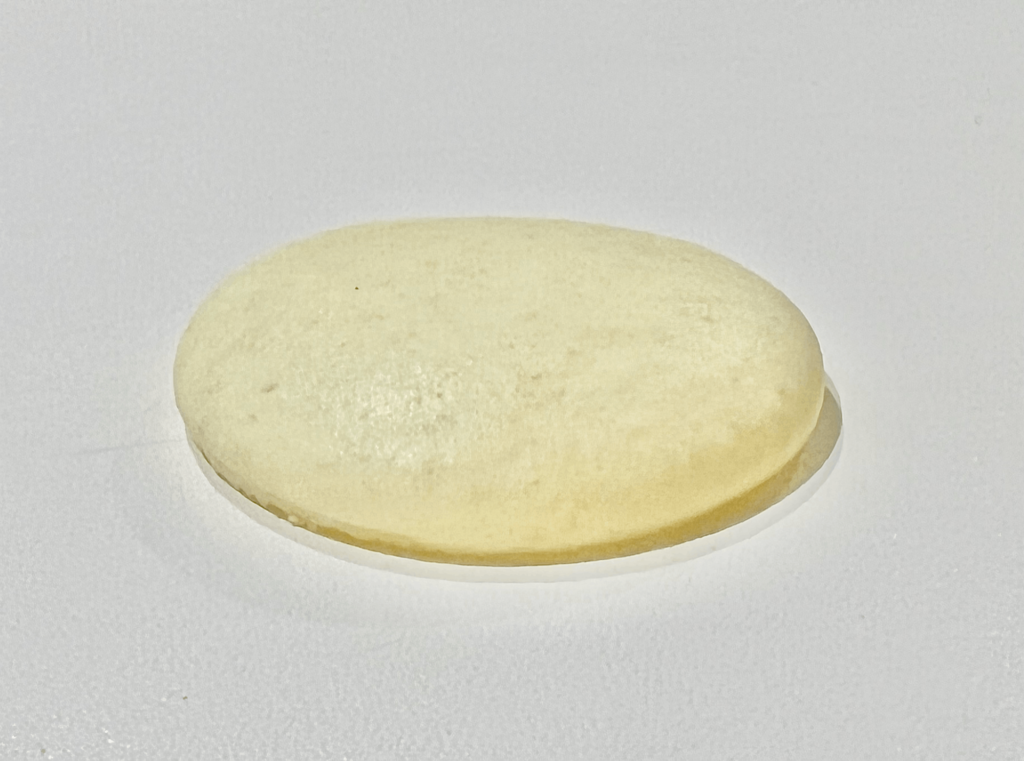
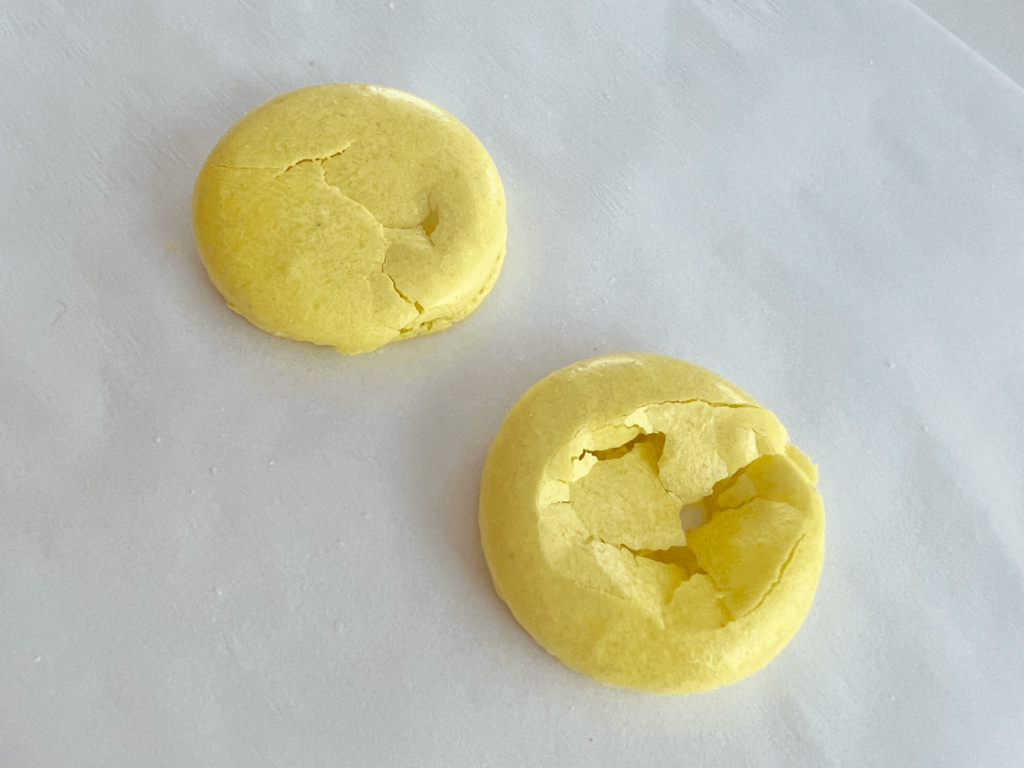
Do tall feet prove a macaron is perfect?
No. Feet vary with the recipe and baking setup. Very tall feet can coexist with a hollow interior. Judge a cooled shell and then a filled, matured macaron rather than treating the height of the ruffle as a complete quality test.
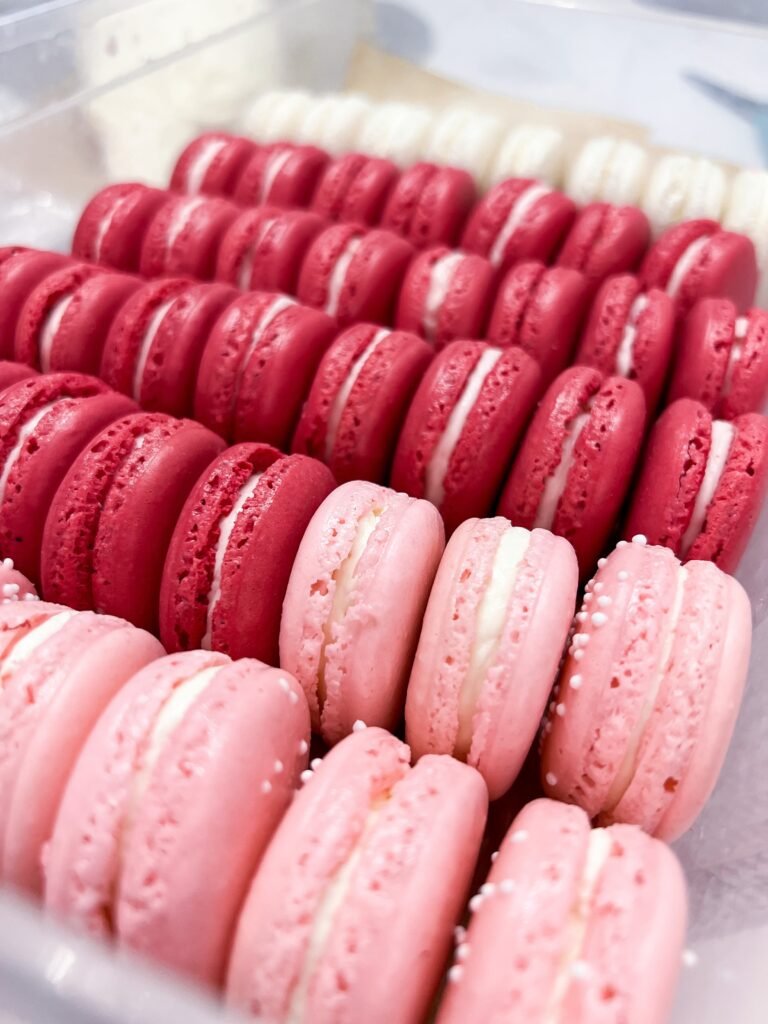

Are macarons supposed to be chewy or fluffy?
A macaron normally has a delicate exterior and a tender, slightly chewy interior after filling and maturation. It should not be expected to feel like sponge cake. Chewiness by itself does not prove underbaking, and crisp unfilled shells are not automatically ruined.
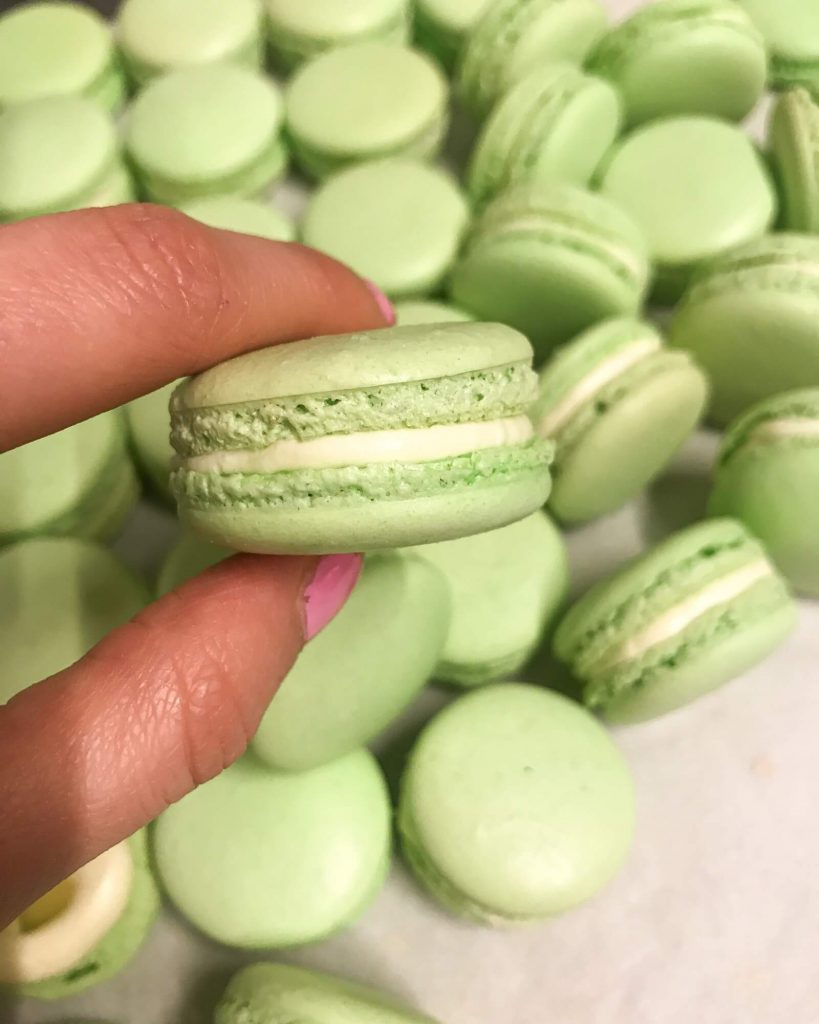
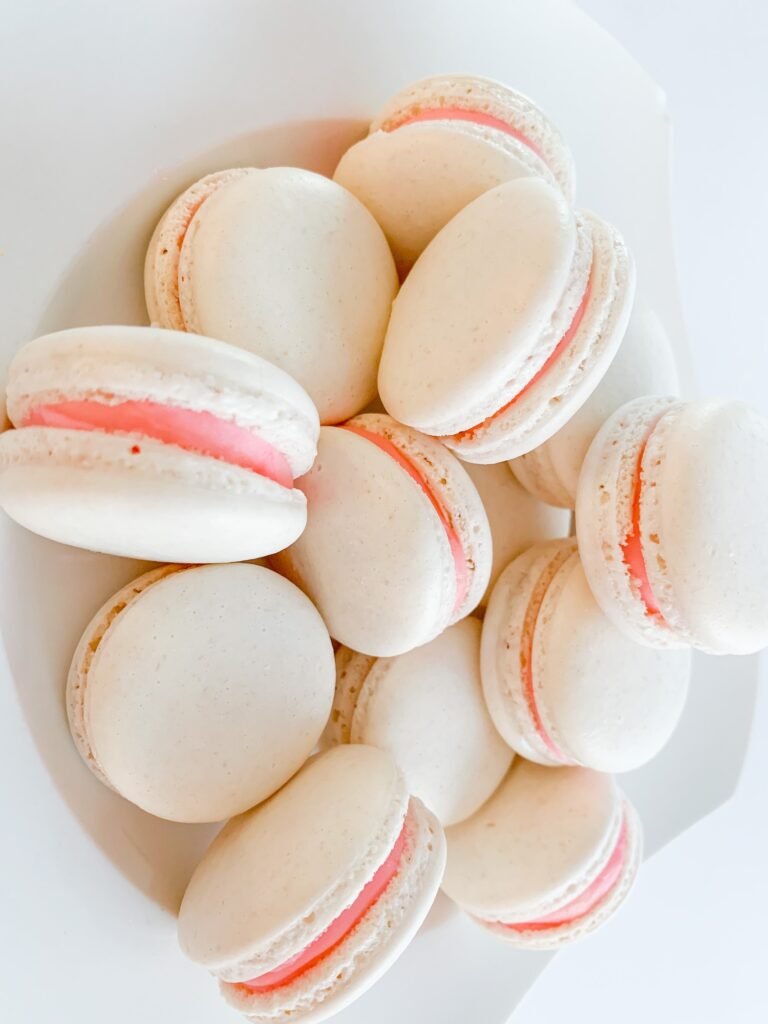
How can I tell if macarons are underbaked?
Check according to your recipe, including whether the shell is set and whether the top moves independently of its base. Let a test shell cool before trying to release it. Hot shells can stick even when they will release after cooling. A batter-like interior is different from the slight chew of a finished macaron.
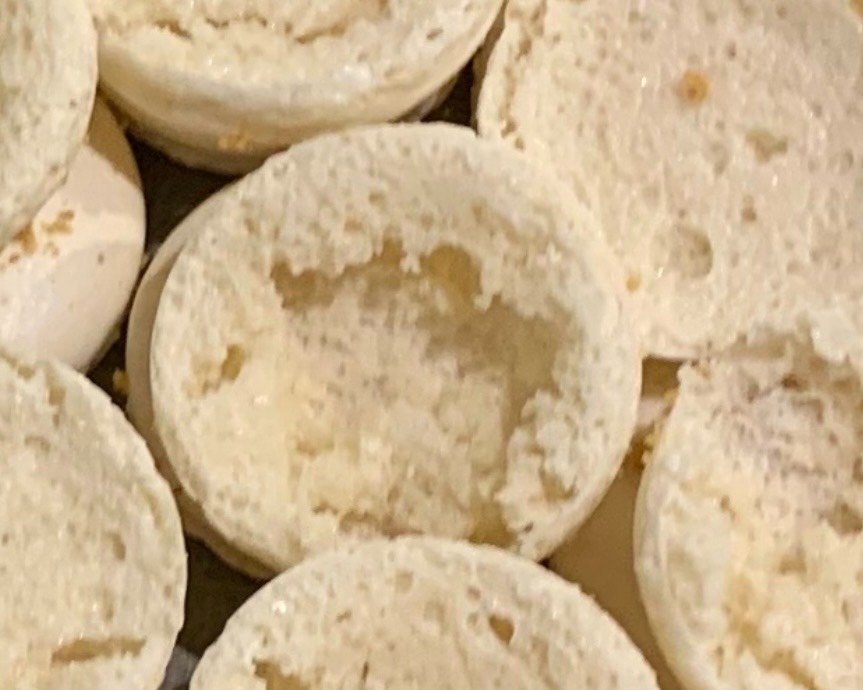
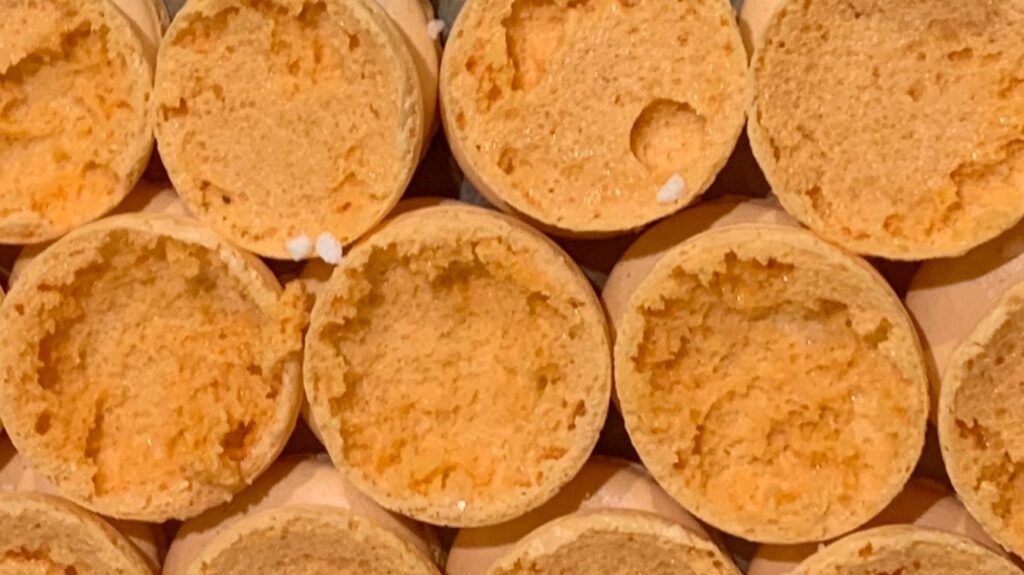
Can underbaked macarons go back in the oven?
If you notice the problem during baking, unfilled shells may need a little more time. This is not a guaranteed rescue after prolonged cooling or unsafe storage. Never rebake filled macarons as if they were plain shells, and do not serve raw centers as a no-bake dessert. For safe reuse of fully baked cosmetic failures, see what to do with failed macarons.
Can filling repair hollow macarons?
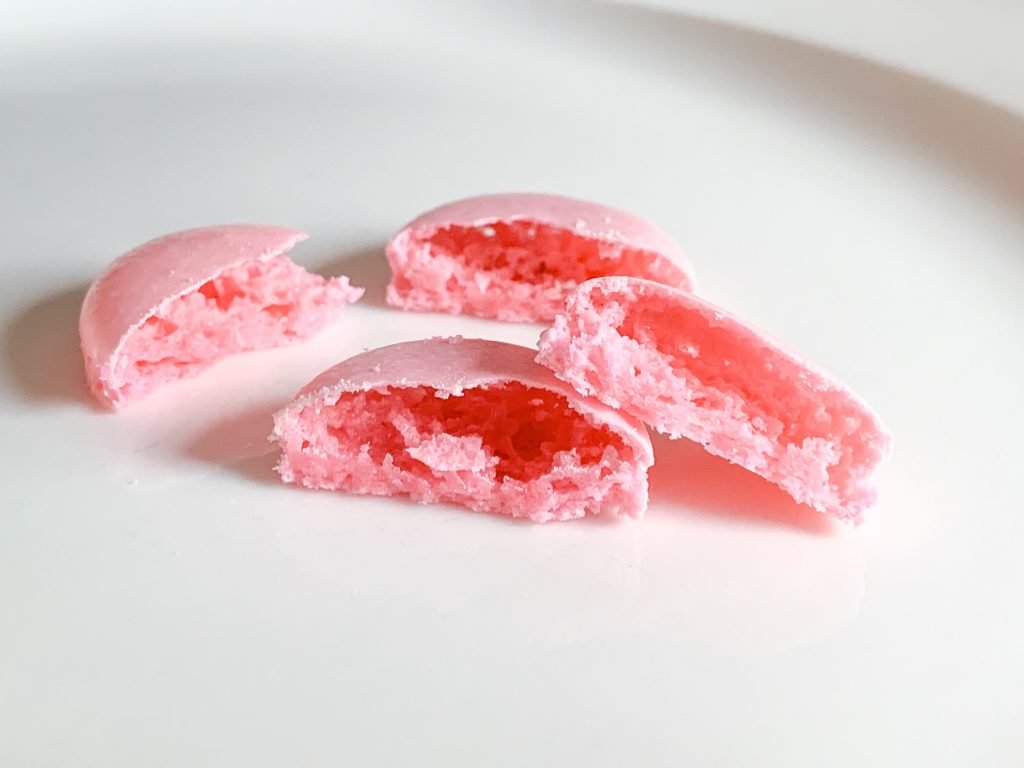
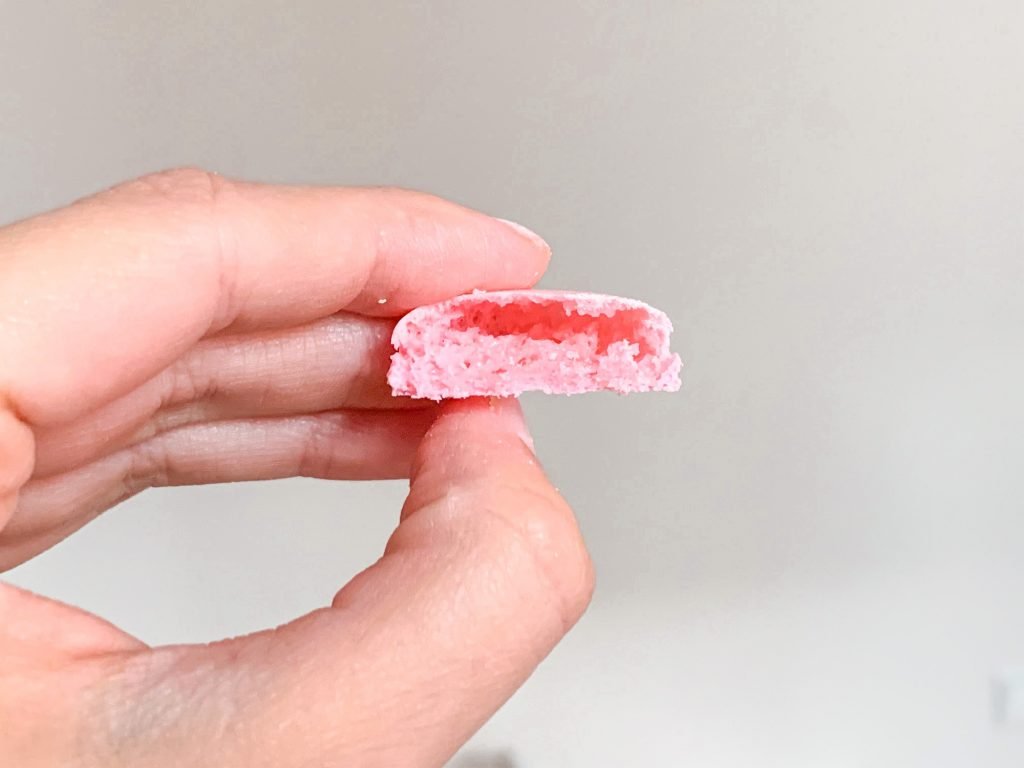
Filling and maturation can soften shells, but they do not reliably eliminate a large internal gap or correct its cause. Pressing a hollow shell with a finger may break it rather than fix it. Compare meringue, folding, oven behavior and cooling on the next batch; use the hollow macaron guide for a fuller diagnosis.
Can I change the coloring or flavor without affecting the batter?
Treat additions as recipe changes. Concentrated coloring intended for food lets you use less, but too much can still affect the mixture. Extracts, fruit puree and cocoa are not interchangeable additions. See how to color macarons and how to flavor macaron shells before experimenting.

Do I need silicone mats?
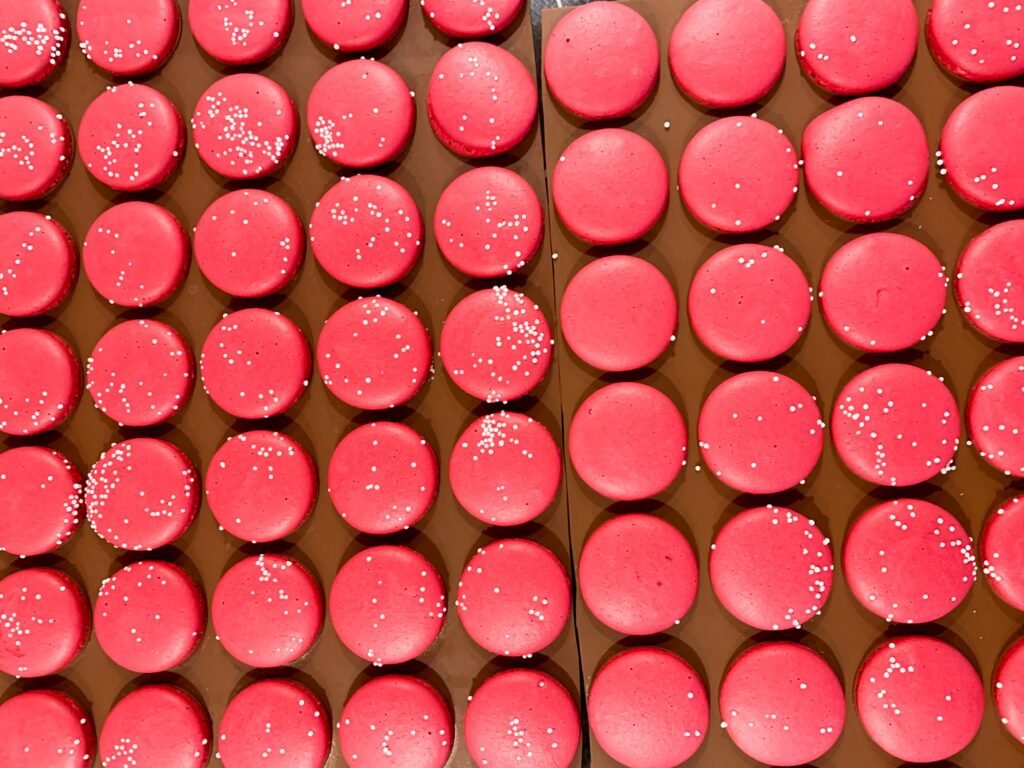
No. Baking parchment and silicone mats can both work. Use a surface suitable for your recipe and oven, not wax paper, and keep it consistent while troubleshooting. Changing the liner can change the way the bottoms bake, so test rather than assuming the same time will suit both.
Why does one tray look different from another?
Compare shell size, tray material, rack position, oven recovery time and how long each tray rested. The same batter can bake differently in different positions. Record one change at a time; do not assume every uneven shell proves the whole batter was mixed incorrectly.
Can I store the batter for another day?
Plan to pipe and bake the batter within the recipe’s workflow rather than treating it as cookie dough that can be refrigerated overnight. Its consistency can change while it waits. For make-ahead baking, storing cooled shells or appropriately filled macarons is usually a more manageable plan.
How should finished macarons be stored?
Storage depends on the filling. Keep perishable filled macarons refrigerated at 4°C (39.2°F) or colder, and follow the recipe’s storage period. Freezing does not make mishandled food safe. The macaron storage guide covers packing and thawing; FDA storage guidance explains the safety basics.
What can I do with a tray that looks imperfect?
Fully baked, safely stored shells can become crumbs, cake decorations or chocolate-dipped sandwiches. Discard unsafe or badly burnt batches instead of hiding the problem. A failed appearance is disappointing, but it is useful evidence for your next test.
Enjoy your macarons!
Belli xx