
Thanksgiving Macarons and Free Templates
Published November 18, 2022 · Updated August 30, 2026
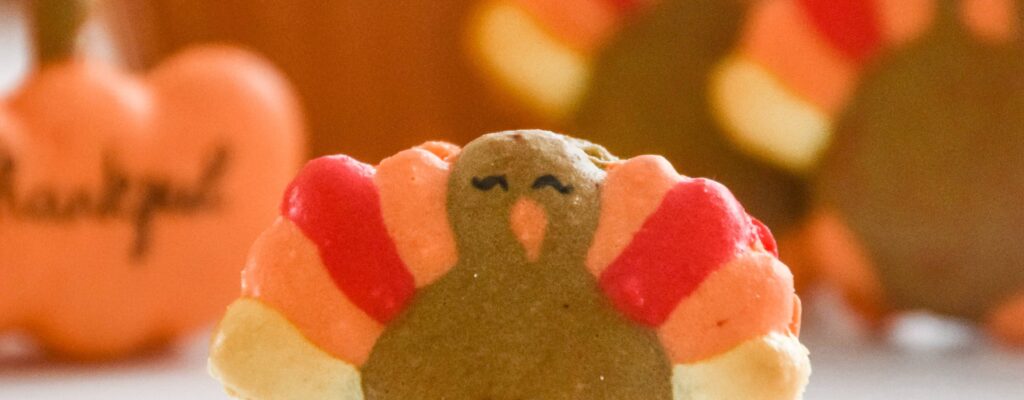
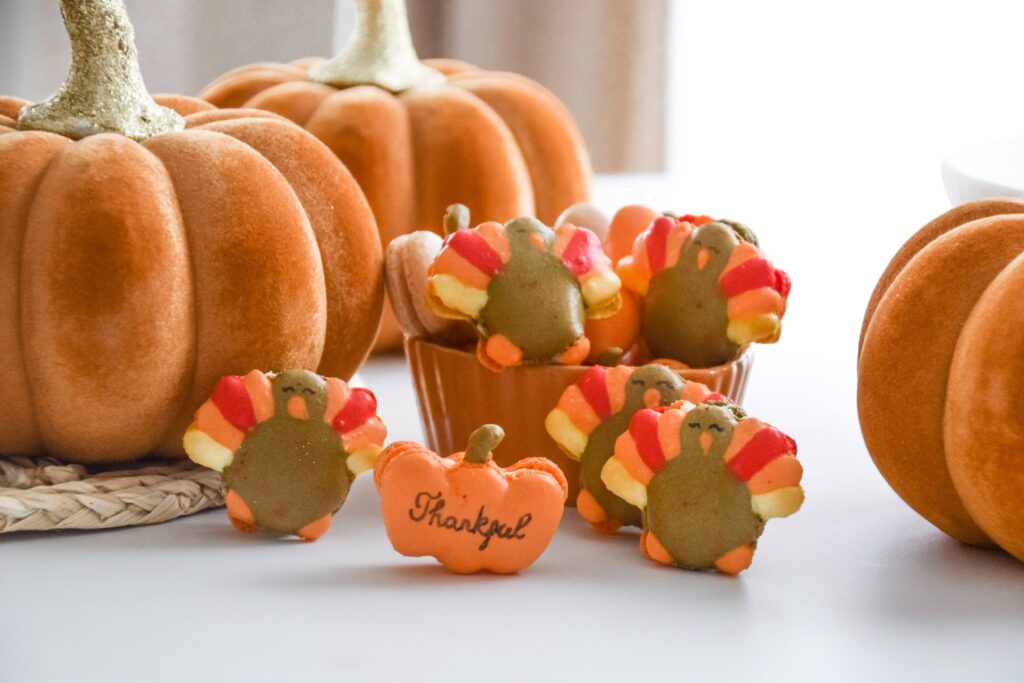
Thanksgiving macarons turn a familiar shell recipe into little turkeys and pumpkins for the dessert table. The turkey design is my favorite: a brown body surrounded by colorful feathers. Below are the free printable templates, the piping order shown in my photos, and tips for filling, decorating and making them ahead.
This is a shaping and decorating tutorial, not a separate batter recipe. Start with a macaron recipe you already bake successfully; dividing batter into several colors and piping small details adds a little extra planning.
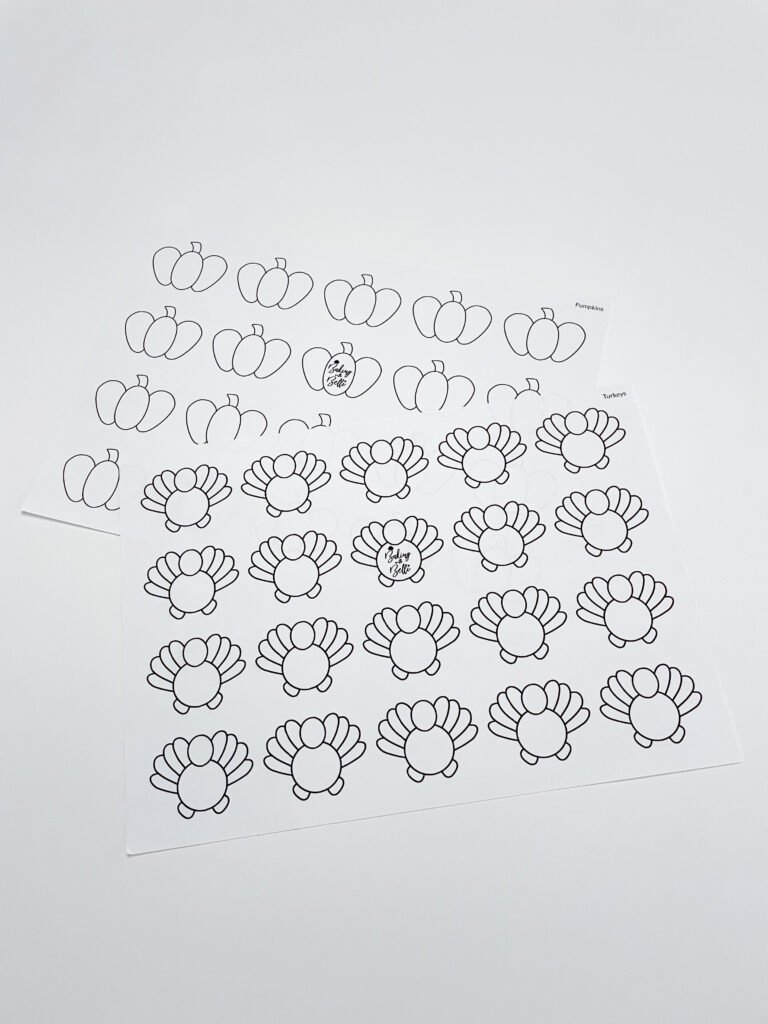
Download the free turkey and pumpkin templates
Print at actual size (100%) as a starting point, and check that the outlines fit your tray. Put the paper under a translucent silicone baking mat or baking parchment so you can see the outlines. Pipe onto the food-safe baking surface, never directly onto printer paper. Slide the paper template out before baking.
Pipe matching pairs for each sandwich. If you change the print scale, both shell size and baking time can change. Leave space between shapes for spreading and airflow.
Prepare the batter, colors and equipment
I use my Italian-method macaron recipe as the base. Read its full ingredient list and method before starting. Have the templates, trays and piping bags ready before the batter is finished.
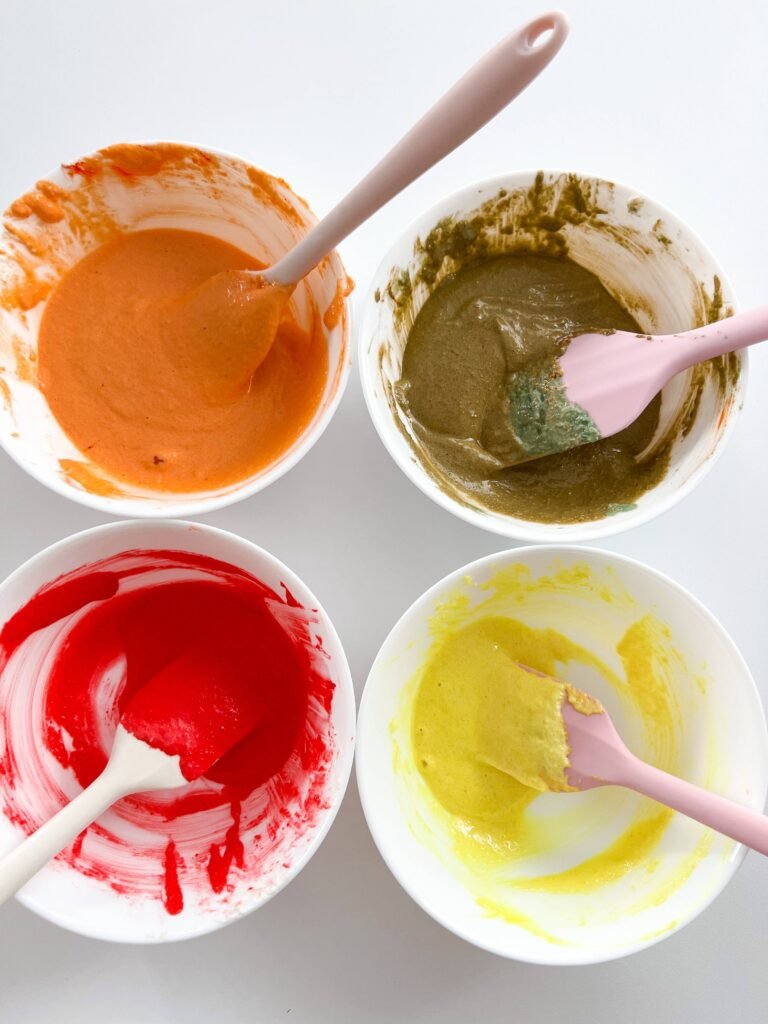
- For turkeys: brown, orange, yellow and red batter, with a separate piping bag for each color.
- For pumpkins: orange or uncolored batter, plus a little brown batter for stems.
- Small round piping tips or neatly cut bag openings for controlled piping.
- A food-safe marker for eyes and lettering, plus your chosen macaron filling.
Use concentrated coloring intended for food, and add it sparingly. Fold each portion only until it reaches the right piping consistency: mixing in color also counts toward macaronage. See how to color macaron shells for more detail.
For the brown batter in these photos, I mixed orange and blue gel coloring when I ran out of brown. Results depend on the colors and their concentration, so test a tiny amount first. Uncolored batter is also a simple choice for cream-colored pumpkins.
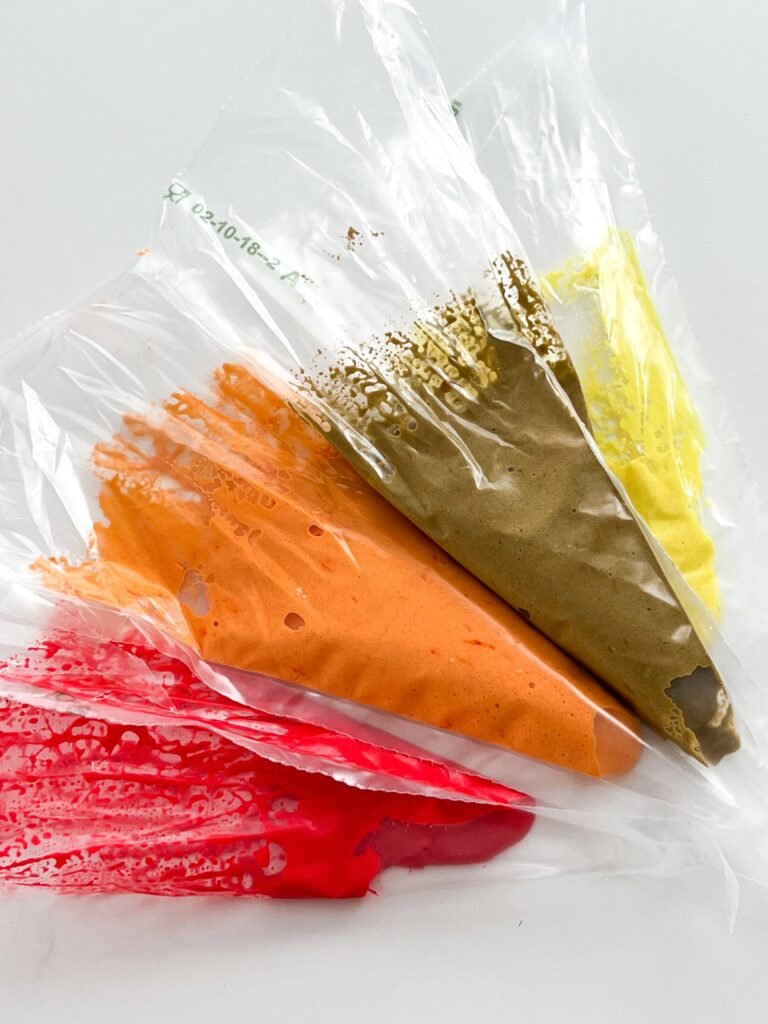
How to pipe turkey macarons
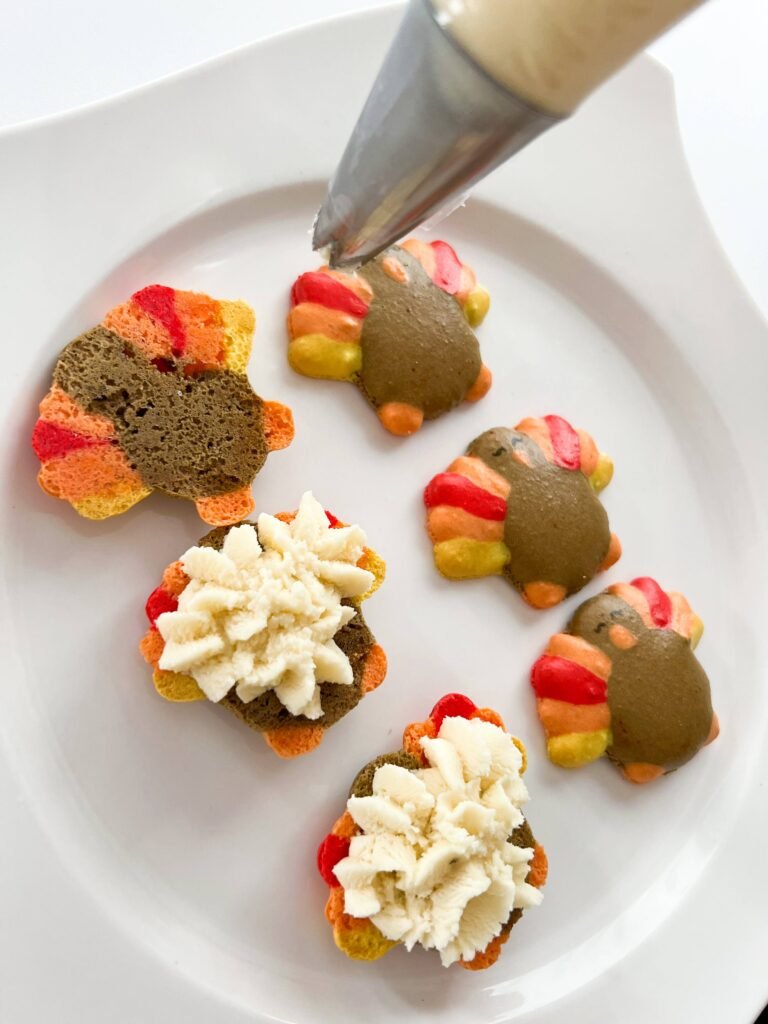
- Pipe the brown body and head first, following the outline. Keep each shell a similar thickness rather than building tall mounds.
- Let the surface begin to set before adding adjacent colors. In my original batch I waited about 10 minutes between stages; use the appearance of the batter rather than a fixed timer.
- Pipe the red feather sections, then the yellow sections after another short rest.
- Add orange feathers, feet and beaks. Adjacent sections should meet so they form one shell, but avoid flooding one color over another.
- Let the completed shapes rest as required by your base recipe. For this resting method, the surface should look matte and not stick to a gentle touch.
Keep the unused batter in its piping bags while you work. If the design spreads into a puddle, pause and check consistency; adding longer rests cannot undo overmixed batter. Very dry sections can also join poorly, so aim for a lightly set surface, not a thick crust.
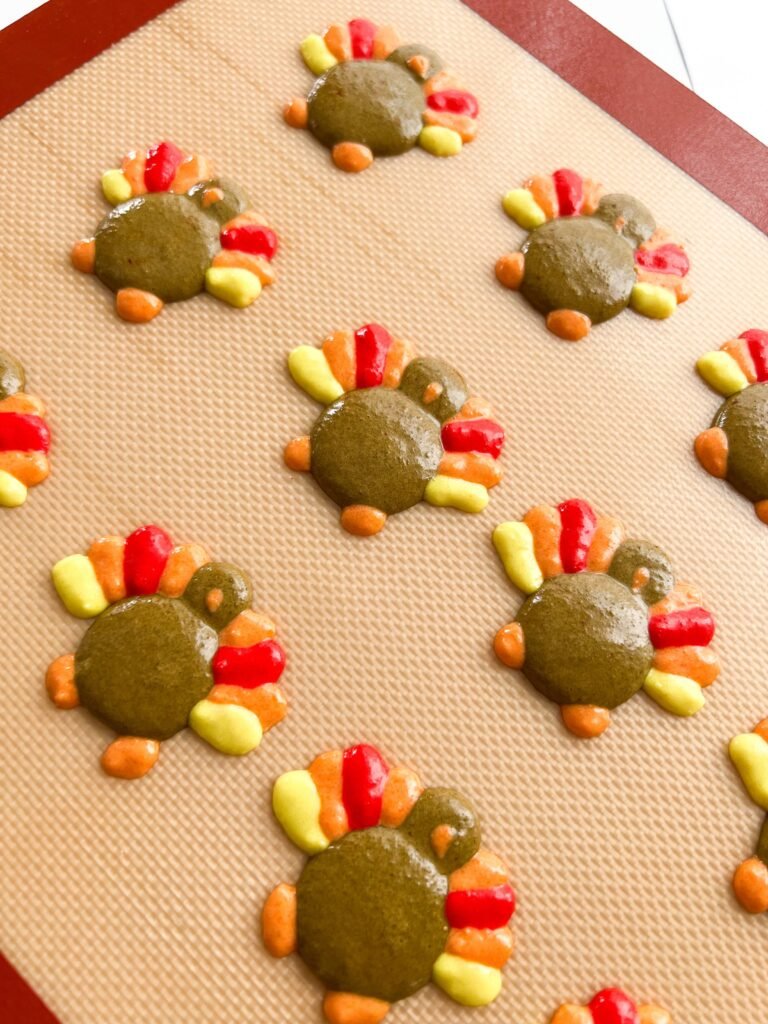
Bake and cool without breaking the details
Preheat fully and follow your base recipe’s oven settings as a starting point. Thin feet and feather tips can bake differently from the thicker body, so check a test shell before committing every tray. Do not assume a set of shaped shells needs exactly the same time as small round macarons.
The shell should be set rather than wobbling independently of its base. Let the macarons cool completely on the baking surface before peeling the mat or parchment away from them. Support the body instead of pulling on the tiny feet or feathers. For sticking, cracking or spreading, use the macaron troubleshooting guide.

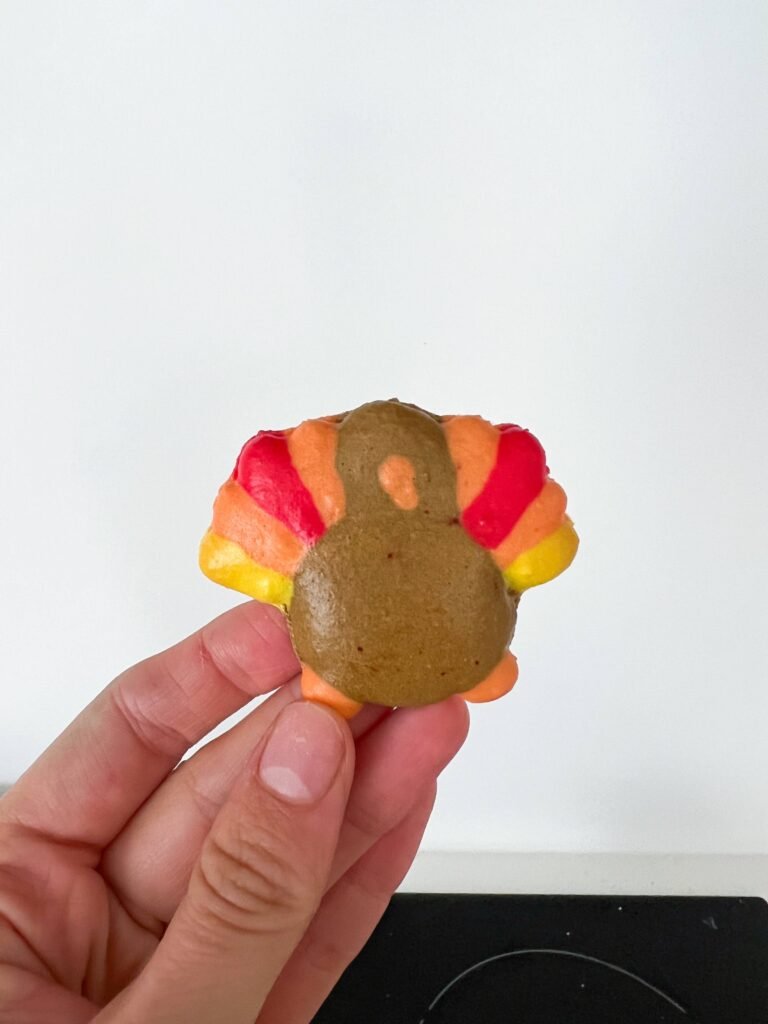
Fill and decorate the turkeys
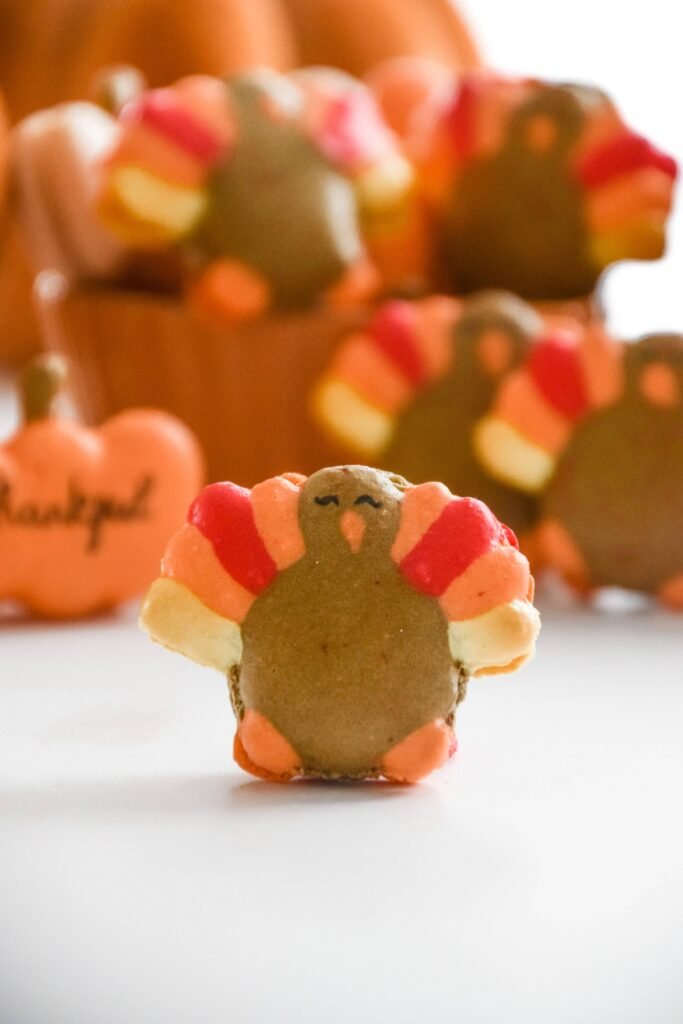
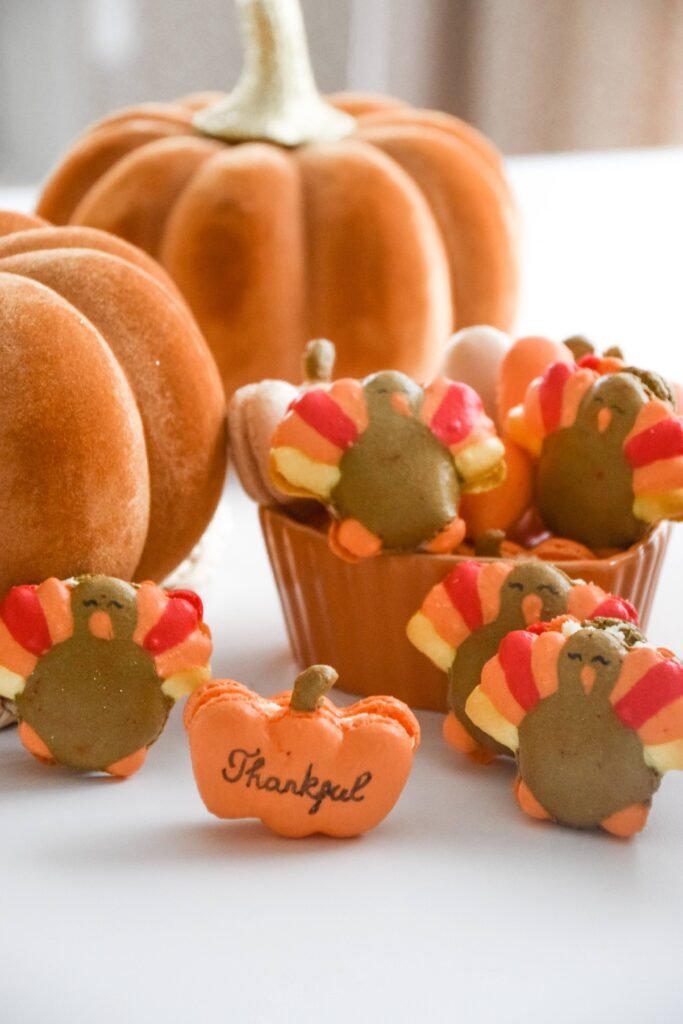
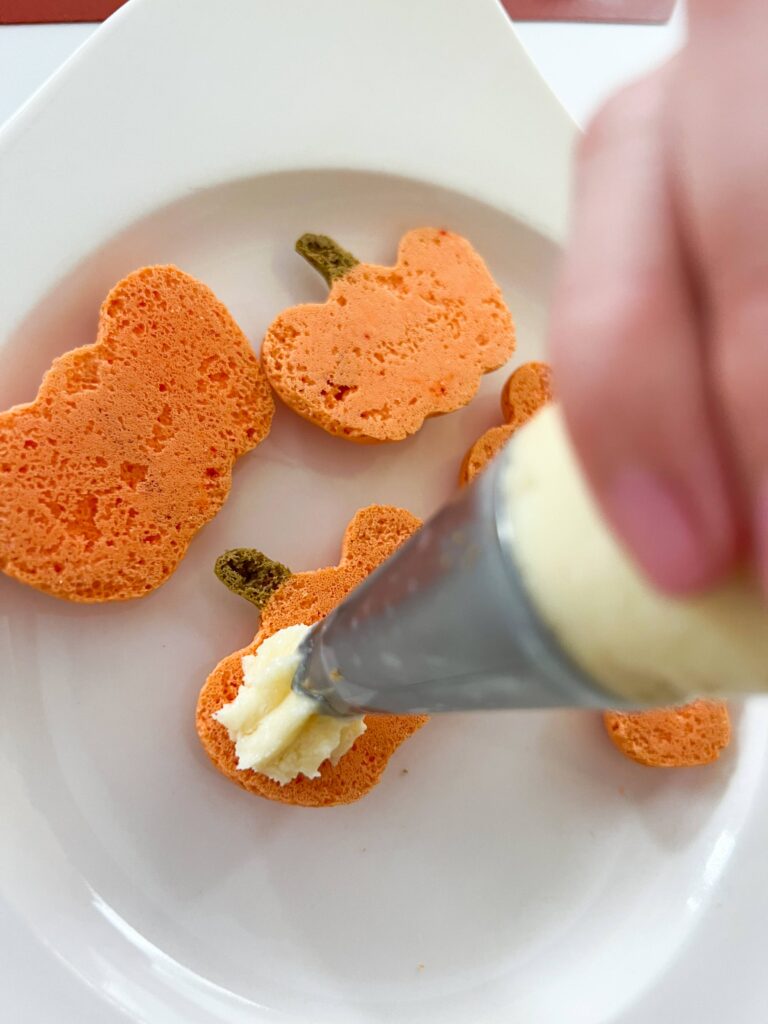
Pair cooled shells by size and shape. Add the eyes with an edible marker on a dry surface. Pipe filling on the flat side of one shell, leaving room near the edge, and press its partner on gently. The batch in these photos uses white chocolate ganache; use a filling with a consistency and storage method suitable for macarons.
Use decorations labeled edible and intended for food. “Non-toxic” does not mean edible; the FDA’s advice on decorative products explains what to check on the label.
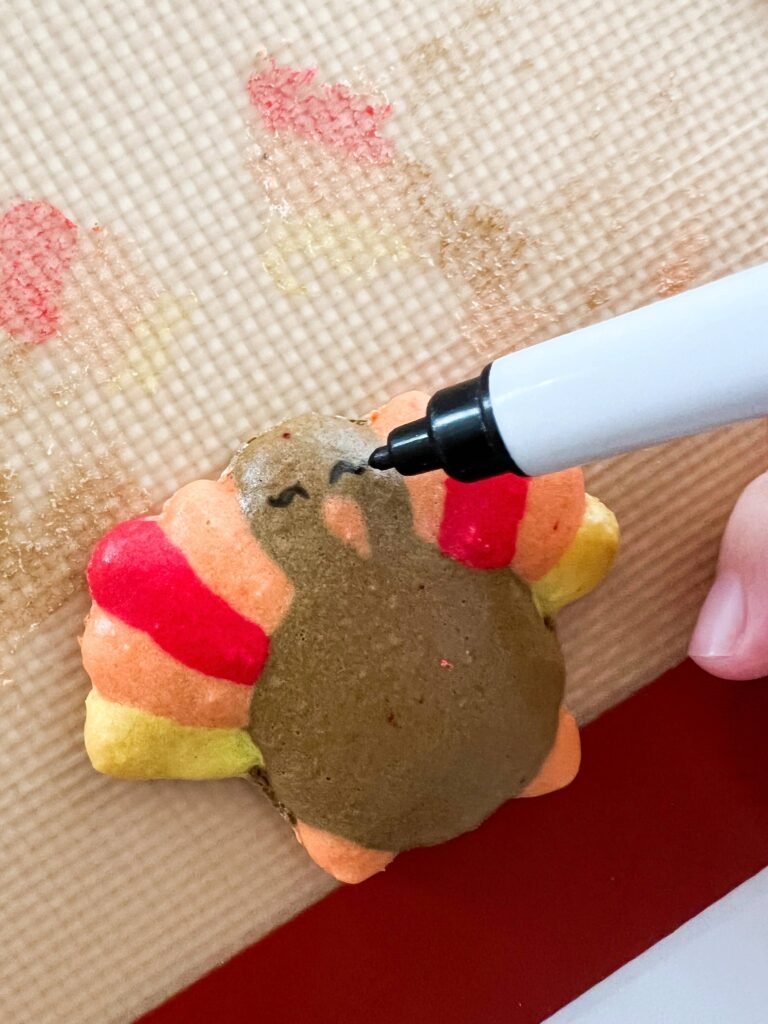
How to pipe pumpkin macarons
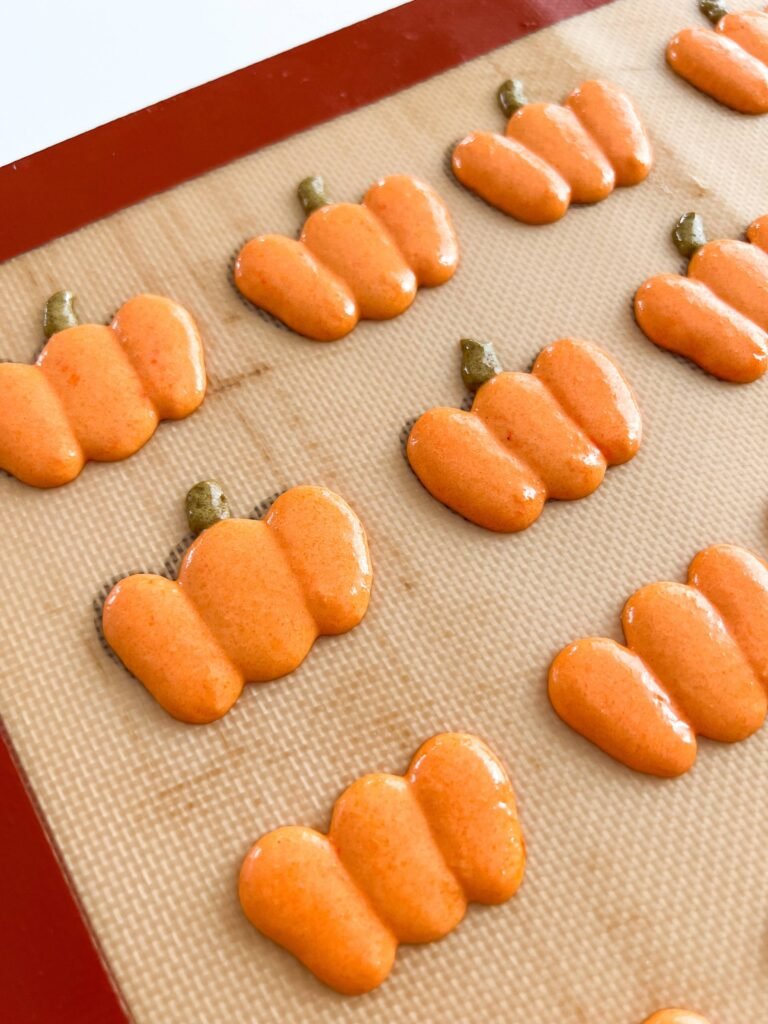
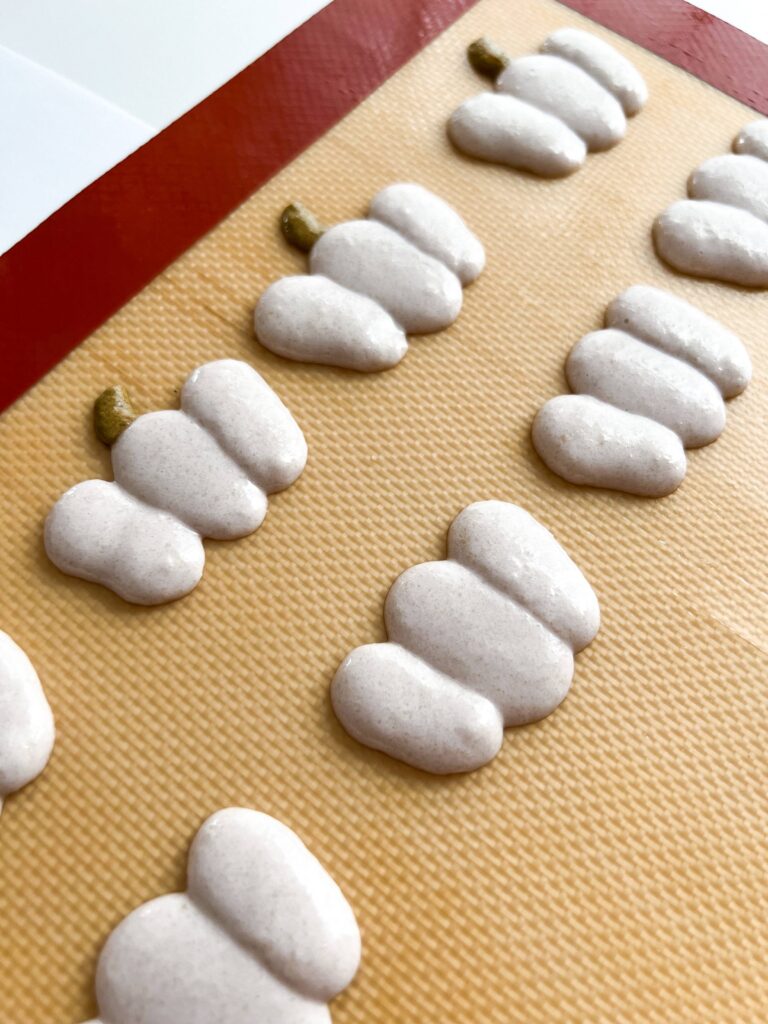
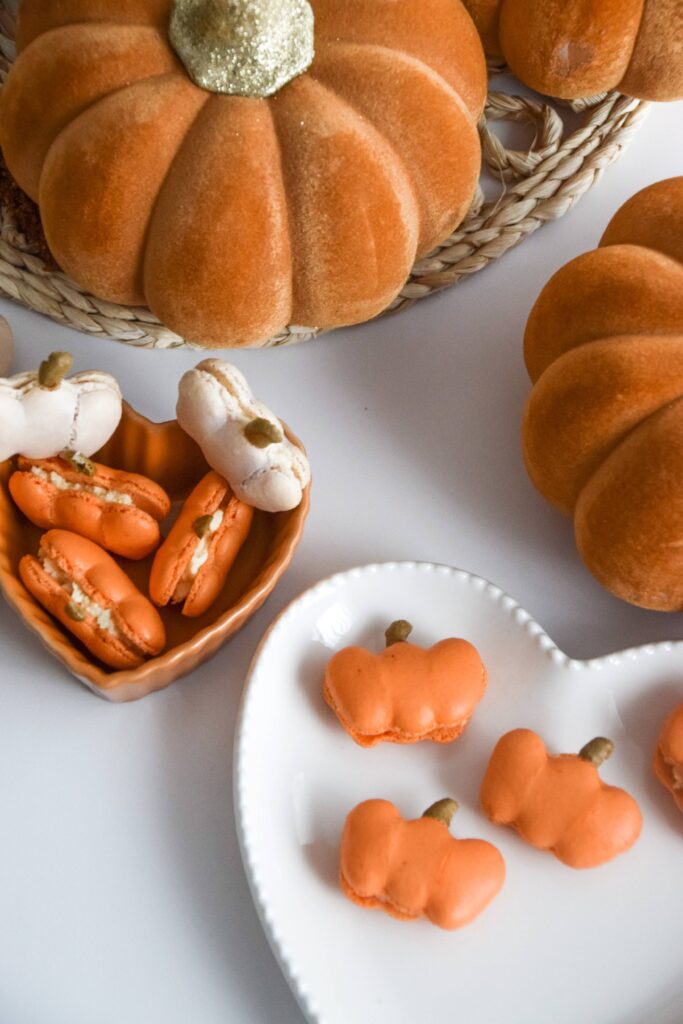
Use the pumpkin template with orange or uncolored batter. Pipe alternating sections first, let their surfaces begin to set, and then fill the remaining sections. This creates the curved ridges visible in the photos. Add the stem so it touches the pumpkin body.
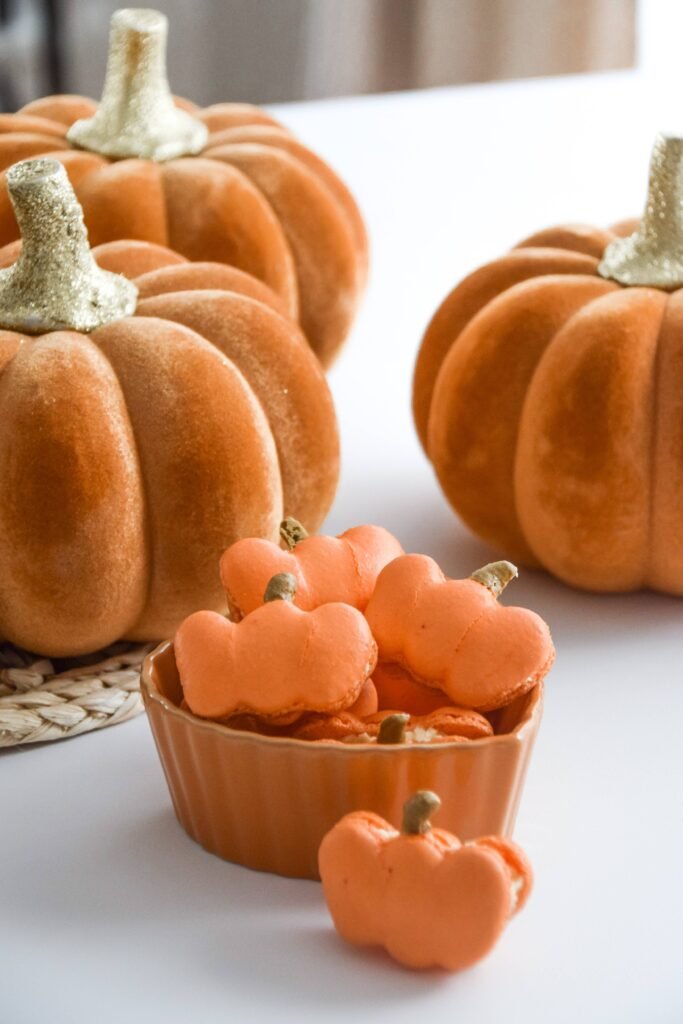
Rest, bake and cool using the same checks as the turkey shells. Pumpkin shapes have fewer small details, making them a useful first project if you are new to shaped macarons. For another seasonal design, see my pumpkin macaron tutorial.
Turn pumpkin macarons into edible place cards
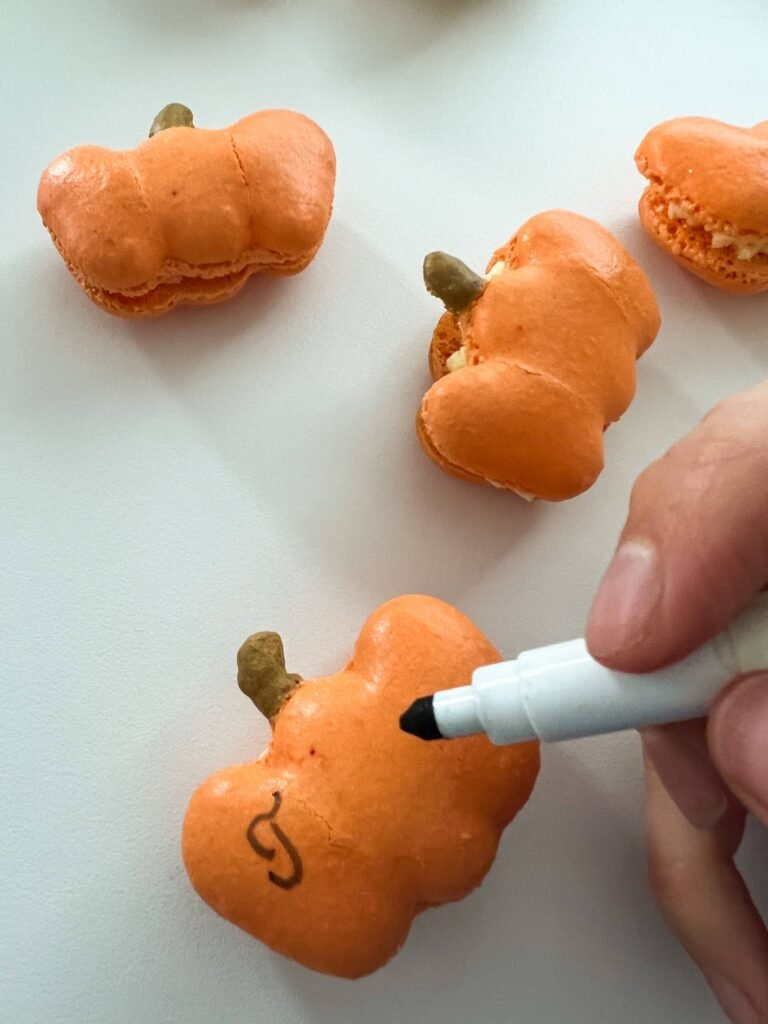
Write a guest’s name or a short message such as “Thankful” on a dry pumpkin shell with an edible marker. Fill gently and let the ink dry before packaging. If the macarons were frozen, thaw them before lettering and wait until surface condensation has gone.
Tell guests these are food, not just decorations, and identify allergens in the shells, filling and decorations. Typical almond macarons contain almonds and eggs; many fillings contain milk. Place filled macarons at the table close to serving time, not at the start of a long day of preparation.
Make-ahead and storage tips
For delicate shapes, freeze the cooled, unfilled shells in a rigid airtight container with layers separated and no heavy items on top. This lets you fill and letter them closer to the holiday. Freezing filled macarons depends on the filling; test a small batch if you are unsure how it thaws.
Keep perishable filled macarons at 4°C (39.2°F) or colder. Limit time out of refrigeration to two hours, or one hour above 32.2°C (90°F). Use the filling’s storage guidance; one freezer deadline does not suit every recipe. See the macaron storage guide and FDA food-storage guidance.
Thanksgiving macaron questions
Why did the feather colors merge?
The earlier section may not have set enough, or the batter may be too fluid. Pipe a small test shape first, use controlled portions and allow adjacent sections to set lightly before continuing.
Can I use round shells instead?
Yes. Bake round shells with your usual recipe and add a simple turkey or pumpkin design after cooling. It is an easier option when you do not have time for several colors of piped batter.
Does the pumpkin shape mean pumpkin flavor?
No. The shape and orange color are decorative. Flavor depends on the recipe and filling you choose; adding pumpkin puree to an established shell formula is not a direct swap.
Happy Thanksgiving!
Belli xx