
What To Do With Failed Macarons?
Published February 5, 2023 · Updated August 30, 2026
Wondering what to do with failed macarons? If the shells are fully baked and have been stored safely, cracks, hollow centers or uneven feet do not have to mean waste. Use sturdy shells for decorated sandwiches and fragile ones for cake decorations, dessert layers or crumbs.
I started decorating cakes with imperfect macarons after getting tired of eating every failed batch myself. Hiding an uneven edge in frosting or turning crisp shells into crumbs is often more useful than trying to make every shell look perfect.
First decide whether the batch is safe to reuse
These ideas are for cosmetic failures, not raw batter or spoiled food. Do not serve underbaked, batter-like centers as a no-bake topping. If you are unsure the shells were properly cooked, do not use them in ready-to-eat desserts. The FDA warns against eating raw dough and batter.
- Use: fully baked shells that are cracked, misshapen, hollow or simply too crisp.
- Discard: moldy, contaminated or recalled ingredients and macarons; do not cover a safety problem with chocolate.
- Skip for flavor: badly burnt or bitter shells will make the next dessert taste burnt too.
- Check filled macarons separately: the filling and its storage history determine whether they can be reused.
Keep perishable fillings refrigerated at 4°C (39.2°F) or colder. Discard perishables left out more than two hours, or one hour above 32.2°C (90°F). Smell alone cannot establish safety. See FDA food-storage guidance.
Choose a rescue based on the shell
- Lopsided but sturdy: pair, fill and cover the uneven edge.
- Cracked but intact: decorate lightly or use on a cake.
- Hollow and fragile: use a light filling or turn into pieces.
- Dry and crisp: crumble for toppings or layers.
- Sticky or batter-like: assess baking, not decoration; do not assume this is just a cosmetic flaw.
Rescue lopsided macarons with a chocolate-dipped edge
Match two similar-sized shells so the uneven edges face the same direction. Fill carefully, then dip that edge in melted chocolate or a confectionery coating prepared according to its instructions. Add a few crumbs, chopped nuts or sprinkles while the coating is still soft.
Hold the sandwich gently and avoid pressing on a thin top. If the shells cannot support dipping, use them as separate decorations instead. Let the coating set before stacking. Chocolate and candy coating are not identical: follow the product’s melting and setting guidance.
Decorate cracked shells without soaking them
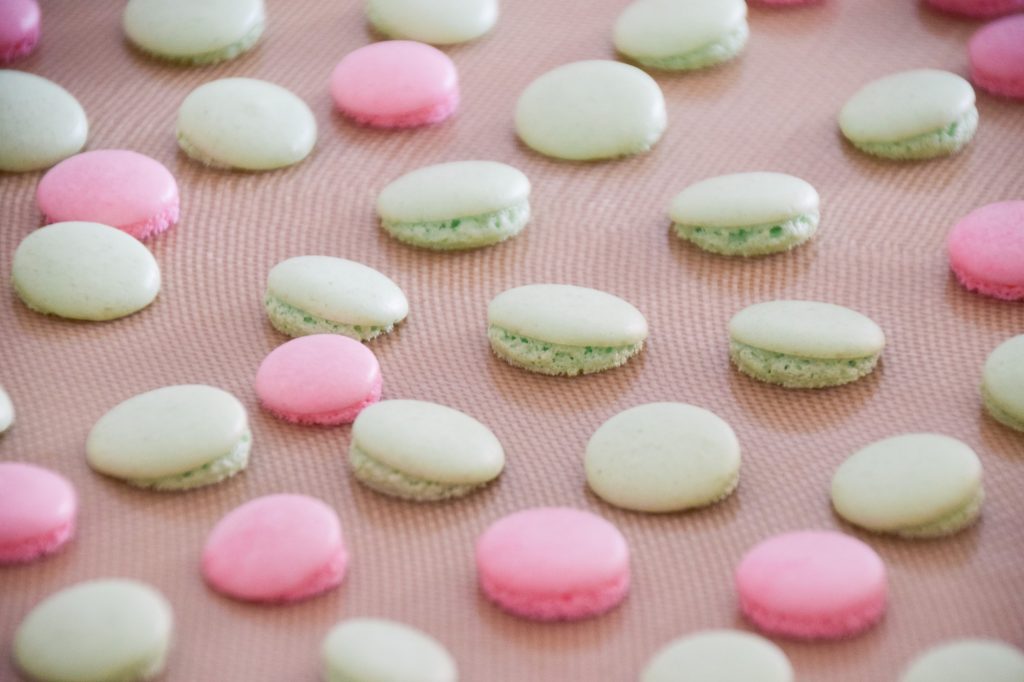
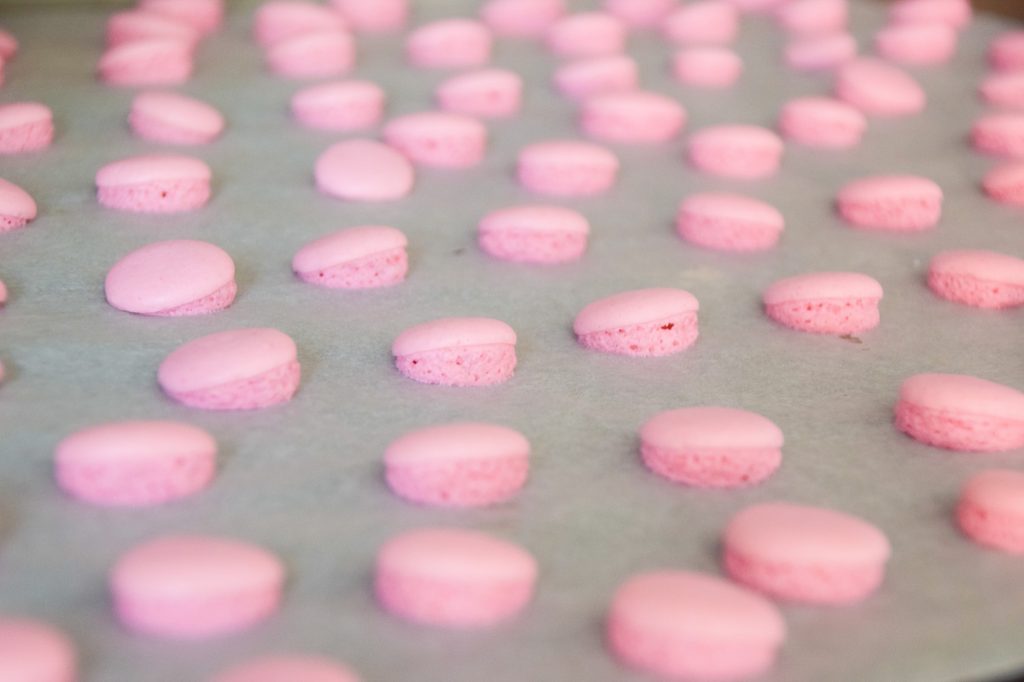
A light chocolate drizzle or a small edible decoration can disguise a crack without adding much weight. For bigger cracks, use the shell as a fragment rather than trying to glue it back into a perfect sandwich. Crumbs and chocolate also work well as deliberate decoration on sound shells.
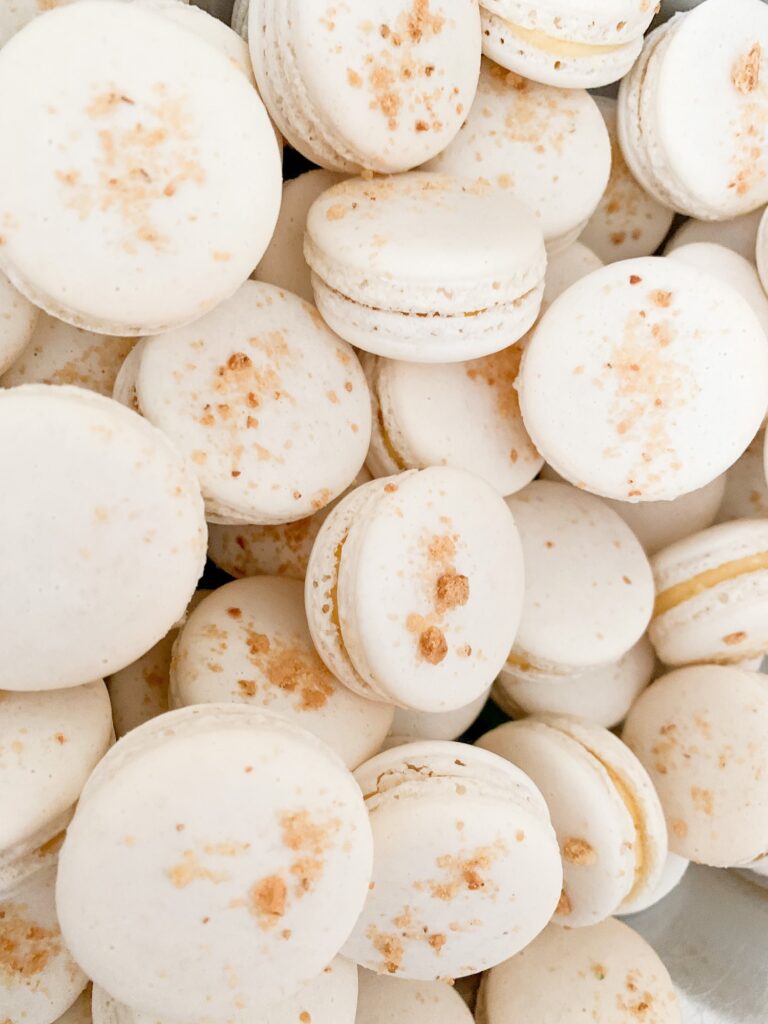
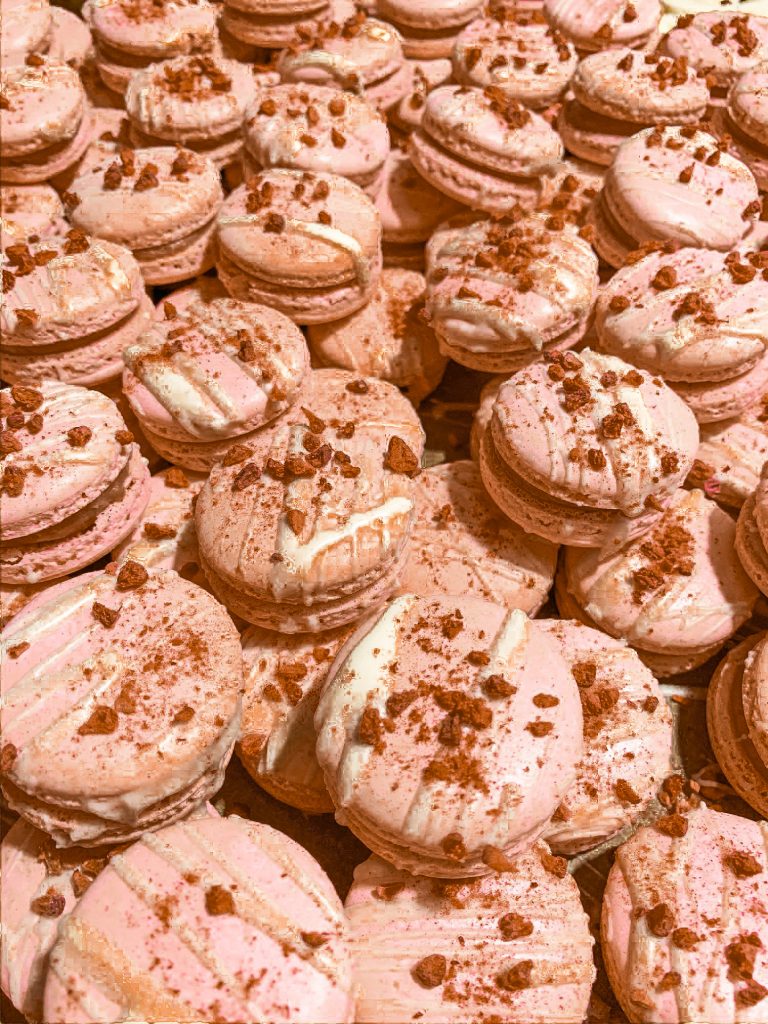
Use only food-safe decorating products and brushes. Avoid flooding a delicate shell with water-based paint; moisture can soften it. An edible marker works best on a dry surface. If you use royal icing, choose an appropriate ready-to-use product or a recipe made with pasteurized egg ingredients.
Use hollow macarons on cupcakes or cakes
Hollow shells are not explained by one simple air-bubble problem. Meringue, folding, baking and cooling can all affect the result. See why macarons turn out hollow for a more useful diagnosis.
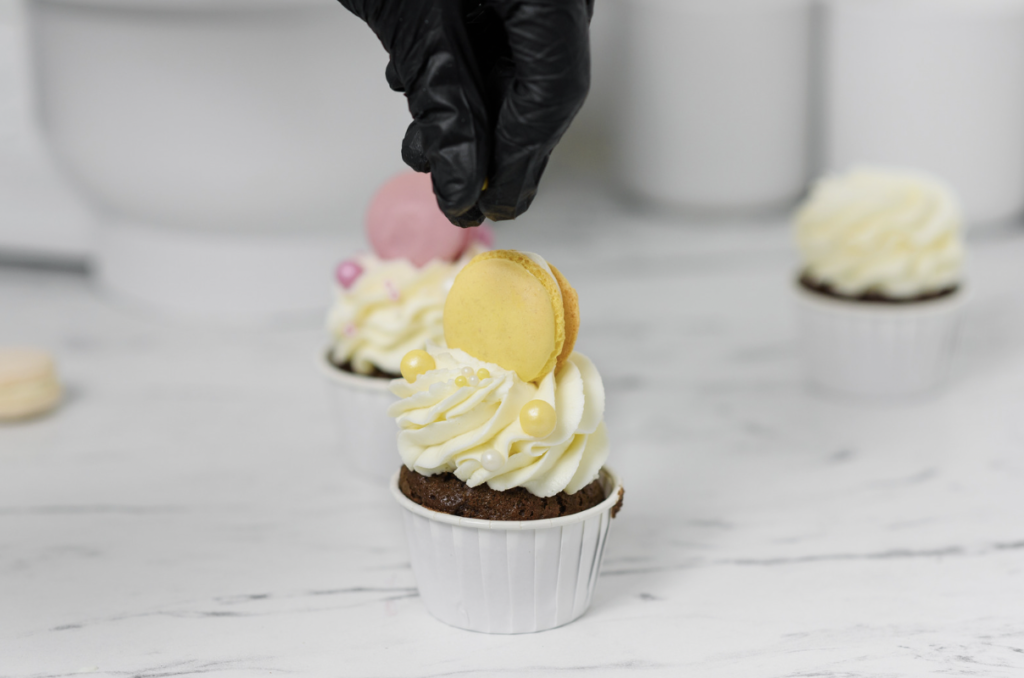
For a baked but fragile shell, place it lightly into frosting so the frosting supports it. Add it near serving time if you want contrast between the crisp shell and soft frosting. Fully hollow shells may crack if filled under pressure, so use a gentle hand or decorate with pieces instead.

Make macaron crumbs from dry shells
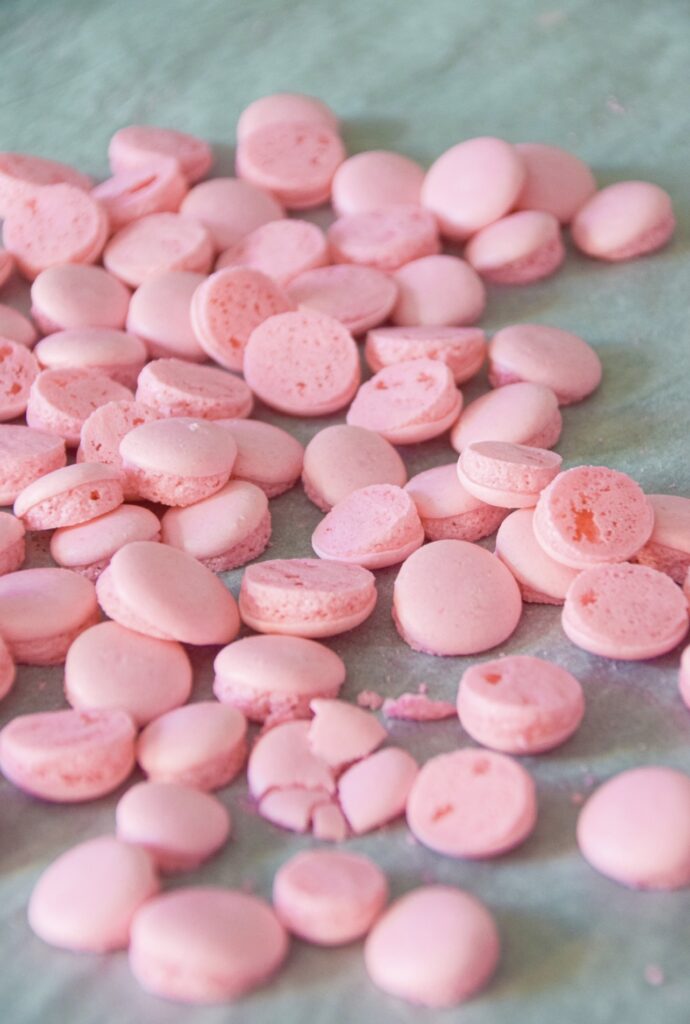
- Start with completely cooled, fully baked, unfilled shells. Soft filling turns crumbs into a sticky mixture and changes how they must be stored.
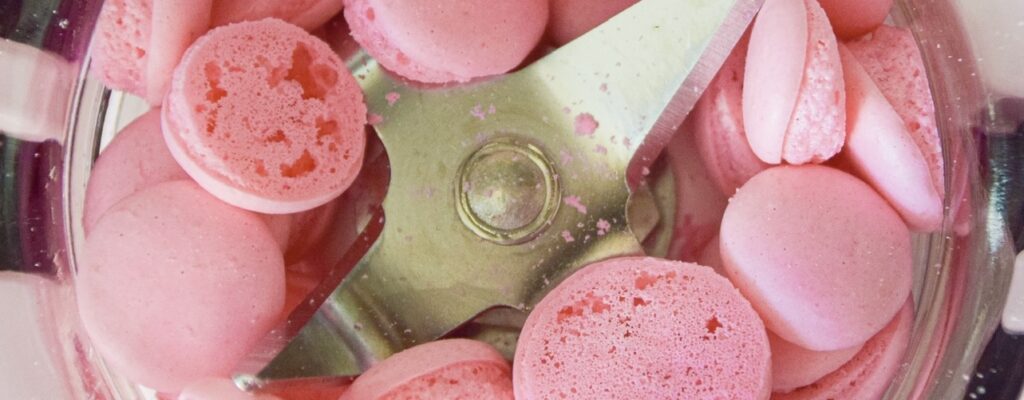
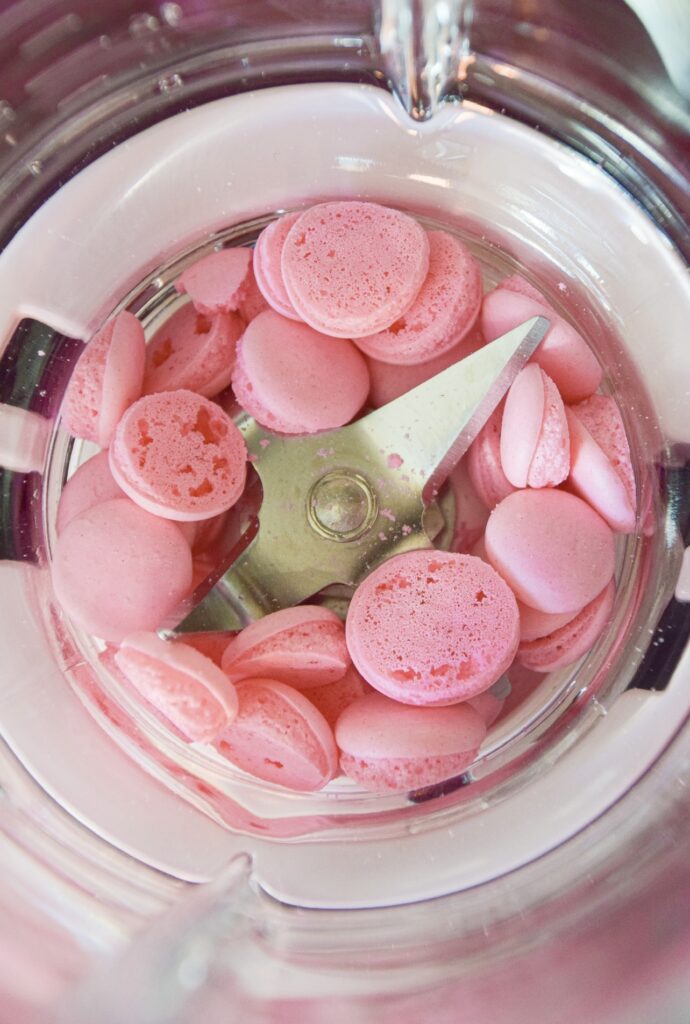
- Break the shells into pieces in a clean food-safe bag with a rolling pin, or pulse them in a blender or processor.
- Stop at coarse crumbs for texture, or pulse more finely for a dusting. Let fine dust settle before opening the lid.
- Store the crumbs in a sealed container and label them with the preparation date and allergens.
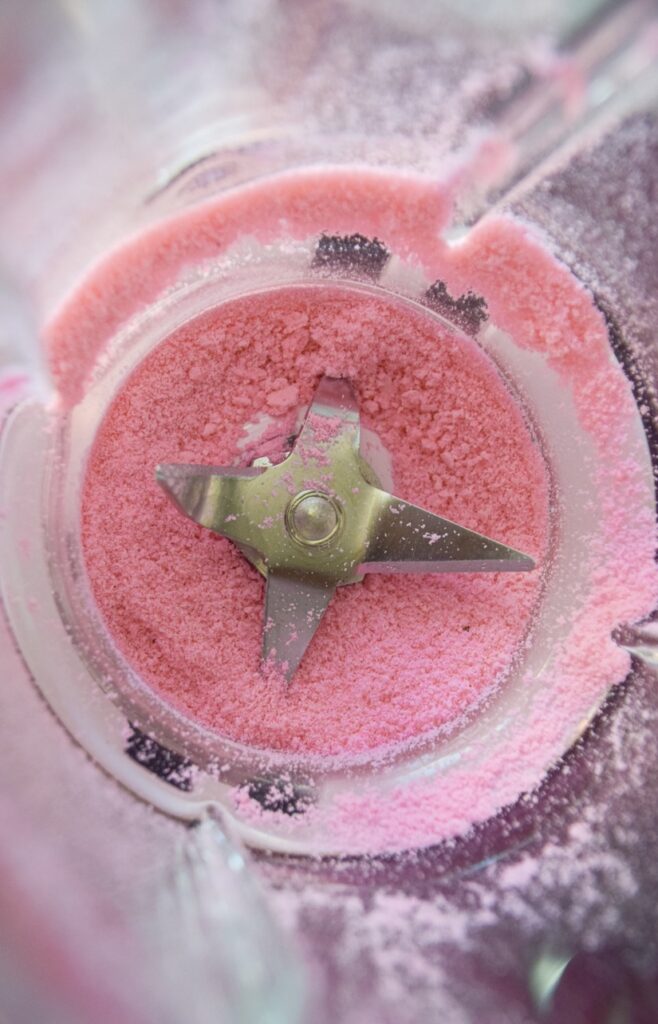
Five ways to use macaron crumbs
- Ice cream topping: scatter coarse crumbs over a scoop just before serving.
- Dessert cups: layer crumbs with a suitable cream or fruit filling; refrigerate according to the most perishable ingredient.
- Cake decoration: press crumbs gently around the sides of a frosted cake.
- Cake pops: add a small amount to an existing cake-pop mixture, checking texture as you go rather than replacing the cake by weight.
- Breakfast garnish: sprinkle a little over yogurt or cereal for a sweet crunch.

Macaron crumbs contain a lot of sugar and almond, so they are not a one-for-one replacement for flour or an ordinary biscuit crumb. A crumb crust needs its own tested proportions. Treat these ideas as additions to desserts you already know how to make.
Can dry macarons soften after filling?
A fully baked shell that is a little too crisp may soften as moisture moves from the filling into it during maturation. Results depend on the shell and filling; this does not guarantee a hollow shell will become full or a burnt shell will taste better. Test a pair before filling the whole batch.
Once you add a filling or combine the crumbs with a dairy dessert, use that dessert’s refrigeration and storage rules. See the macaron storage guide for packaging, thawing and filling-specific considerations.
Store or share the rescued batch thoughtfully
Keep plain shells or crumbs dry and protected in a sealed container. For longer storage, freeze suitable portions and thaw them covered to reduce condensation. Use a rigid container for fragile shells so they are not crushed before you need them.
When sharing, identify almonds, eggs and any allergens added by chocolate, sprinkles or filling. Imperfect appearance is fine; uncertainty about safety is not. Do not describe a dessert as nut-free or gluten-free without checking every ingredient and cross-contact risk.
Improve the next batch
Take a photograph and note the recipe, oven setting, tray, resting time and batter consistency. Change one variable at a time instead of changing everything after one disappointing tray. The macaron troubleshooting guide helps separate issues such as spreading, sticking, cracks and uneven feet.
Can I mix failed shells into fresh macaron batter?
Do not use them as a direct replacement for almond flour or sugar. They are already baked and have a different composition and behavior. Use them as a topping instead unless you have a recipe specifically developed for recycled crumbs.
Can I crush filled macarons too?
They will make a moist mixture rather than dry crumbs. Use only safely stored macarons, choose a compatible dessert and keep the mixture under the filling’s storage conditions. For a dry topping, use unfilled shells.
A tray of imperfect macarons can still be useful. Keep the safe, tasty parts, learn from the result and give the next batch another try.
Belli xx