
How to Freeze Macarons, Shells, and Fillings
Published August 16, 2022 · Updated September 2, 2026
You can freeze unfilled macaron shells and many filled macarons, but the filling determines how well they thaw. Freeze them promptly in airtight, freezer-safe packaging, label the package and thaw perishable products in the refrigerator. Test a small batch before relying on freezing for an event or order.
Quick answer: what freezes well?
| Item | Freezing outlook | Important check |
|---|---|---|
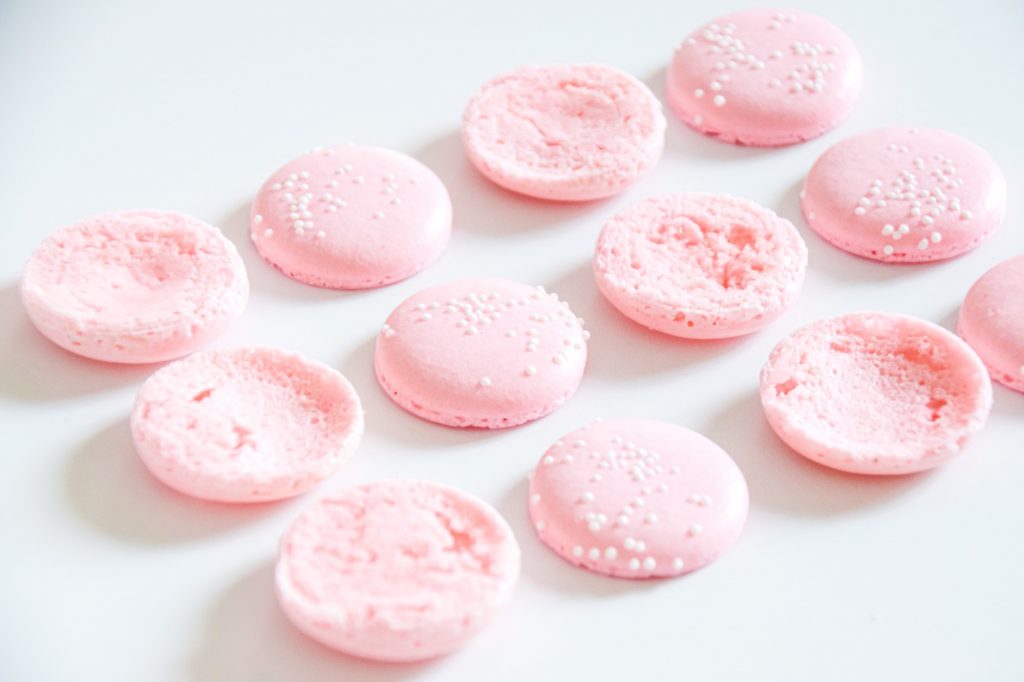
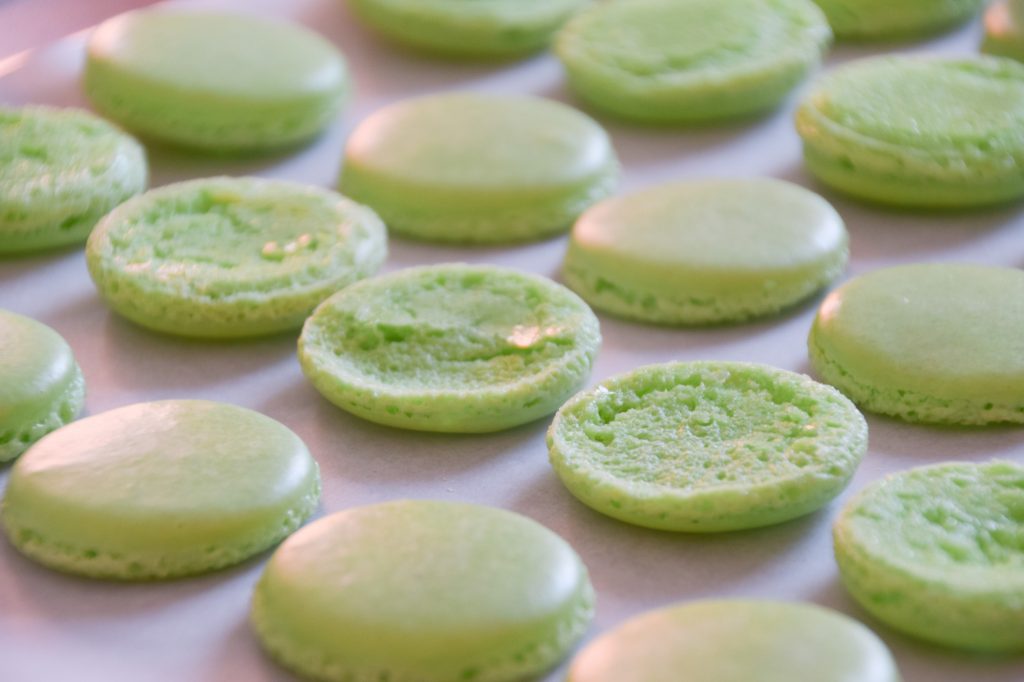
| Unfilled shells | Usually a reliable option | Protect from crushing and moisture |
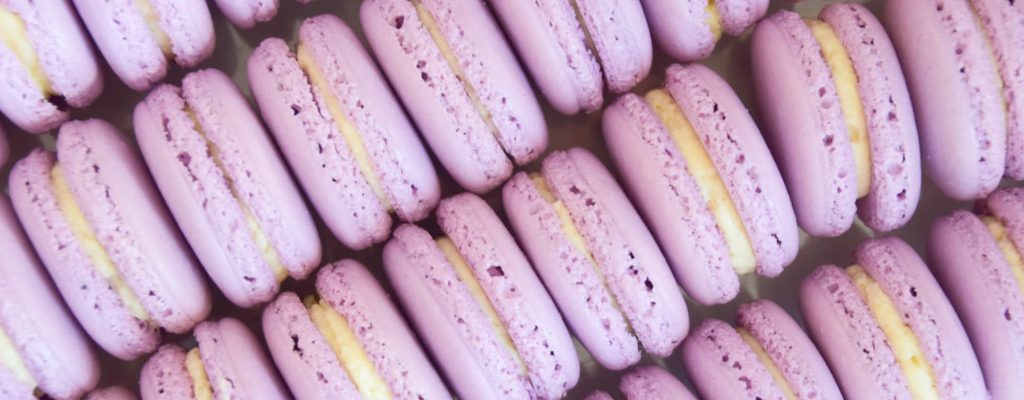
| Filled macarons | Often successful | The filling and decoration must tolerate freezing |
| Buttercream | Many recipes freeze well | Use the recipe’s storage guidance; re-mix only if needed |
| Chocolate ganache | Often freezes acceptably | Texture depends on the chocolate-to-liquid formula |
| Fruit curd | Variable | Some recipes separate or become watery; test first |
| Salted caramel | Often possible | Consistency varies by formula; follow the tested recipe |
Freezing does not improve an unstable or unsafe filling. Start with a properly made product and the storage instructions for that recipe. For everyday refrigerator storage, use my macaron storage guide.
Food-safety basics before freezing
FDA storage guidance recommends a refrigerator at or below 4°C (40°F) and a freezer at −18°C (0°F). Freezing pauses microbial growth but does not kill most bacteria, so it is not a rescue step for food that has already been held unsafely.
- Freeze perishable shells, fillings or assembled macarons promptly; do not leave a dairy- or egg-based filling on the counter for hours first.
- Use clean utensils and containers. Cool a cooked filling according to its recipe before closing it into a large deep container.
- Label each package with the item, filling, date frozen and any allergy information you need.
- Keep raw foods separate from ready-to-eat macarons in the freezer.
- If a commercial ingredient or product has storage instructions, follow those directions.
How to freeze unfilled macaron shells
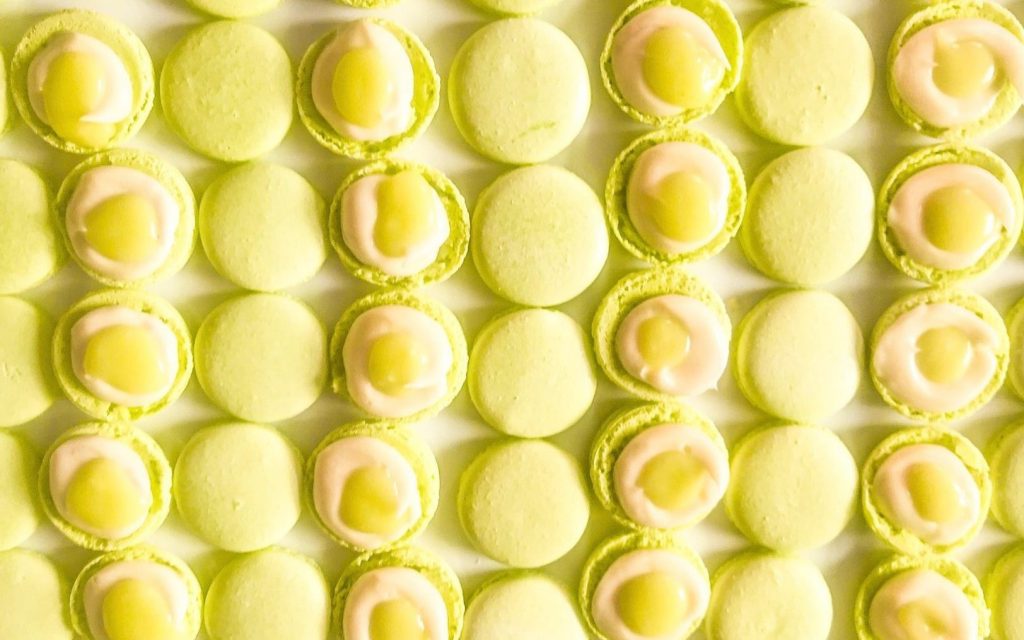
- Cool baked shells completely. Pairing shells by size before freezing can make filling day faster.
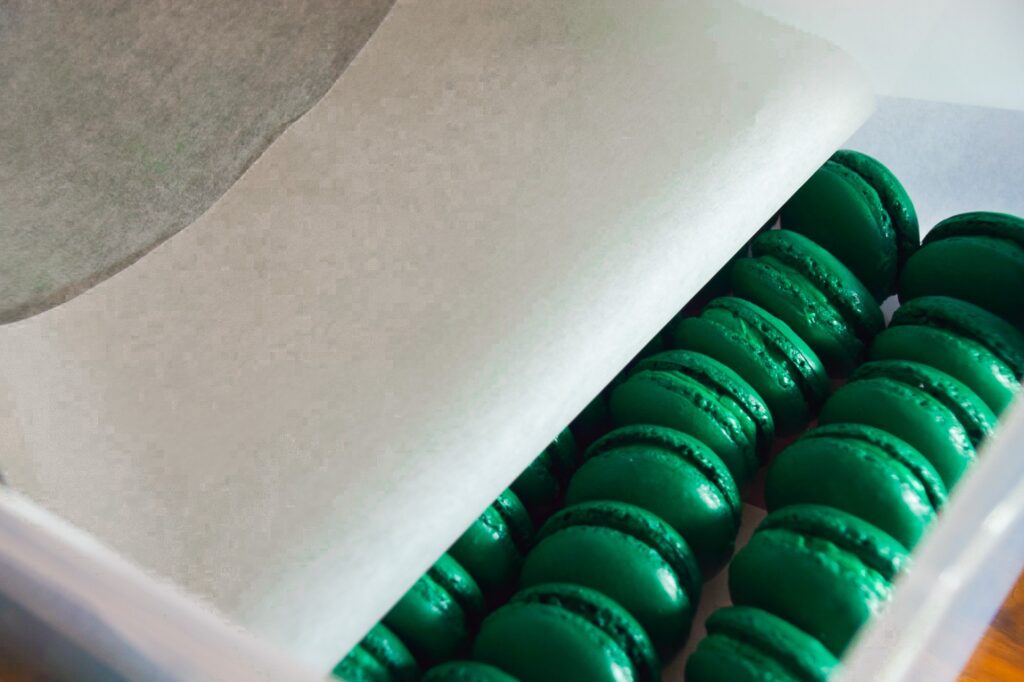
- Arrange them in a rigid freezer-safe container. Use parchment between layers if the surfaces could catch, but avoid heavy stacks that crush the feet.
- Close the container tightly. For extra protection during longer storage, place the closed container in a suitable freezer bag and remove excess air without pressing on the shells.
- Label and freeze the container on a level shelf where it will not be crushed.
- Thaw while the shells are still protected by their packaging so humid room air does not condense directly on them.
How long can macaron shells stay frozen?
There is no universal best-quality date for every home freezer, recipe and package. The longer shells are stored, the more opportunity there is for stale flavor, freezer odor, breakage and moisture damage. Use the tested timeline from your recipe or bakery process. For home baking, check a labeled test batch after a few weeks before promising a long storage period.
Food kept continuously at −18°C (0°F) can remain safe for a long time, but safety and quality are different. Freezer burn and absorbed odors are quality problems. Discard food if its handling history is uncertain or the package has failed.
How to freeze filled macarons
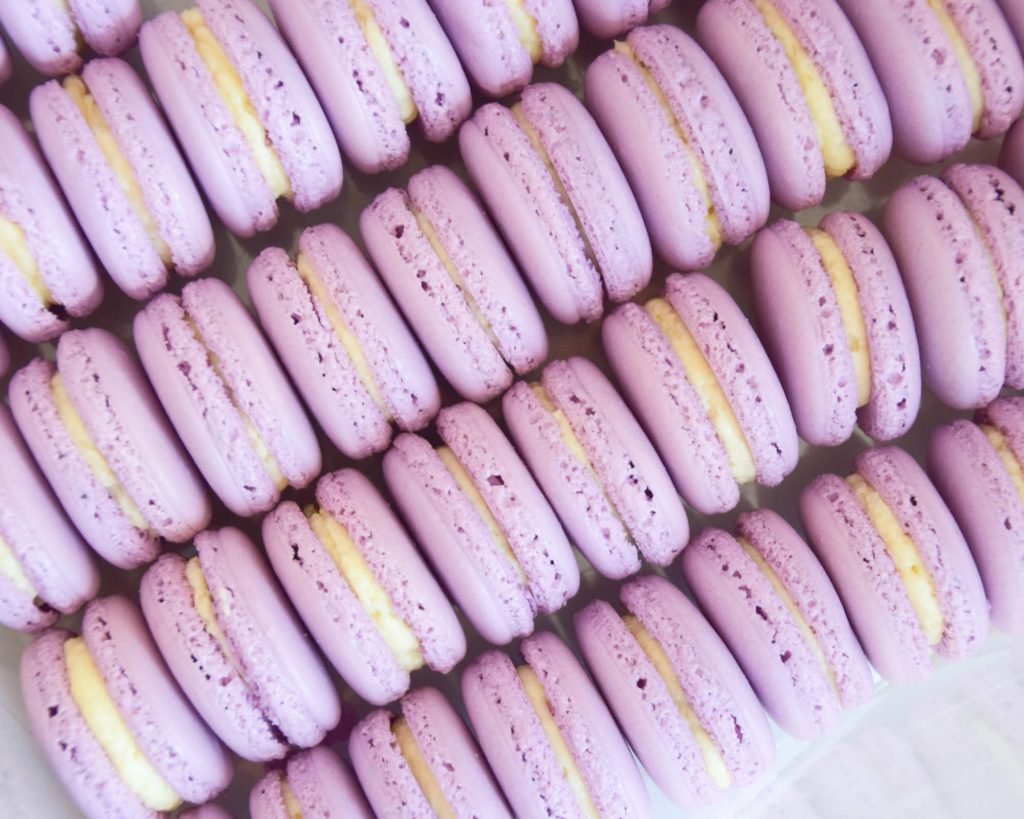
Assemble only with a filling known to freeze well. Fragile garnishes, fresh fruit pieces and high-moisture centers may change texture. If you are not sure, freeze two or three finished macarons, thaw them exactly as planned and evaluate the shell, filling and decoration the next day.
- Let the filling reach the condition specified by its recipe before packing; do not seal visibly warm macarons into a container.
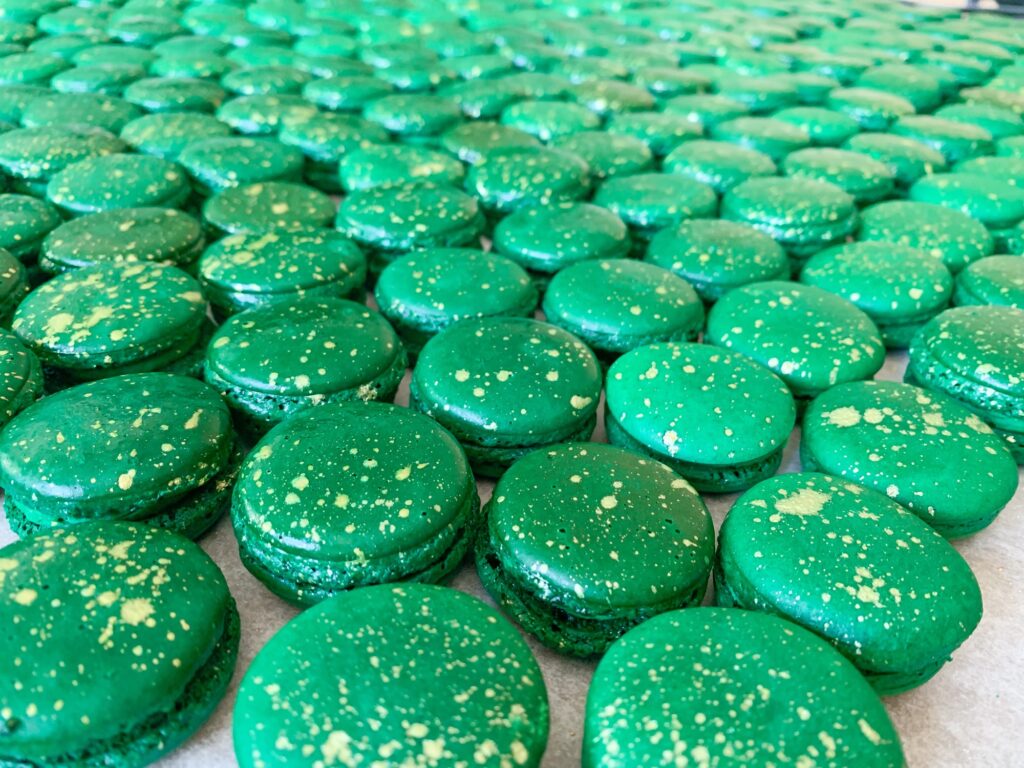
- Arrange macarons in a rigid airtight container with minimal movement. Separate layers if needed.
- Label the flavor and date, then freeze level.
- Thaw the closed container in the refrigerator. Once thawed, follow the filling’s refrigerated storage limit.
- Avoid repeated freeze-thaw cycles; package portions you can use together.
Freezing buttercream
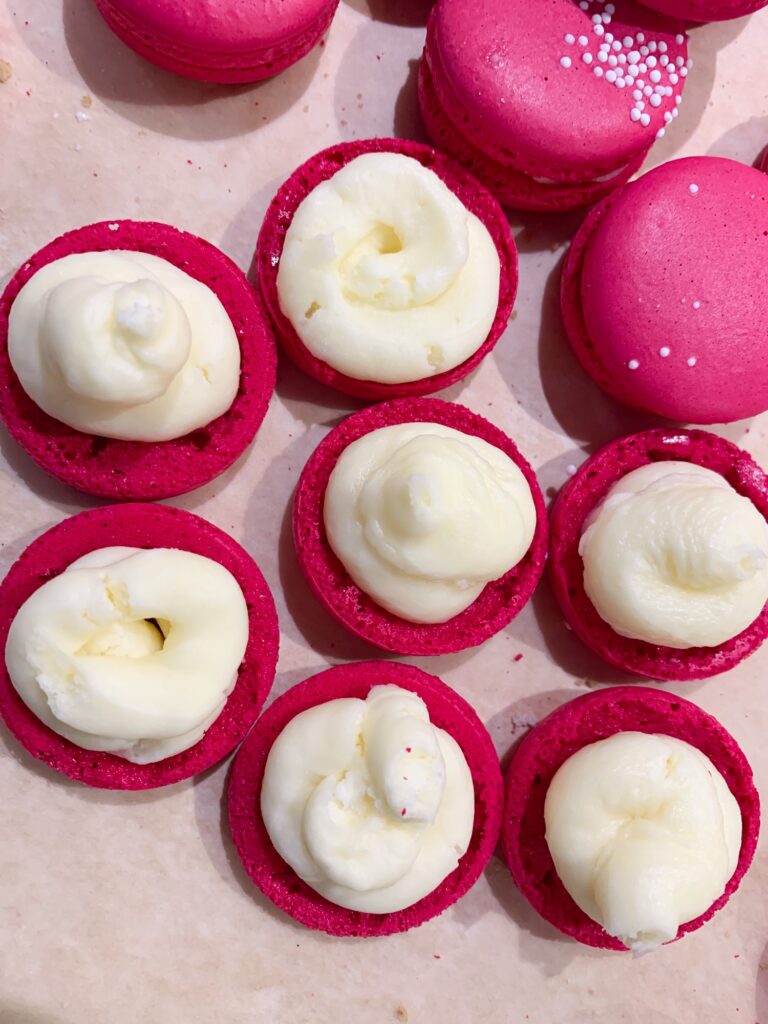
Buttercream is a family of recipes, not one formula. American-style buttercream, meringue buttercreams and cream-cheese frosting do not behave identically. Freeze only when your specific recipe or ingredient guidance permits it, particularly when eggs or dairy are involved.
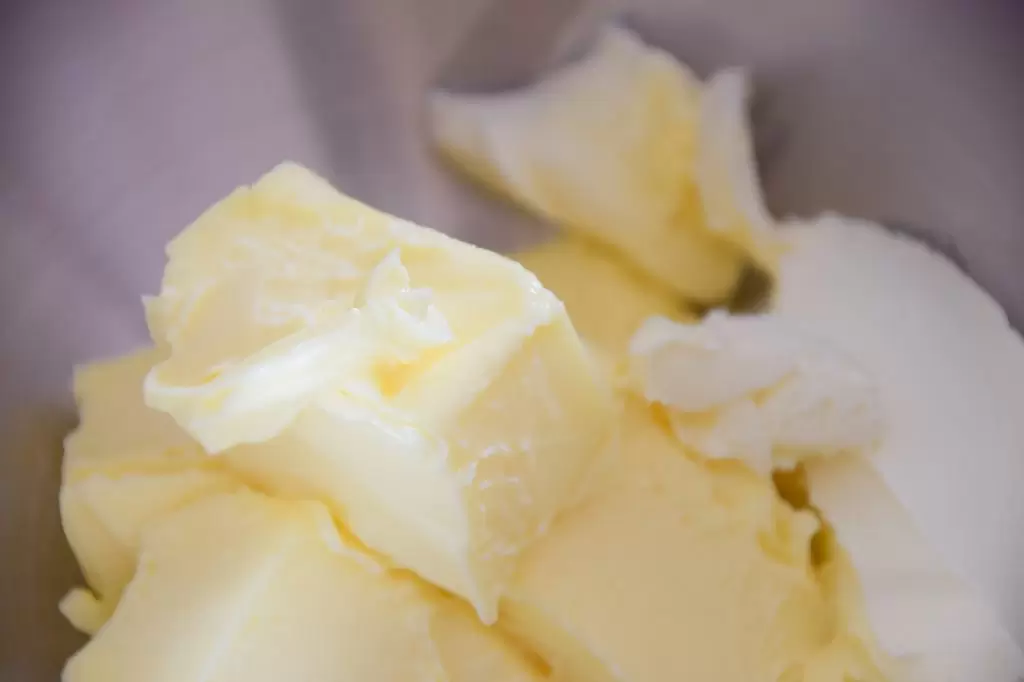
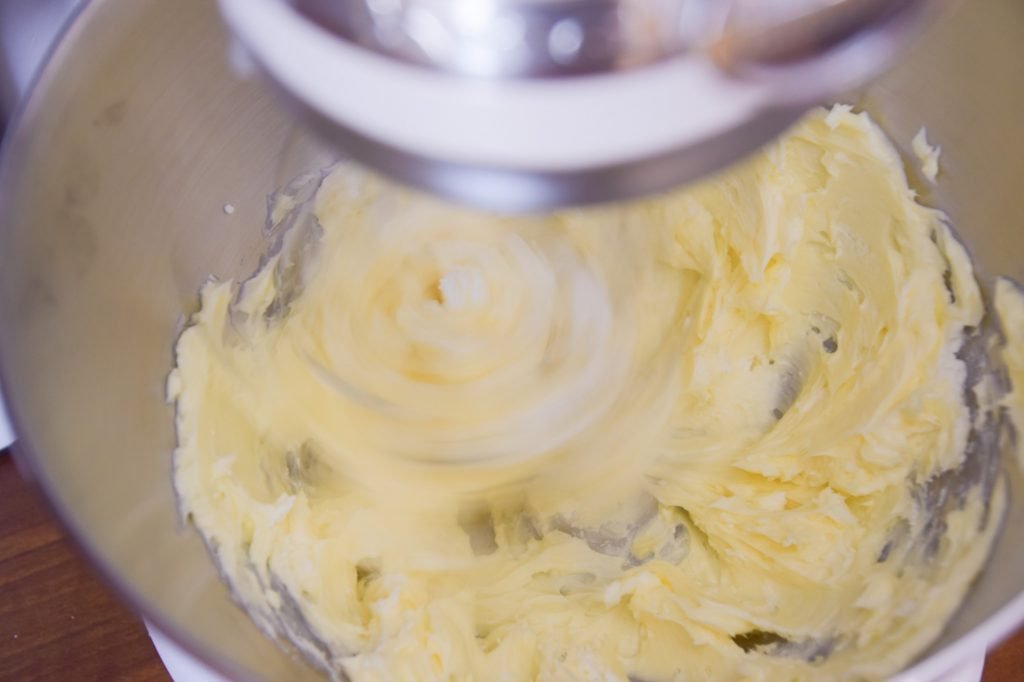
Pack buttercream in a clean freezer-safe container with little unnecessary headspace. Label the flavor and date. Thaw it in the refrigerator, then let it soften only as much as needed for safe handling. Stir or mix gently to restore a smooth consistency; do not assume a fixed whipping time. If it remains separated, watery or unpleasant after correct handling, do not use it for an important batch.
Freezing chocolate ganache
Ganache texture depends on chocolate type, chocolate-to-liquid ratio and added ingredients. A firm filling may thaw differently from a pourable glaze. Freeze a recipe only after it has cooled as directed, in a sealed portion sized for one use.
Thaw ganache in the refrigerator. Rewarm only with the method and temperature appropriate to that recipe, using short, controlled steps and stirring between them. Microwave power varies, so “ten seconds” is a check interval, not a guarantee. Avoid overheating, which can split the emulsion.
Freezing lemon curd and other fruit curds
Curds can be more variable because eggs, butter, acidity and thickeners affect the thawed texture. Do not promise that every curd will freeze for months without change. If the recipe does not include freezer guidance, test a small amount first and look for separation, weeping or a grainy texture after refrigerator thawing.
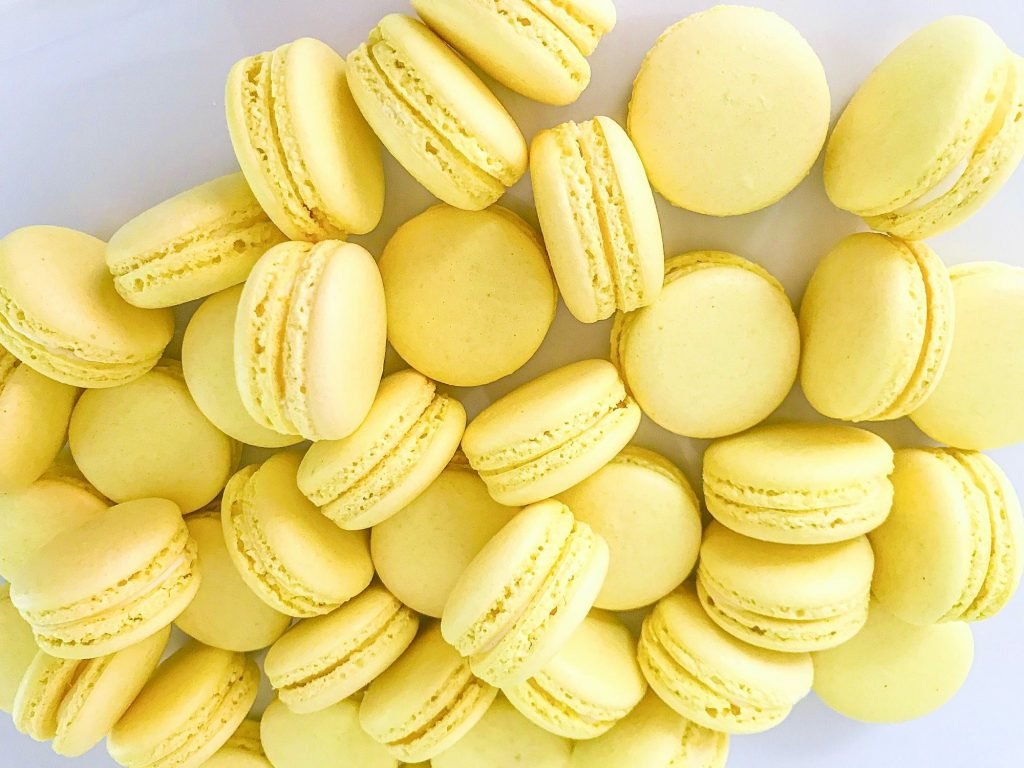
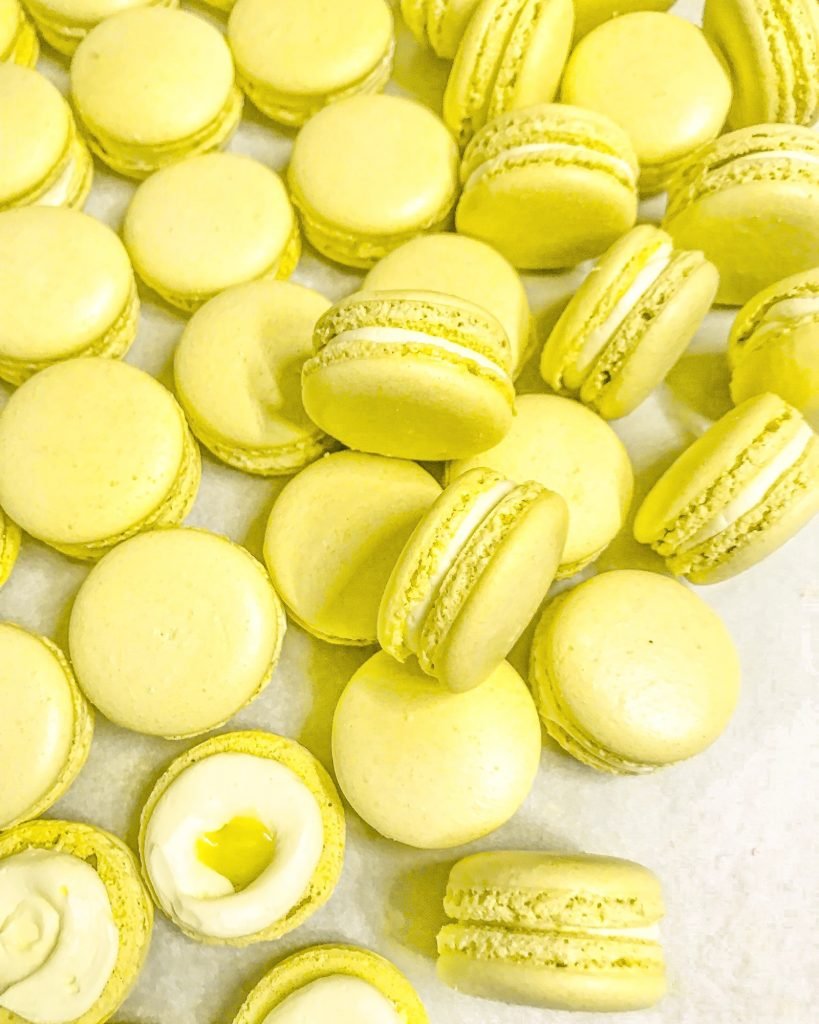
Keep a curd cold while thawing and use it according to its tested refrigerated limit. Do not thaw an egg-based curd on the counter. Freezing does not extend the safe life of curd after it has fully thawed.
Freezing salted caramel
Many caramel sauces can be frozen, but sugar, dairy and fat ratios determine firmness and reheating behavior. Portion the cooled caramel in a freezer-safe container with room for normal expansion, close it, label it and follow the original recipe’s guidance.
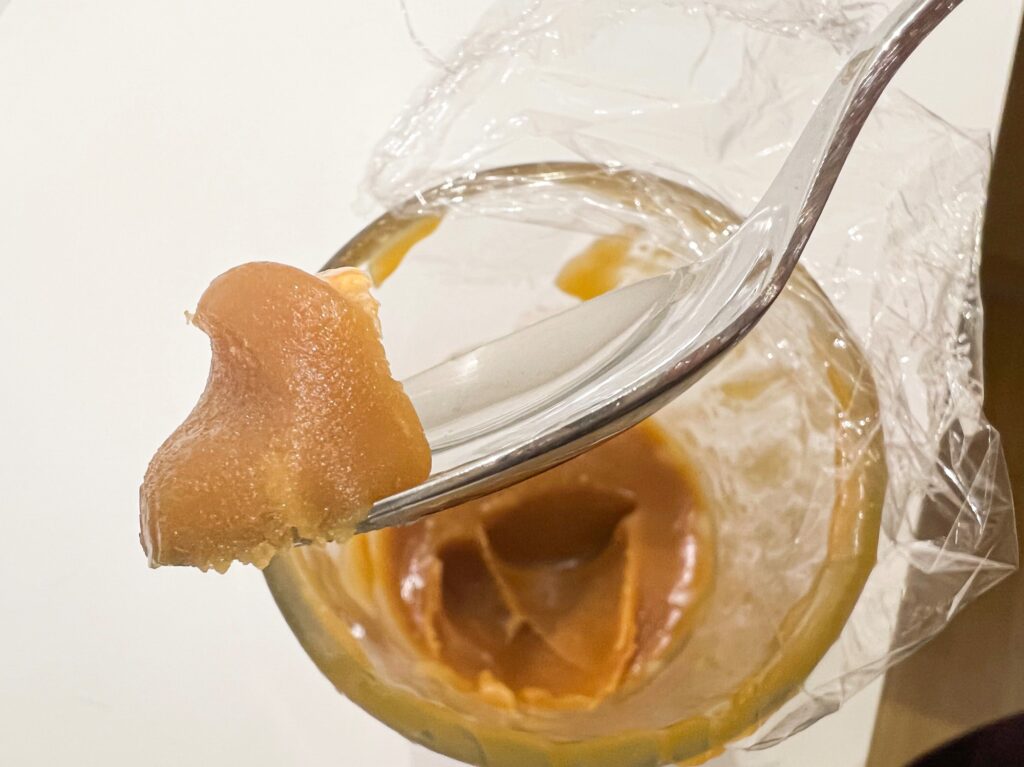
Thaw caramel in the refrigerator. If the tested recipe permits warming, use gentle heat and stir. A sauce suitable for pouring is not automatically the right consistency for a macaron filling, and warming a filling can soften or melt assembled shells.
The best containers for frozen macarons
- Rigid, freezer-safe and airtight enough to protect against moisture and odors.
- Shallow enough that macarons are not buried under excessive weight.
- Large enough to avoid crowding but not so oversized that the contents slide around.
- Easy to label and divide into practical portions.
- Intact, clean and free from strong residual odors.
A cardboard gift box is presentation packaging, not necessarily freezer packaging. Put decorative boxes inside suitable protective packaging only if the materials and dimensions allow it. Do not press plastic wrap directly onto delicate decorations.
How to thaw macarons safely
FDA thawing guidance warns against thawing perishable food on the counter. Move the closed package to the refrigerator and allow enough time for the center to thaw. Keeping it closed during the first part of thawing also helps limit condensation on the shells.
- Thaw only the portion you need.
- Keep the package level and protected from strong refrigerator odors.
- After thawing, inspect for damaged packaging, unexpected liquid, off odors or major texture changes.
- Apply the filling’s normal refrigerator and serving rules; the shell does not make a perishable center shelf-stable.
Common freezing mistakes
- Freezing warm fillings or shells and trapping steam in the container.
- Using a loose bag with no rigid protection around fragile macarons.
- Writing only the date and forgetting which filling is inside.
- Assuming every curd, ganache or buttercream shares one storage limit.
- Thawing perishable filled macarons for hours at room temperature.
- Refreezing portions repeatedly instead of using smaller packages.
Freezing is most useful when it is part of a tested workflow: freeze promptly, protect the product, label it, thaw it cold and check the result before serving.
Belli xx