Parchment Paper vs Silicone Mats for Macarons
Published November 9, 2021 · Updated September 2, 2026
Both parchment paper and silicone baking mats can produce good macarons. Parchment is light, disposable and easy to test; silicone is reusable and often includes size guides. The better choice is the surface that stays flat on your tray and gives repeatable results with your recipe and oven.
Parchment vs silicone at a glance
| Factor | Parchment paper | Silicone mat |
|---|---|---|
| Cost | Lower initial cost; replaced over time | Higher initial cost; reusable if cared for |
| Shape guides | Use printed sheets or draw on the reverse | Many macaron mats have printed or raised circles |
| Heat response | Thin liner with little added mass | Thicker mat may change bake time or browning |
| Release | Good when shells are fully baked and cooled | Good when clean, compatible and shells are fully baked |
| Cleanup | Usually discard when worn or soiled | Wash, rinse, dry and store correctly |
| Best first step | Easy for comparing a new tray or recipe | Useful when a tested mat fits the pan and oven |
How to choose for your kitchen
Run a controlled comparison rather than changing the liner, oven temperature, piping size and recipe at once. Use the same batter, similar trays and equal shell sizes. Record whether the bottoms release, whether the centers are baked, how much the batter spreads and whether browning differs.
My macaron troubleshooting guide can help separate liner problems from batter and oven problems. If both surfaces fail in the same way, review macaronage and actual oven temperature before buying another mat.
Using parchment paper for macarons
Parchment is not the same as wax paper, freezer paper or ordinary writing paper. Reynolds’ paper guide describes its parchment as silicone-coated, nonstick and rated to 218°C (425°F). That limit belongs to that product; read the box for the paper you use.
- Cut the sheet to fit inside the tray so it does not touch oven walls or heating elements.
- Flatten curls before piping. A tiny smear of batter under the corners can help hold the sheet to the tray; keep it away from the piped shells.
- Place a printed template under the parchment while piping, then remove the template before baking.
- Let baked shells cool as the recipe directs before testing release.
- Replace paper that is scorched, greasy, brittle, torn or no longer lying flat.
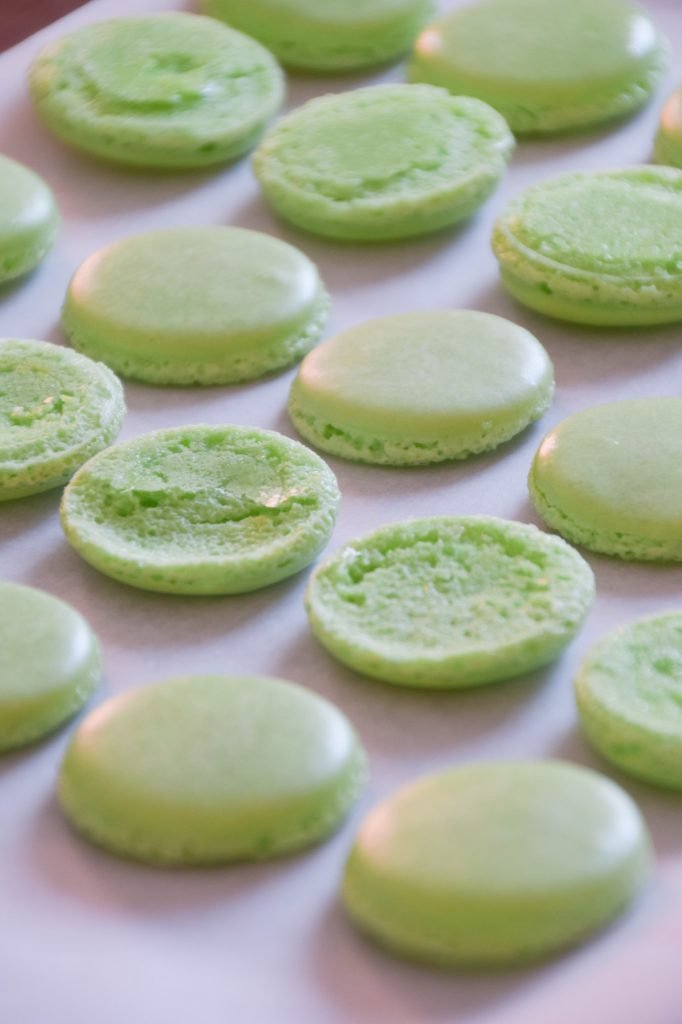
King Arthur Baking’s French macaron recipe uses parchment, removes the template before baking and cools shells before lifting them. It also notes that sticking shells can be briefly chilled before removal. Treat that as advice for that recipe, not proof that every sticky batch needs freezing.
Using silicone baking mats for macarons
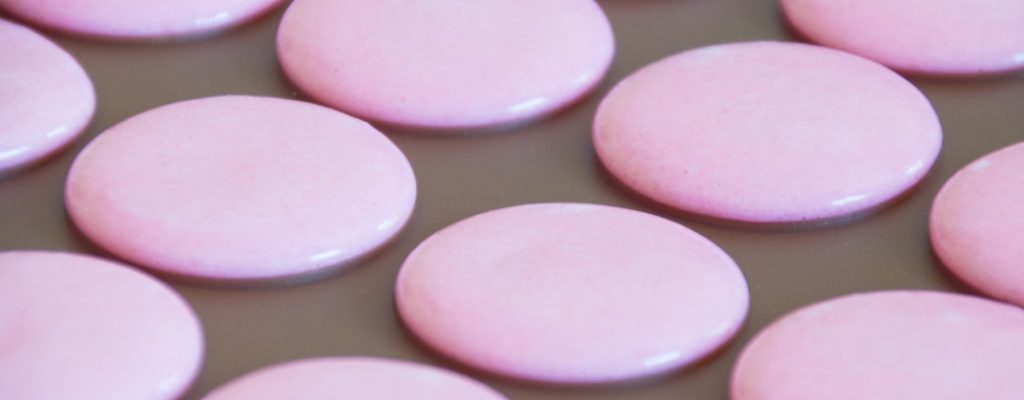
Choose a food-contact baking mat that fits the tray without bending or climbing the sides. Follow its exact temperature, cleaning and storage limits. A mat with circles can help with consistent diameter, but it cannot correct uneven piping pressure or overmixed batter.
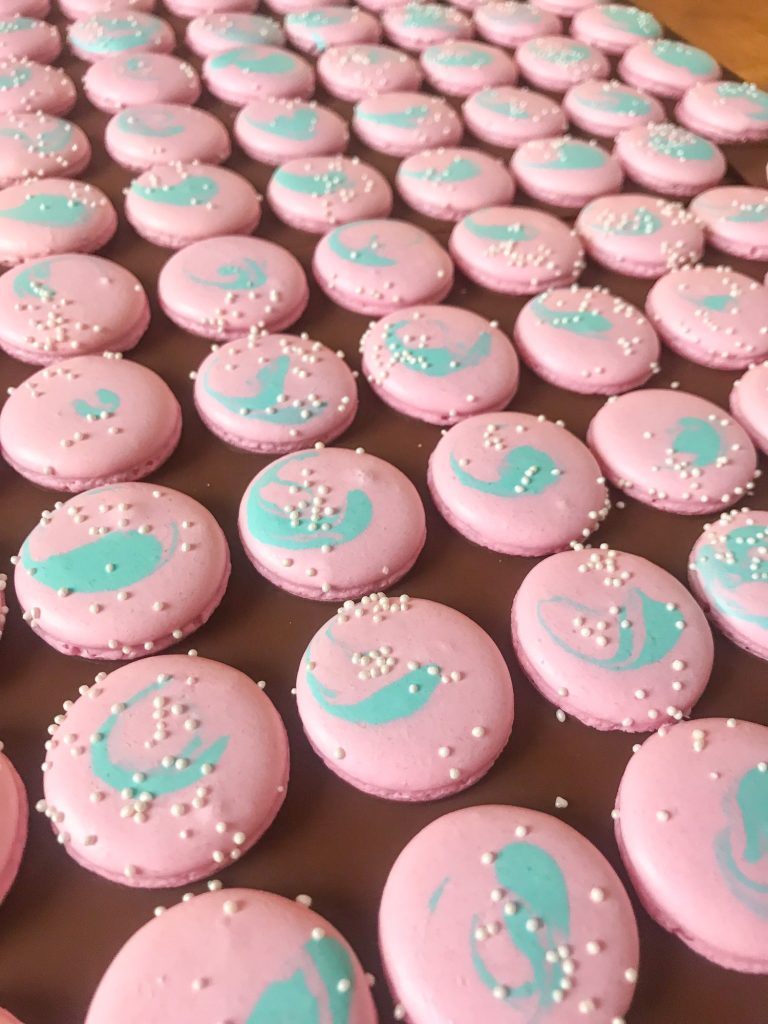
- Place the mat on a flat, compatible tray. Do not cut a fiberglass-reinforced mat to fit.
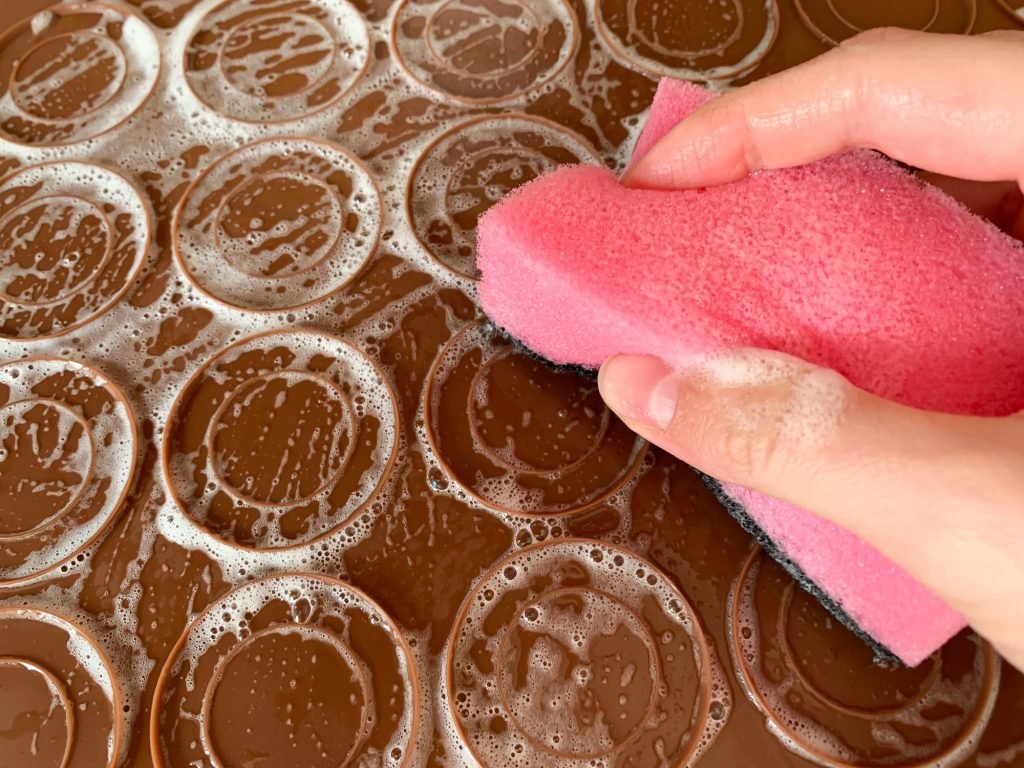
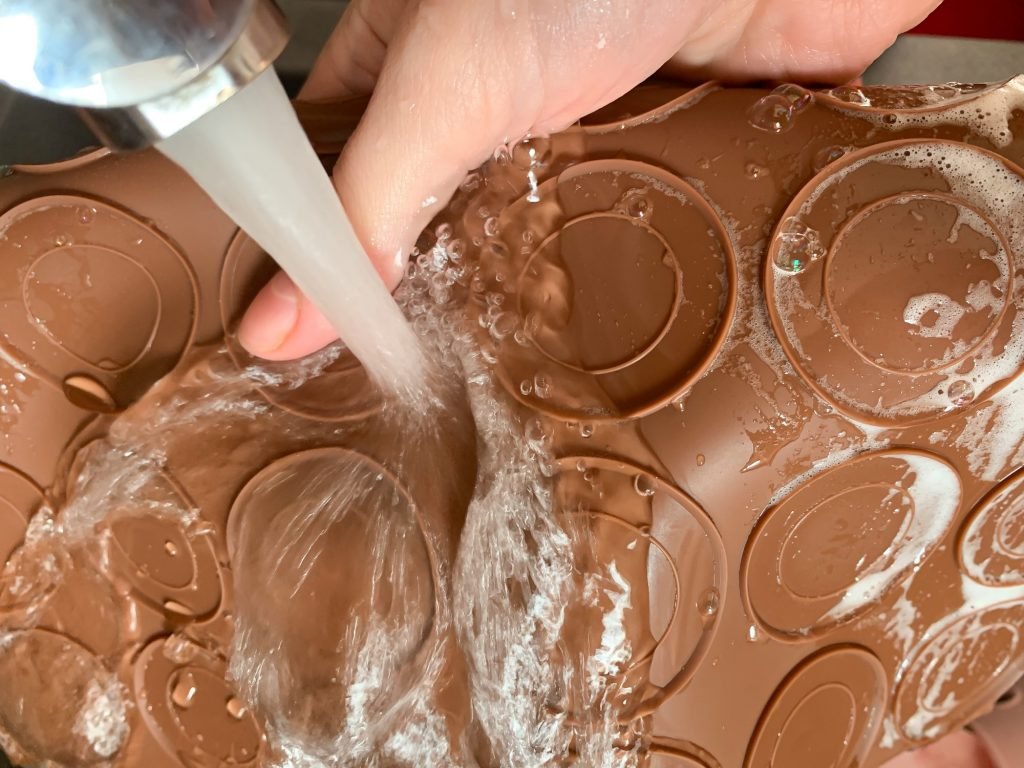
- Clean and dry both sides; trapped water or grease can make the mat shift.
- Pipe inside the guides without filling each circle to the edge unless your tested batter requires it.
- Expect that a thick mat may need a different bake time from parchment. Adjust one variable in small recorded steps.
- Cool shells before removal and peel the flexible mat away gently rather than forcing the shell upward.
For care instructions, see how to clean silicone baking mats safely.
Why macarons stick to either surface
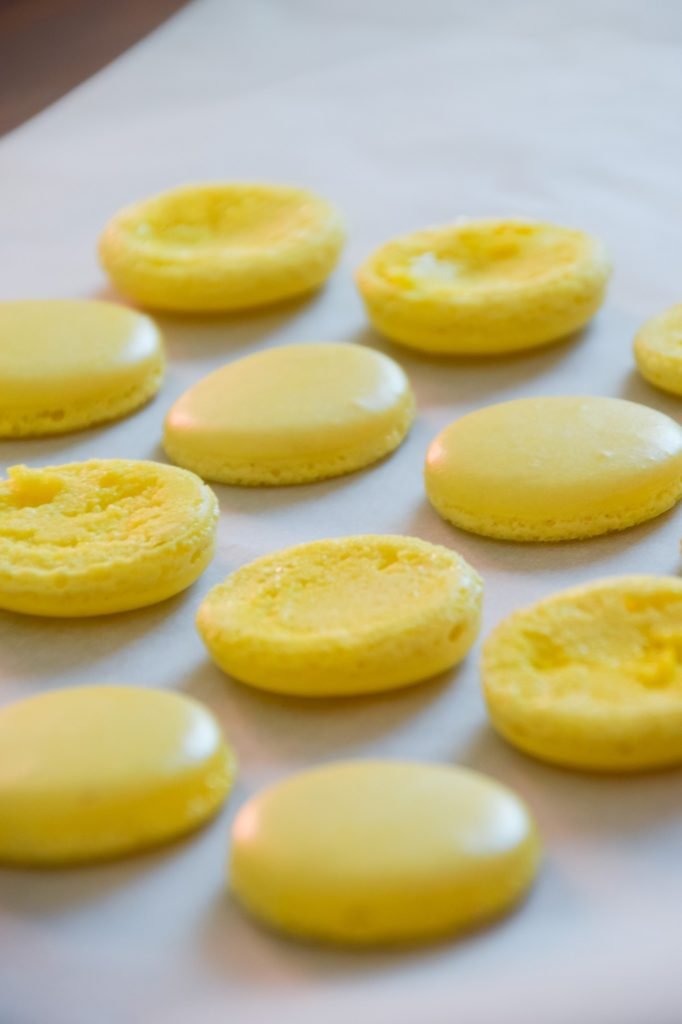
The most common practical checks are doneness and cooling. A shell whose base is still wet can leave part of its center behind. A hot shell is also more fragile. Bake and cool according to the tested recipe before deciding that the liner is defective.
Other possibilities include a damp or greasy surface, a warped tray, a formula with excess liquid, or a major temperature mismatch. Do not “fix” oily batter by greasing the liner; added fat works against macaron structure and release.
Does silicone make macarons spread more?
A mat does not automatically make every batter spread. Spread is strongly affected by batter consistency and piping. However, switching to a smoother or thicker surface can change how a particular batter settles and bakes. Compare one tray side by side, and stop folding based on batter cues rather than the liner you hope to use.
Which option is cheaper?
Parchment costs less per purchase but is consumed. A silicone mat costs more upfront but can be reused until wear or damage makes replacement necessary. The lower-cost choice depends on how often you bake, how carefully the mat is maintained, and whether it actually works with your trays and oven.
Do not count a mat as a saving if you need several rounds of failed ingredients to adapt to it. Start with one suitable liner and test before buying a matching set.
Which is easier for beginners?
Parchment is often the simplest low-commitment starting point, especially when a reliable recipe was developed on parchment. A flat silicone mat with clear guides can be easier for learning consistent size. Neither surface removes the need to weigh ingredients, make stable meringue, fold correctly and control the oven.
Can you make equal-size macarons without a printed mat?
Yes. Slide a paper template under translucent parchment, pipe the tray, then remove the template before baking. Keep the printed ink or toner off the food-contact side. You can also trace circles on the reverse of parchment with a food-safe setup, but a removable template is easier to reuse.
Can I use aluminum foil, wax paper or coffee filters?
I recommend using parchment intended for baking or a compatible silicone baking mat. Foil conducts and reflects heat differently and is not naturally nonstick; it is a poor default for delicate macaron bottoms. Wax paper and freezer paper are not substitutes for exposed oven baking.
Reynolds’ parchment guidance specifically warns that wax paper should not replace parchment for cookies exposed to oven heat. Coffee filters are made for filtering, not as tested baking-pan liners. Do not improvise with an unlabeled paper product near an oven element or flame.
My recommendation
Use the liner specified by the recipe while you learn it. If you want to switch, divide one batch between comparable trays and record the difference. Parchment is an excellent baseline; a well-made silicone mat is a useful reusable option once you know it works in your oven.
Belli xx