
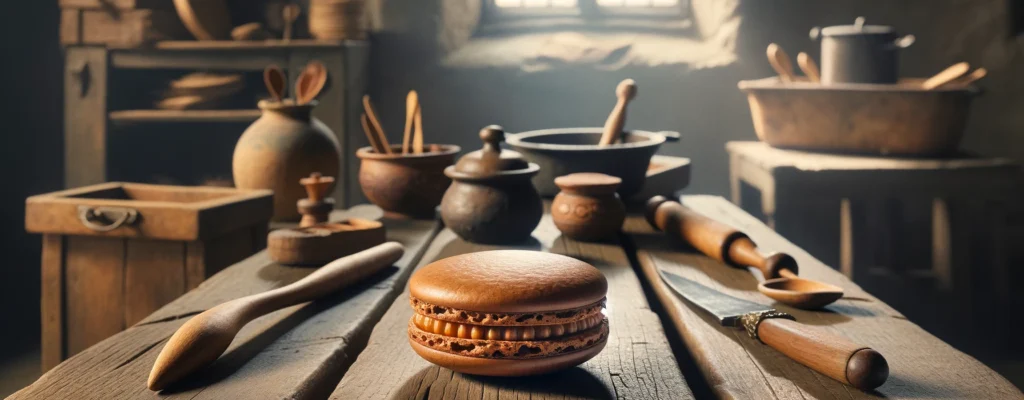
History of Macarons: Facts, Traditions, and Myths
Published November 16, 2021 · Updated September 3, 2026
The history of macarons is not a single, settled invention story. The almond biscuit has several European and regional traditions, while the familiar Parisian macaron—two smooth shells joined with a filling—developed much later. The most responsible history separates documented dates from stories repeated without contemporary evidence.
Macaron history at a glance
| Date or period | What the evidence supports |
|---|---|
| 1552 | The French word macaron is documented as a small round almond pastry in Rabelais. |
| 17th–18th centuries | Distinct regional almond-biscuit traditions developed in several French towns. |
| 1793 | Nancy tradition associates former Benedictine nuns with selling the local single-biscuit macaron after the French Revolution. |
| 19th century onward | Filled versions appeared in Paris; the precise first maker remains debated. |
| Mid-20th century | Ladurée credits Pierre Desfontaines with perfecting and popularizing its two-shell filled macaron. |
| Today | Both traditional single biscuits and modern filled macarons remain part of French pastry culture. |
What is a macaron?
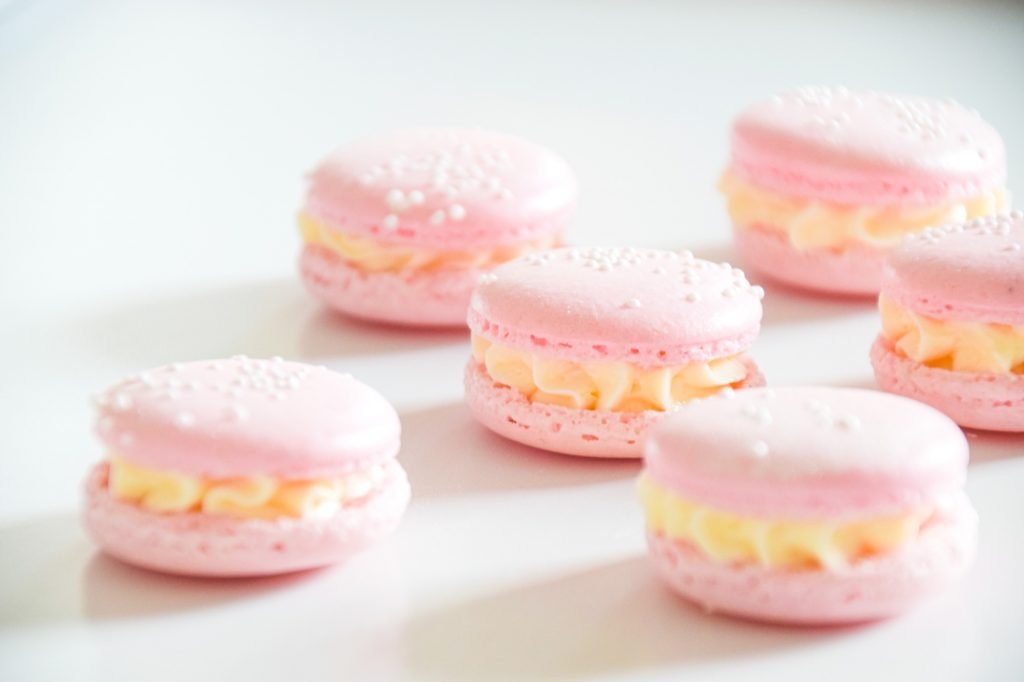
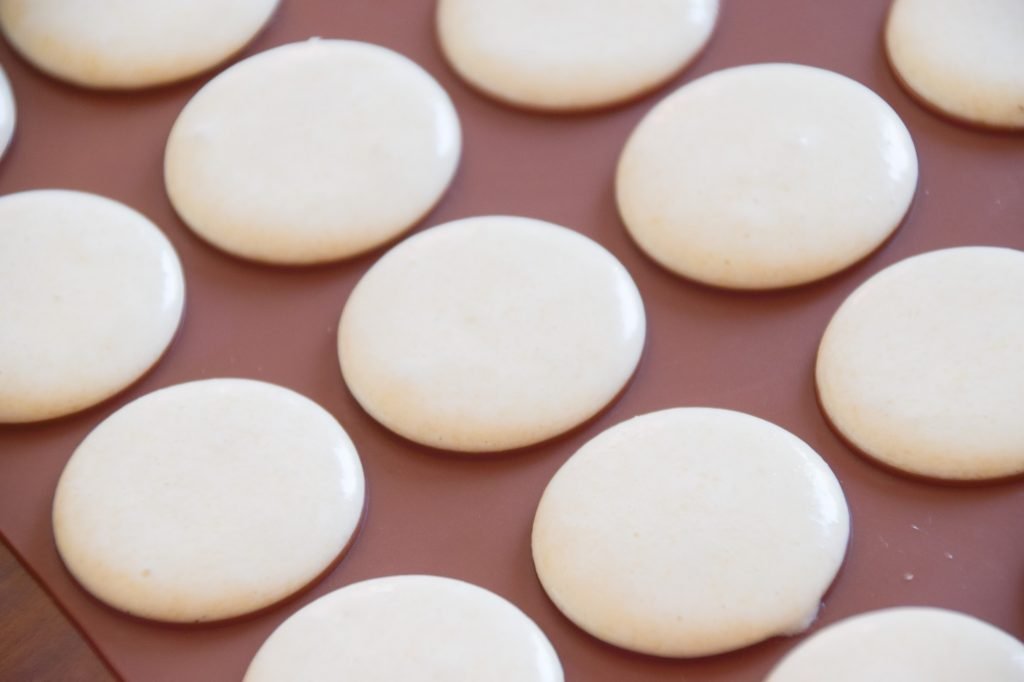
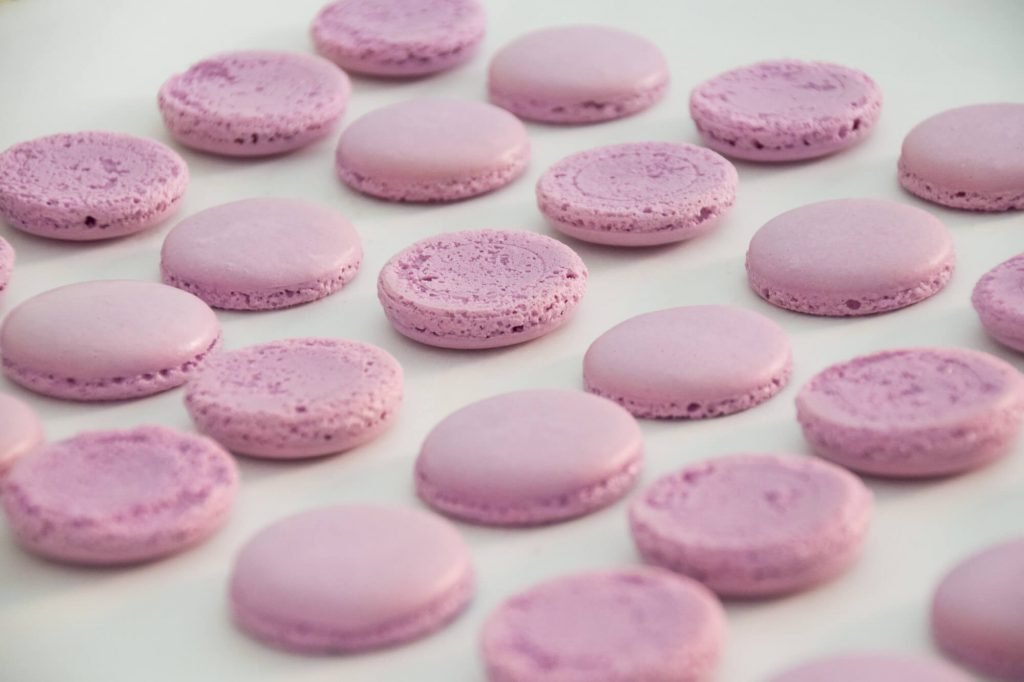
In current English baking usage, a French macaron is usually an almond-based meringue confection made as two shells with a filling such as ganache, buttercream, caramel or curd. The shells commonly use ground almonds or almond flour, sugar and egg white. Recipes may use French, Italian or Swiss meringue techniques.
That modern description should not be projected onto every historical macaron. Many regional versions are a single almond biscuit with a rougher surface and no filling. A coconut macaroon is a different confection, despite the related English name.
The earliest clear French reference
The Centre National de Ressources Textuelles et Lexicales dates the French pastry sense of macaron to 1552 in Rabelais and defines the item as a small round almond pastry. It also traces the word to southern Italian maccarone. This is useful linguistic evidence, but a word history does not prove that one named person invented the pastry.
Did Catherine de’ Medici bring macarons to France?
The often-repeated story says Catherine de’ Medici brought Italian pastry cooks—and macarons—to France for her 1533 marriage to the future Henry II. It is an appealing origin tale, but no surviving contemporary record establishes that event as the macaron’s introduction.
Ladurée’s own history now describes the Catherine story as undocumented and notes that almond confections already circulated in Europe. It is better presented as folklore than as a proven fact.
Regional French macaron traditions
Before the filled Parisian style became internationally dominant, towns across France developed their own almond biscuits. Their recipes, textures and local stories are not identical, so “the macaron” did not follow one neat line from a single birthplace.
Nancy and the Sœurs Macarons
The best-known Nancy tradition concerns Marguerite Gaillot and Marie Morlot, two former Benedictine nuns said to have sold almond macarons after religious congregations were suppressed during the French Revolution. The Maison des Sœurs Macarons dates its business to 1793 and continues to make the local unfixed, single-biscuit style. This is a regional tradition, not the origin of the modern sandwich macaron.
Other local styles
Macarons are also associated with places including Saint-Émilion, Amiens, Montmorillon, Cormery and Saint-Jean-de-Luz. Some origin stories involve convents or royal visits, but the surviving evidence varies. These local biscuits help explain why old sources may describe a macaron that looks unlike today’s smooth, filled version.
How the filled Parisian macaron emerged
Sandwiching two almond shells around a filling was a later development. Ladurée reports that filled macarons appeared in Paris by the 1830s and credits Pierre Desfontaines, a relative of the company’s founder, with perfecting its signature double-shell version in the mid-20th century. Because commercial histories can emphasize house traditions, it is safest to say Ladurée played a major role in popularizing the format—not that one uncontested person invented every filled macaron.
Why macarons became a global pastry icon
- The small shell provides a repeatable base for changing flavors, fillings and colors.
- Their compact size works well for assortments, gifting and special events.
- Parisian pastry houses connected the filled macaron with luxury presentation and seasonal collections.
- International bakeries and online instruction made the technique accessible far beyond France.
- The technical challenge—meringue, macaronage, piping and baking—created an active learning community.
If you want to make the modern version, see the Italian-method macaron tutorial and the guide to macaronage.
History claims to treat cautiously
| Claim | Better interpretation |
|---|---|
| “Macarons were invented in Italy in the 1500s.” | Italian linguistic and confectionery connections are plausible, but a single inventor and date are not documented. |
| “Catherine de’ Medici introduced macarons in 1533.” | A famous story, not a verified contemporary record. |
| “Napoleon made macarons popular after Egypt.” | This article found no reliable evidence for that specific claim, so it should not be repeated as fact. |
| “Ladurée invented the macaron.” | Ladurée is strongly associated with the modern filled style and its global popularity; earlier macarons and filled forms existed. |
| “All macarons are sandwich cookies.” | Regional French macarons can be single, unfilled almond biscuits. |
Sources and further reading
- CNRTL: etymology and early French attestation of “macaron”.
- Maison Ladurée: history of the macaron.
- Maison des Sœurs Macarons: the Nancy tradition.
The clearest conclusion is that the macaron has a layered history: an old family of almond biscuits, several regional French traditions, and a much newer filled Parisian form.
Belli xx