
How to Clean Silicone Baking Mats Safely
Published October 21, 2021 · Updated August 31, 2026
To clean a silicone baking mat, start with warm water, a mild dishwashing liquid and a soft, non-abrasive sponge. Rinse both sides thoroughly, let the mat dry fully and follow the instructions for your exact product. Lemon juice and improvised alcohol mixtures are not a validated way to sterilize a baking mat.
What you need before you start
- A clean sink or basin large enough to support the mat.
- Warm water comfortable enough to handle safely.
- Mild dishwashing liquid used at its labeled dilution.
- A clean, soft sponge without an abrasive scouring surface.
- A clean drying area with room for air to reach both sides.
Silpat’s manufacturer guidance recommends a soft sponge and soapy water. Keep the care sheet for your mat: not every silicone product has the same cleaning or heat limits.
Step-by-step: wash, rinse and dry
- Let the mat cool after baking. Lift away loose crumbs without scraping or cutting the surface.
- Lay it in a clean basin and wet both sides. Add the recommended amount of dishwashing liquid.
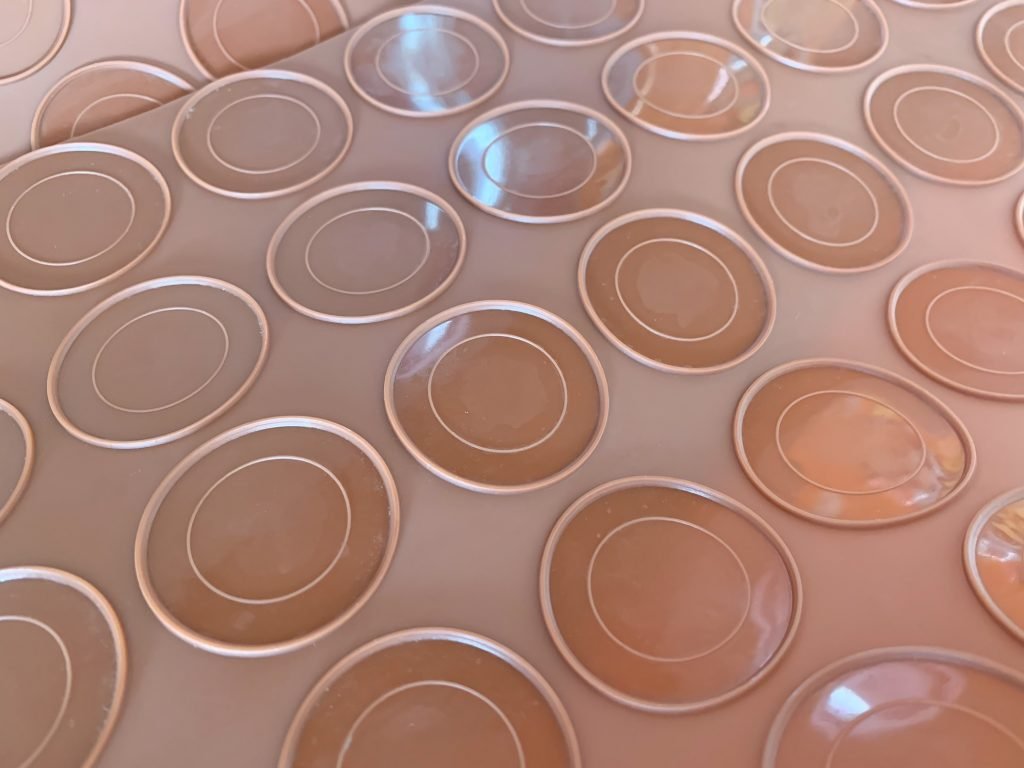
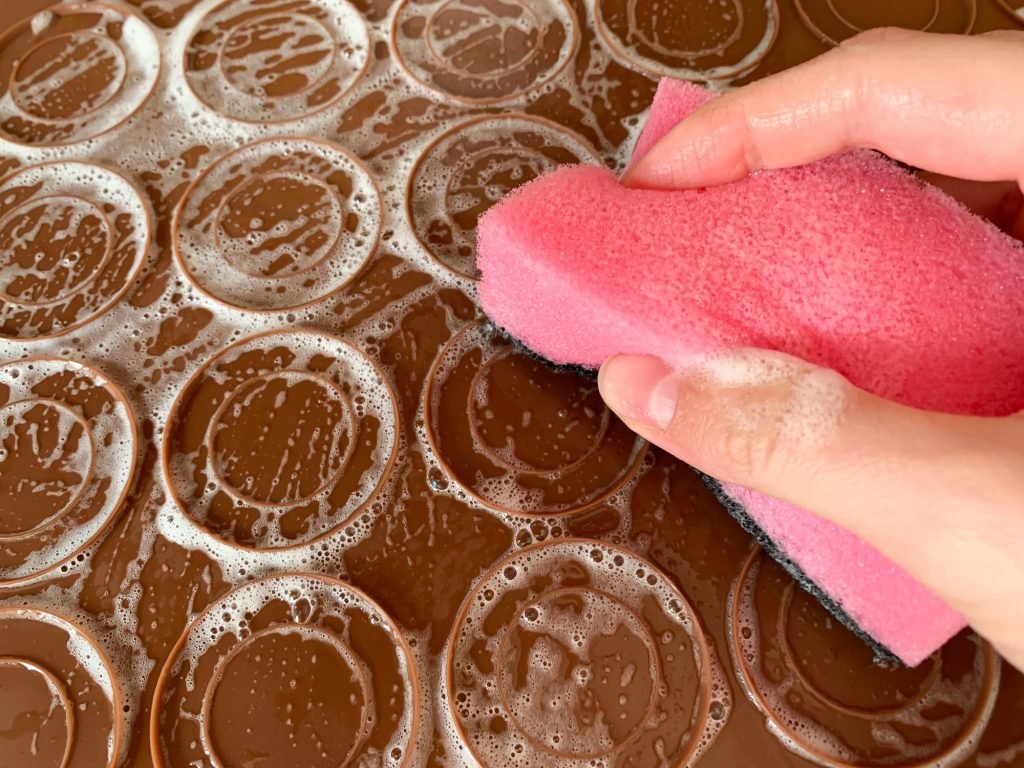
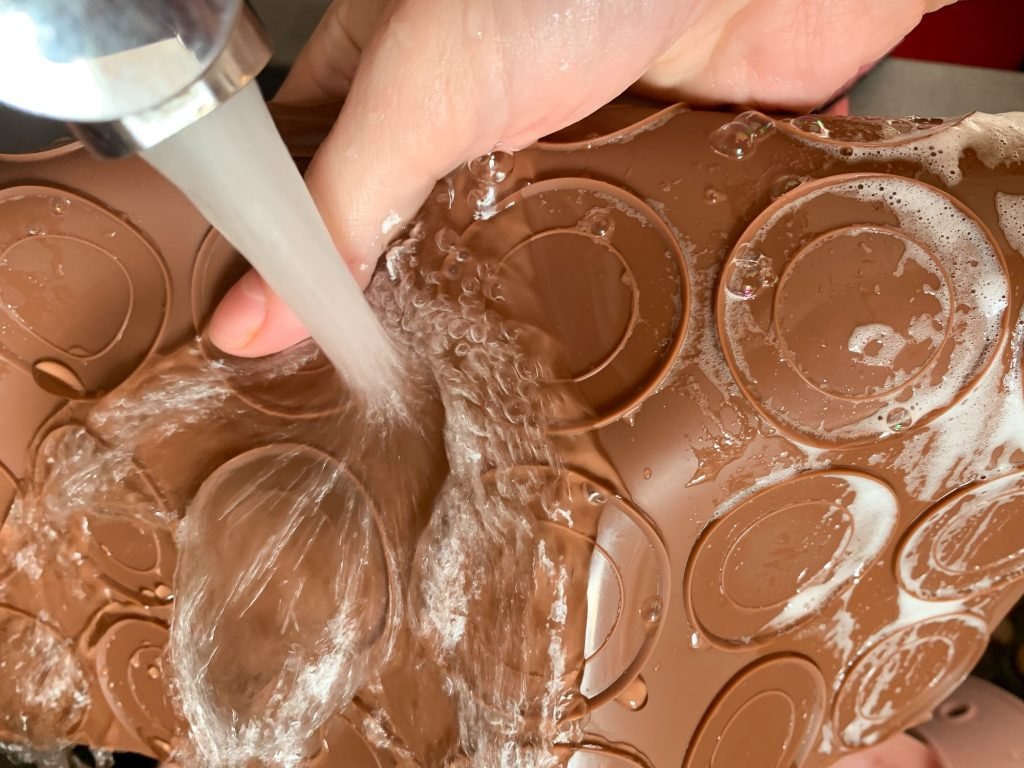
- Wash gently with the soft sponge, including the edges and any raised macaron guides. Flip the mat and wash the back.
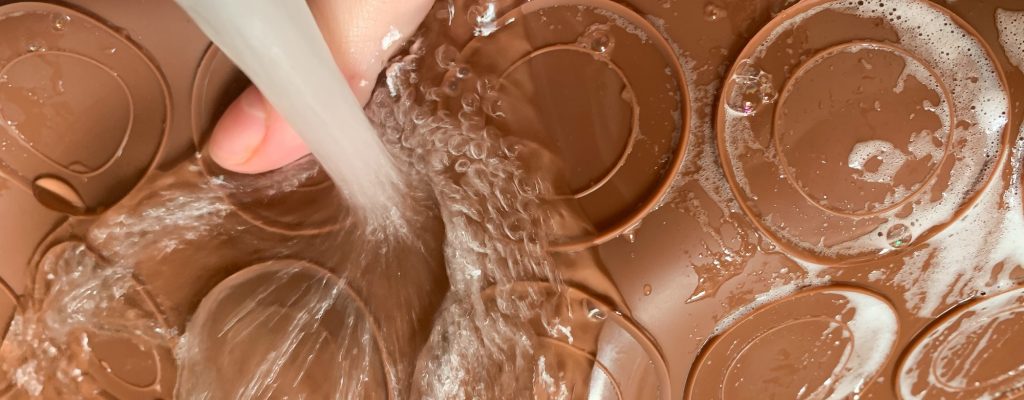
- Rinse thoroughly under clean water until no soap remains. Look closely around ridges where suds can collect.
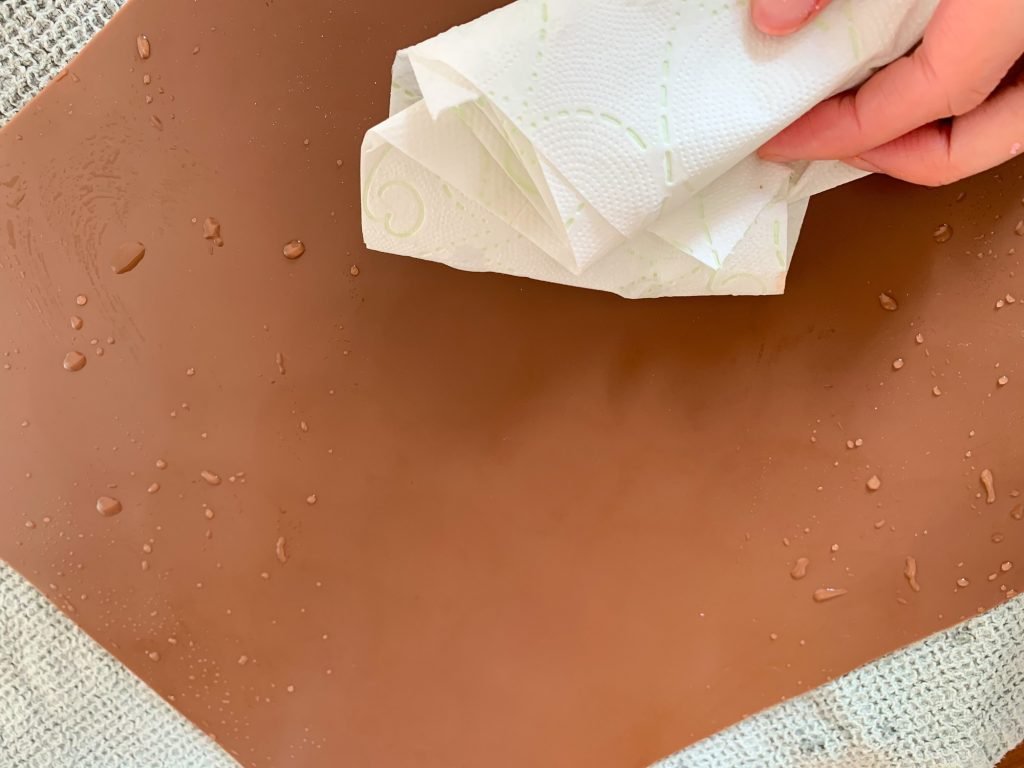
- Shake off excess water and let both sides air-dry. If you blot water, use a clean towel or paper towel and avoid leaving lint.
- Inspect the mat before storing it dry and flat, or as its manufacturer directs. Do not fold it tightly.
If the mat still feels greasy
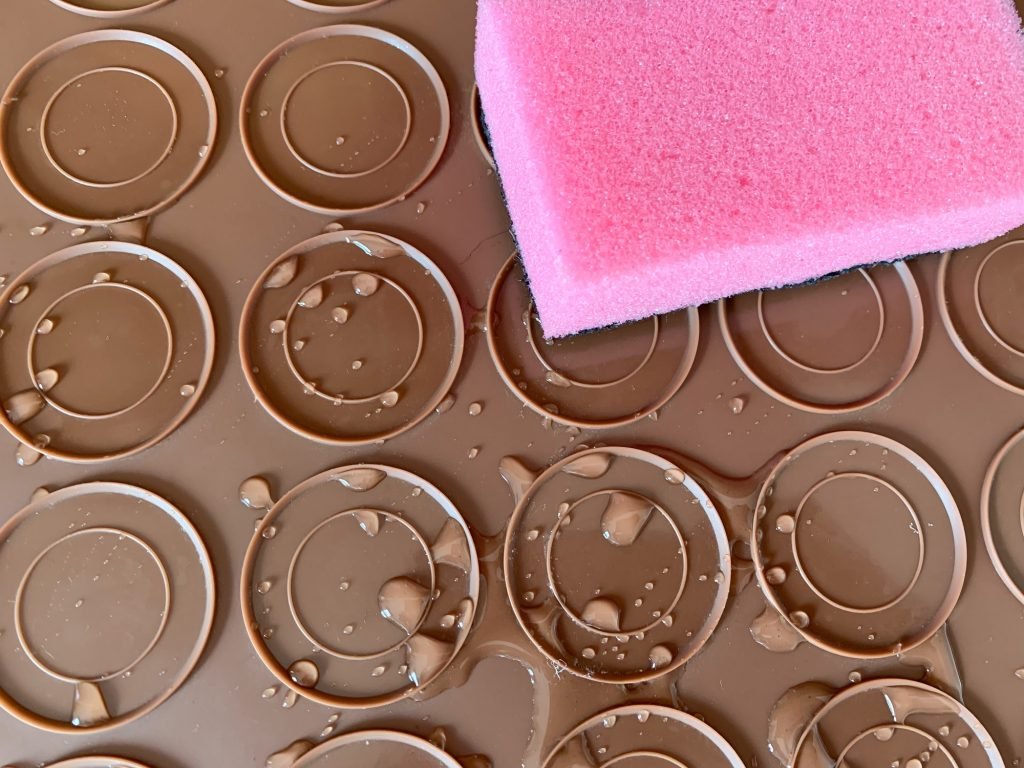
Wash it again with fresh soapy water and a clean sponge rather than rubbing dirty wash water around. A short soak can help soften stuck food if your manufacturer permits soaking; it does not replace washing and rinsing. Avoid boiling water that could scald your hands.
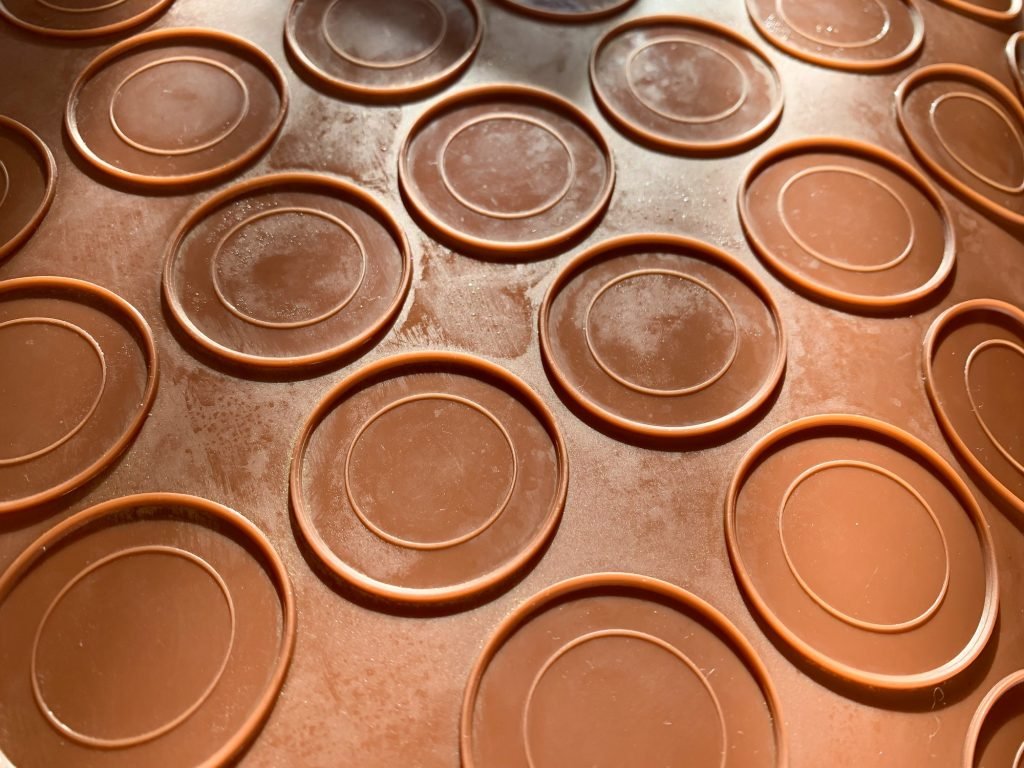
A slight oily feel is not always a sign that the mat is ruined. The Silpat care sheet notes that a slight oily residue and discoloration can occur. Distinguish this from visible food buildup, an unusual smell or a surface that is peeling or breaking down. Do not scour the mat to make it look brand new.
Can silicone baking mats go in the dishwasher?
Some can, but check the exact mat. The Maison Demarle Silpat technical sheet permits machine washing for the products it covers and stresses detergent dosage and effective rinsing. That does not make every brand or older mat dishwasher-safe. If the instructions are missing, handwashing is the sensible starting point while you ask the manufacturer.
When machine washing is permitted, follow the loading and detergent instructions. Keep the mat clear of sharp objects and inspect it afterward for trapped residue. Air-dry any damp areas before putting it away.
Do lemon juice, vinegar or alcohol sanitize a mat?
Cleaning removes soil; sanitizing is a separate process with a suitable product and specified conditions. CDC cleaning guidance explains that dirt should be removed before sanitizing or disinfecting. The old suggestion to mix clear alcohol and water by eye is not a dependable food-contact sanitizing procedure.
For routine home baking, clean after use. If sanitizing is needed, use a product labeled for the food-contact surface and compatible with the mat, following its dilution, contact time and rinsing directions. Do not substitute hand sanitizer or assume a household disinfectant is suitable for bakeware. Never mix cleaning chemicals.
The FDA’s kitchen-cleaning advice also emphasizes clean utensils, surfaces and towels. A dirty sponge or towel can undermine a careful wash. A mat looking clean is not proof that it is sterile.
Which cleaning shortcuts should I avoid?
- Steel wool, abrasive pads and sharp scrapers that can damage the surface.
- Cutting the mat to fit a tray, or cutting food directly on it.
- Oven cleaners, unapproved solvents and concentrated detergents.
- Heating an empty mat at a high temperature to “burn off” residue.
- Assuming lemon juice or a pleasant smell proves that germs are gone.
- Assuming bottle-washing soap is automatically safer or more effective than ordinary suitable dishwashing liquid.
When should I replace a silicone baking mat?
Stop using a mat that is cut, torn, peeling or showing exposed reinforcement. Do not try to repair it with adhesive. For persistent tackiness or odor that remains after proper cleaning, contact the manufacturer; if its condition cannot be resolved, replace it rather than transferring a possible problem to food. Staining alone is different from physical damage.
Temperature limits and storage
Use the temperature range printed on your mat or in its current care instructions. “Silicone” is not one universal rating, and an oven rating does not authorize use on a burner, under a grill or against an exposed heating element. Do not assume microwave or freezer suitability without checking.
For reference, −40°C equals −40°F, and 230°C equals 446°F. Those are conversions, not recommended limits for every mat. Once clean and completely dry, store the mat without creases, heavy objects pressing into it or sharp utensils nearby.
Will a perfectly clean mat prevent failed macarons?
Clean, dry equipment is a good starting point, but a mat cannot correct overmixed batter or unsuitable baking conditions. If shells spread or stick after you have checked the surface, use the macaron troubleshooting guide and review your macaronage technique before changing several things at once.
A consistent, gentle cleaning routine is more useful than a collection of harsh cleaning tricks. Wash, rinse, dry and inspect—and keep the manufacturer’s instructions with your baking notes.
Belli xx