
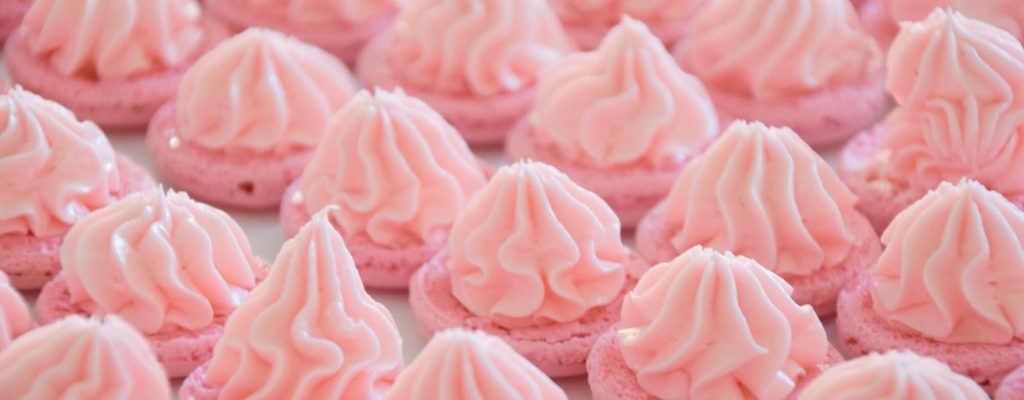
Italian Macarons: Step-by-Step Recipe for Beginners
Published · Updated
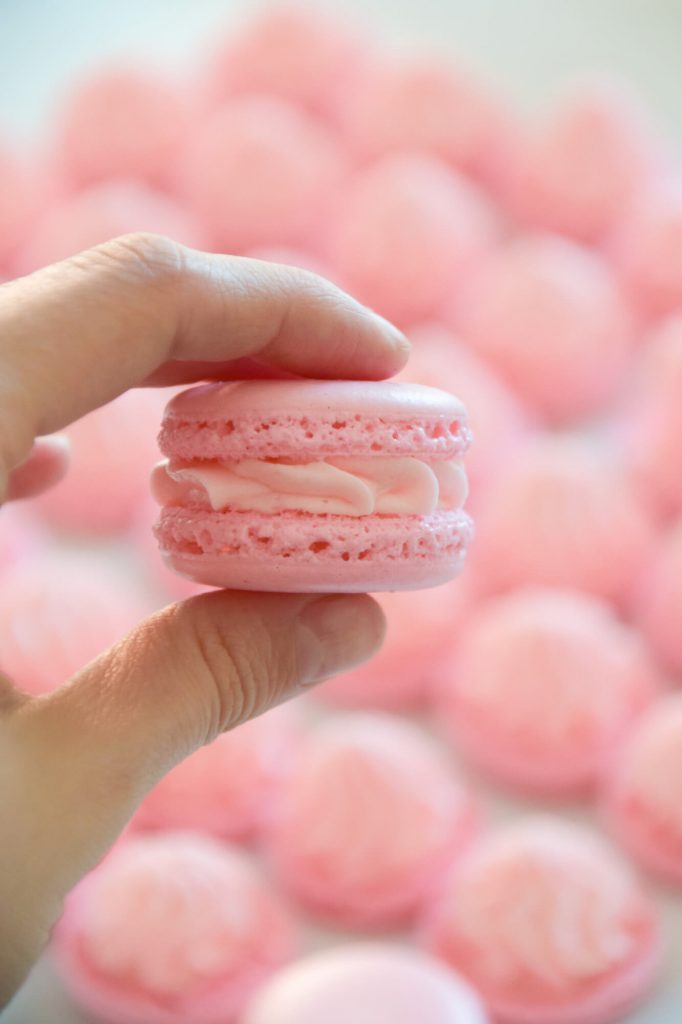
This Italian macaron recipe uses a hot sugar syrup to create a stable meringue, then combines it with almond flour, powdered sugar, and a second portion of egg white. The method takes concentration, but it gives you a structured meringue and repeatable process once you learn the visual cues.
Every ingredient is measured by weight. Read the full method before starting, prepare all equipment, and use the temperatures as a starting point for your own oven. Macarons are sensitive to meringue strength, macaronage, humidity, piping, resting, baking surface, and oven heat.
This post contains Amazon affiliate links. If you buy through one of these links, I may earn a commission at no additional cost to you.
Italian Macaron Recipe at a Glance
| Yield | Syrup temperature | Bake temperature | Bake time | Maturation |
|---|---|---|---|---|
| About 30–40 filled macarons | 118°C (244°F) | 115°C (240°F) fan; test 120°C (250°F) if needed | About 20 minutes | 12–24 hours refrigerated |
The yield assumes shells around 1.5 inches (3.8 cm). Oven temperature and bake time are starting points: use an oven thermometer and adjust one variable at a time.
Why Use the Italian Method?
Italian meringue is made by streaming syrup cooked to 118°C (244°F) into whipping egg whites. Compared with the French method, it is generally firmer and more tolerant during folding. That does not make the recipe automatic: the syrup, meringue endpoint, macaronage, and bake still need to be controlled.
This is the method I have used for years in home baking and macaron classes. The updated instructions below preserve the original formula while adding clearer cues, corrected conversions, storage guidance, and troubleshooting.
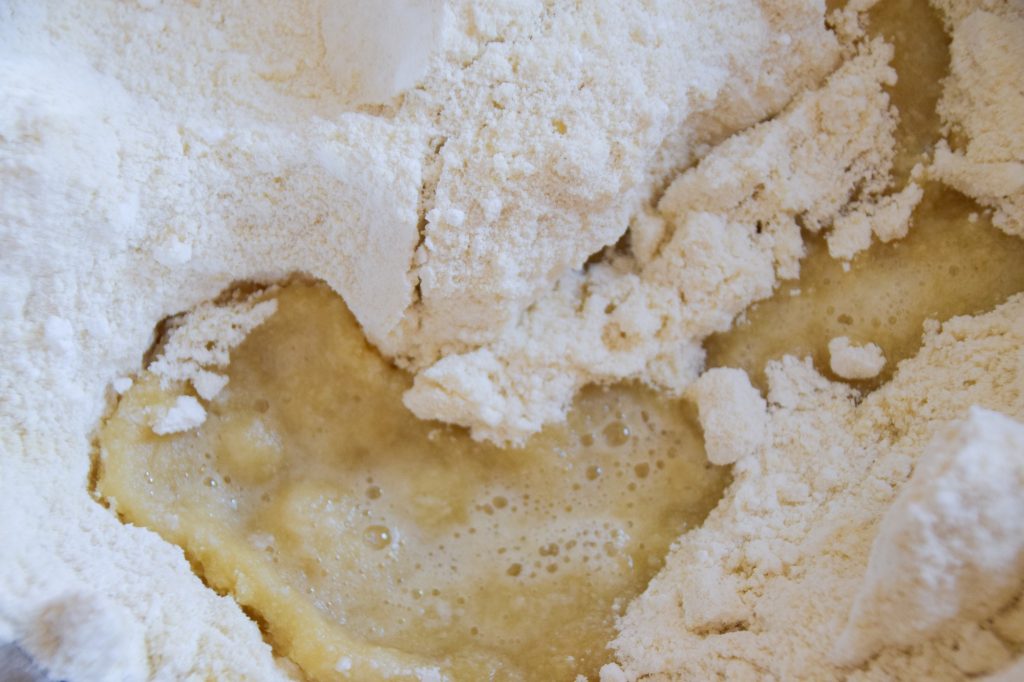
Ingredients for the Macaron Shells
- 115 g (4 oz) finely ground almond flour
- 115 g (4 oz) powdered sugar
- 115 g (4 oz) granulated sugar
- 30 g (about 1 oz) water
- 50 g (1.7 oz) egg whites for the Italian meringue
- 40 g (1.4 oz) egg whites for the almond paste
- Concentrated gel or powdered food color, optional
For best consistency, weigh the water and egg whites in grams. Keep the two egg-white portions separate. Use plain, unflavored almond flour made from blanched almonds.
Ingredients for the Vanilla Cream-Cheese Buttercream
- 200 g (7 oz) unsalted butter, softened
- 200 g (7 oz) powdered sugar
- 85 g (3 oz) full-fat block cream cheese, cool
- 1 teaspoon vanilla extract or vanilla paste
- Concentrated gel food color, optional
Cream-cheese filling must stay refrigerated. For macarons that need a longer display time, choose a stable ganache or standard buttercream instead.
Tools
- Digital kitchen scale
- Fine-mesh sieve
- Digital sugar thermometer
- Stand mixer or hand mixer with whisk attachment
- Small saucepan, preferably with a pour spout
- Large glass or stainless-steel bowls
- Flexible silicone spatula
- Piping bags and an Ateco 809-style round tip, optional
- Flat baking sheets with parchment or a macaron silicone mat
- Toothpicks for visible air bubbles
Preparation Before You Start
- Wipe the mixing bowl and whisk with a little vinegar or lemon juice, then dry completely. Fat or soap residue can weaken the meringue.
- Line the trays and prepare the piping bag before making the batter.
- Weigh all ingredients into separate containers.
- Separate eggs carefully so no yolk reaches the whites. Room-temperature whites whip readily, but accurately weighed cool whites can also work.
- Check the thermometer in boiling water periodically and use a separate oven thermometer if your oven runs inconsistently.
Step 1: Make the Almond Paste
Sift the almond flour and powdered sugar together. Discard unusually coarse pieces rather than forcing them through the sieve. Whisk the dry ingredients to distribute them evenly.
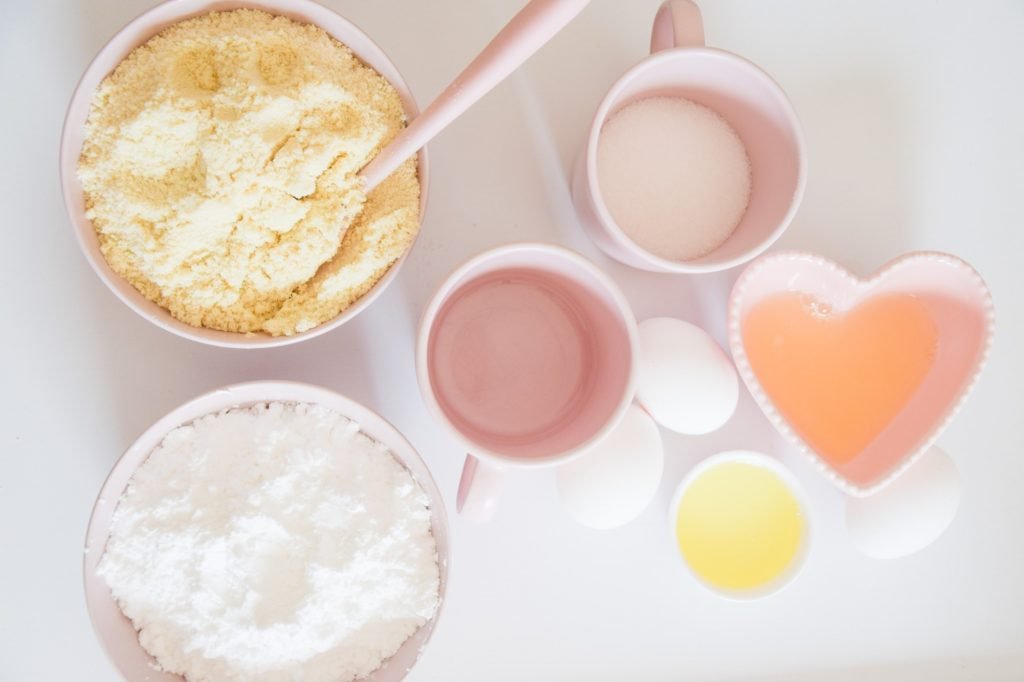
Add the 40 g egg-white portion and mix with a silicone spatula until you have a thick, uniform almond paste. Cover the bowl while you prepare the syrup so the surface does not dry out.
Step 2: Cook the Sugar Syrup
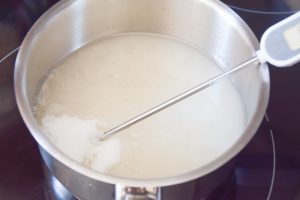
Place 115 g granulated sugar and 30 g water in a small saucepan. Heat over medium-low to medium heat. Stir only at the beginning if needed to moisten the sugar; once it boils, do not stir or scrape crystals from the sides into the syrup.
Step 3: Begin Whipping the Egg Whites
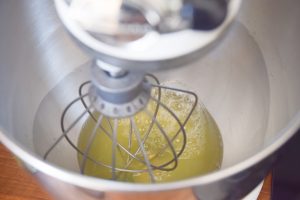
Place the 50 g egg-white portion in the mixer bowl. When the syrup reaches about 110°C (230°F), begin whipping at medium speed. The goal is a fine, foamy meringue by the time the syrup reaches its final temperature—not dry, overwhipped peaks.
Step 4: Pour the Syrup at 118°C (244°F)
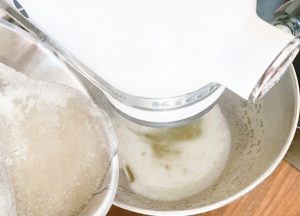
As soon as the syrup reaches 118°C (244°F), remove it from the heat. With the mixer running at medium speed, pour the syrup in a thin, steady stream down the inside of the bowl between the whisk and the bowl wall. Avoid pouring directly onto the whisk, which can throw hot syrup and create hard sugar threads.
Do not scrape the saucepan after pouring; the small amount left behind is safer than introducing crystallized sugar. Hot syrup can cause severe burns, so keep children and loose cords away from the work area.
Step 5: Whip to a Glossy, Firm Meringue
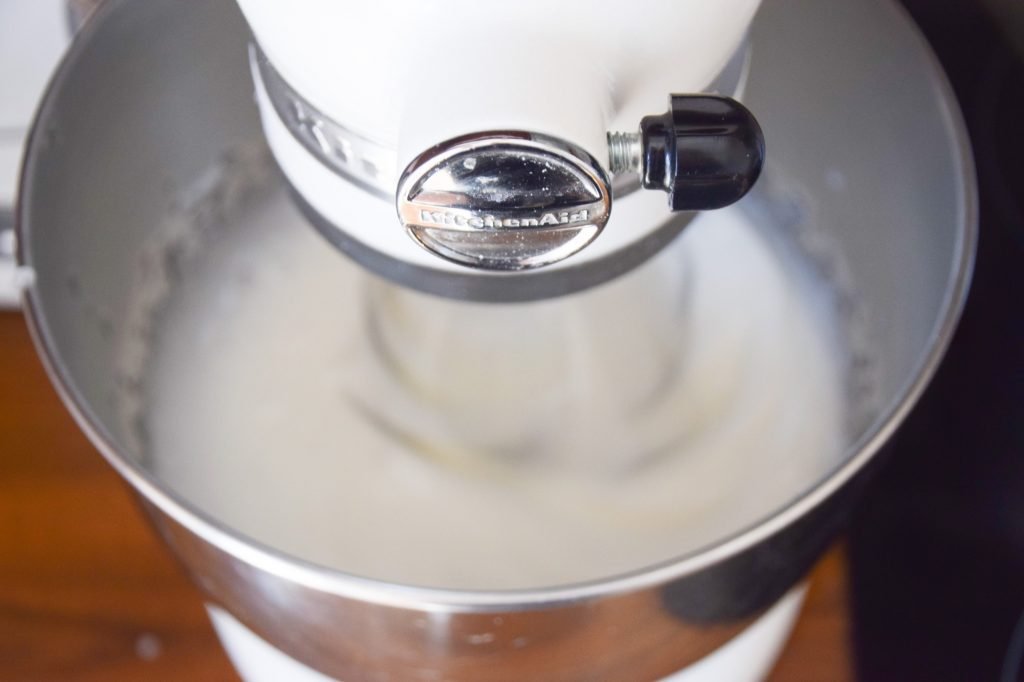
Continue whipping until the meringue is glossy, dense, and holds a firm peak with a slight bend. The outside of the bowl should feel warm rather than hot. This may take around 5–8 minutes depending on the mixer and room, so use texture and temperature—not an exact timer—as the final cue.
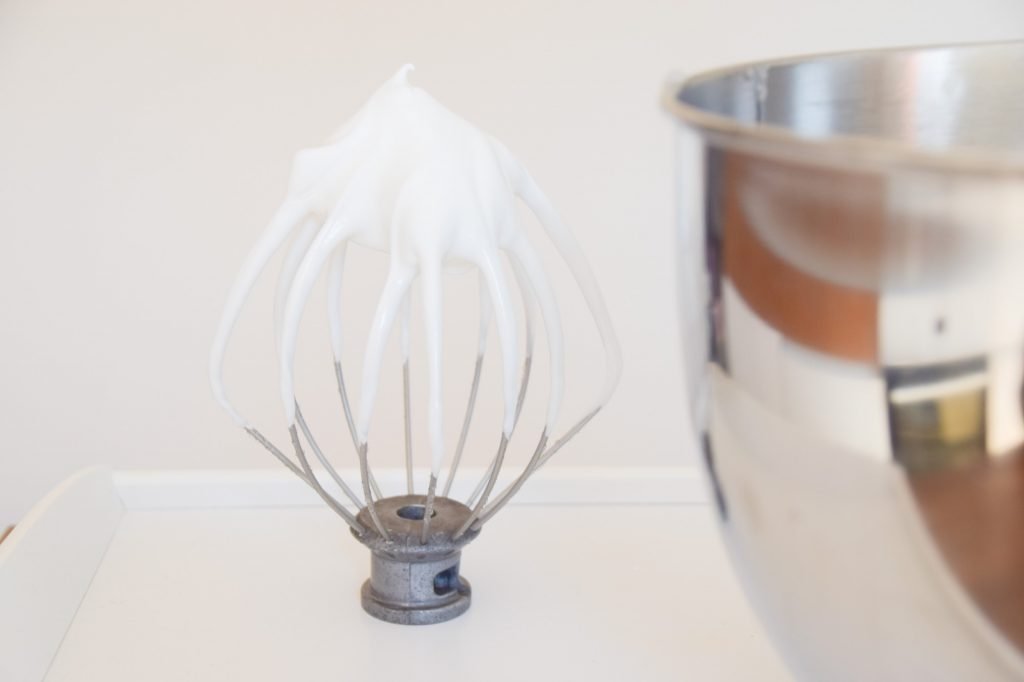
Step 6: Combine the Meringue and Almond Paste
Fold about one-third of the meringue into the almond paste. The first addition is used to loosen the dense paste, so it can be mixed more firmly. Fold in the second third until mostly even, then add the remaining meringue.
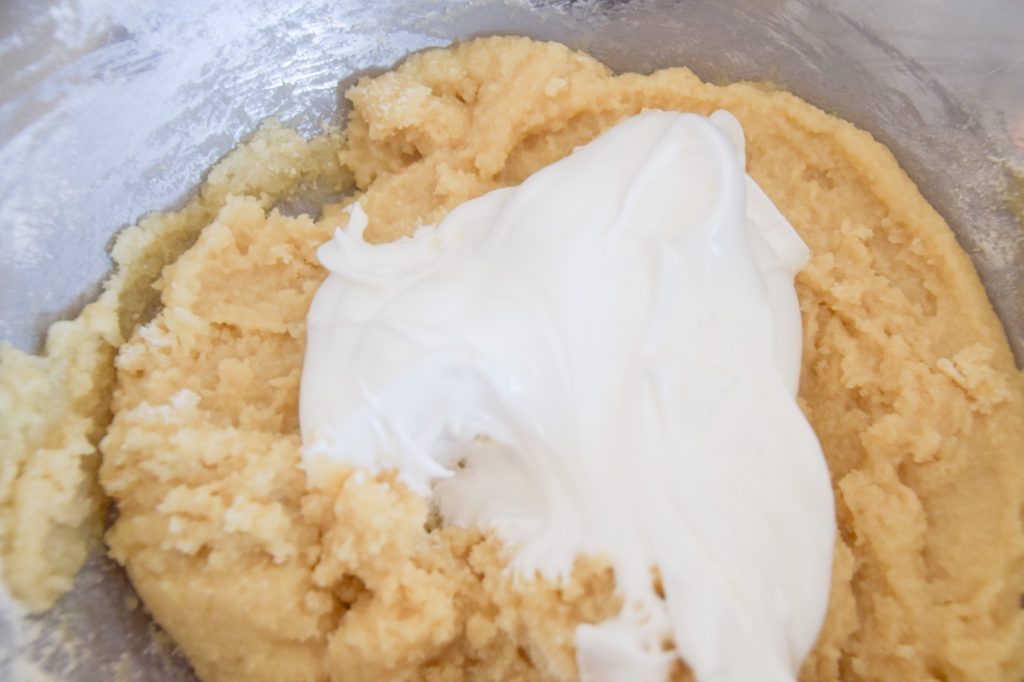
Add concentrated gel or powdered food color before the batter reaches its final consistency. Avoid ordinary watery liquid color. For color selection and quantity guidance, read Best Food Coloring for Macarons.
Step 7: Macaronage
Fold by scraping around the bowl, cutting through the center, and lifting the batter over itself. Rotate the bowl so no dense almond paste remains on the bottom. As the batter becomes glossy and begins to flow, check after every few folds.
The batter is ready when it falls from the spatula in a slow, continuous ribbon. You should be able to draw one figure eight, and the ribbon should gradually blend into the surface rather than disappearing immediately.
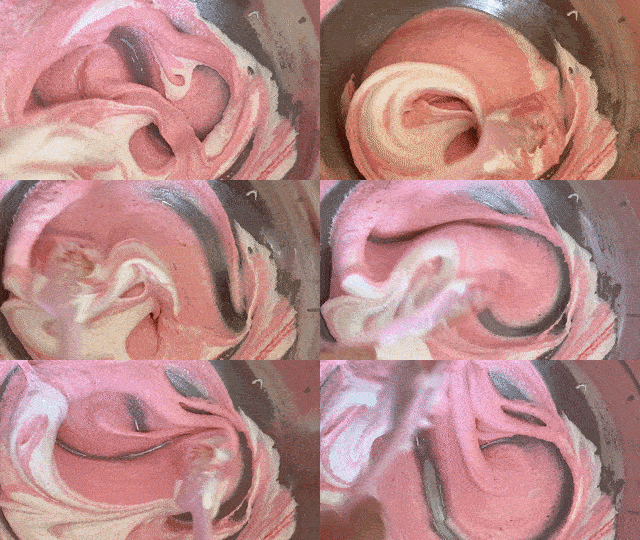

Stop as soon as the tests agree. Overmixed batter cannot be restored reliably with more dry ingredients. The full macaronage guide compares under-, correctly, and overmixed batter.
Step 8: Pipe the Shells
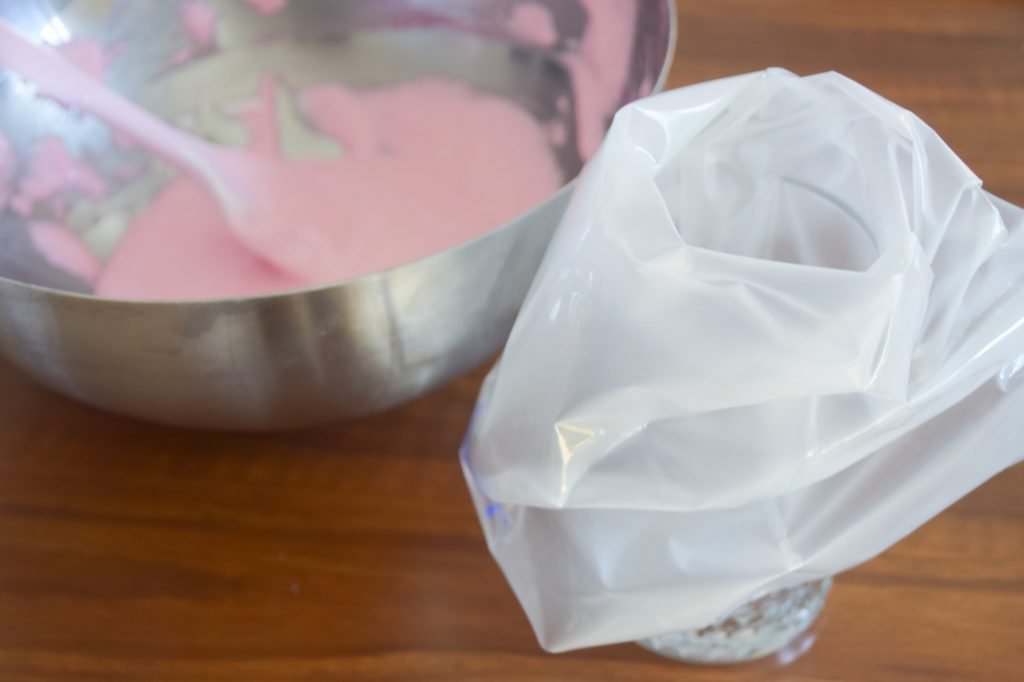
Transfer the batter to the piping bag. Hold the bag at a 90-degree angle about 1/4 inch (6 mm) above the tray and pipe even rounds. Stop before the batter reaches the edge of the template because it will spread slightly.
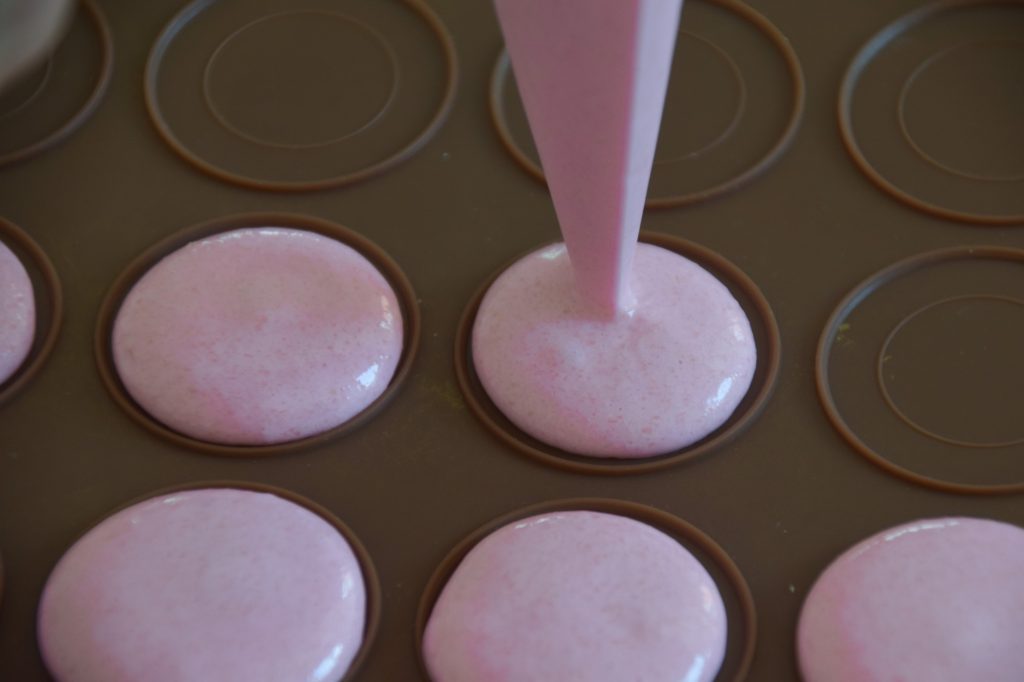
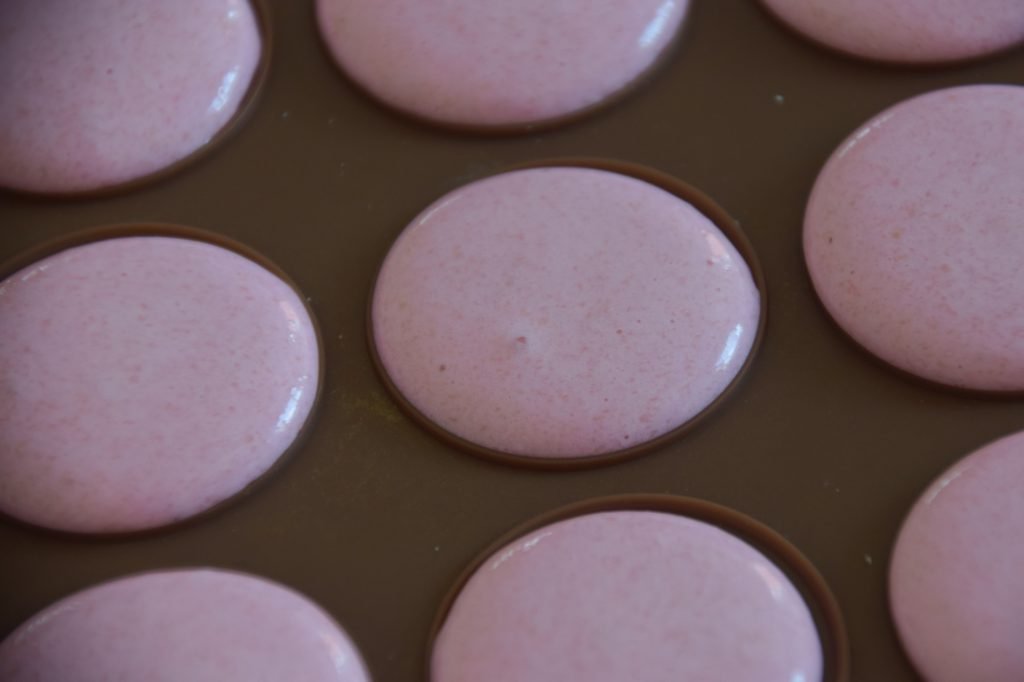
Tap each tray firmly against the counter several times, rotating it between taps. Pop visible bubbles with a toothpick before the surface begins to dry.
Step 9: Rest If Your Process Needs It
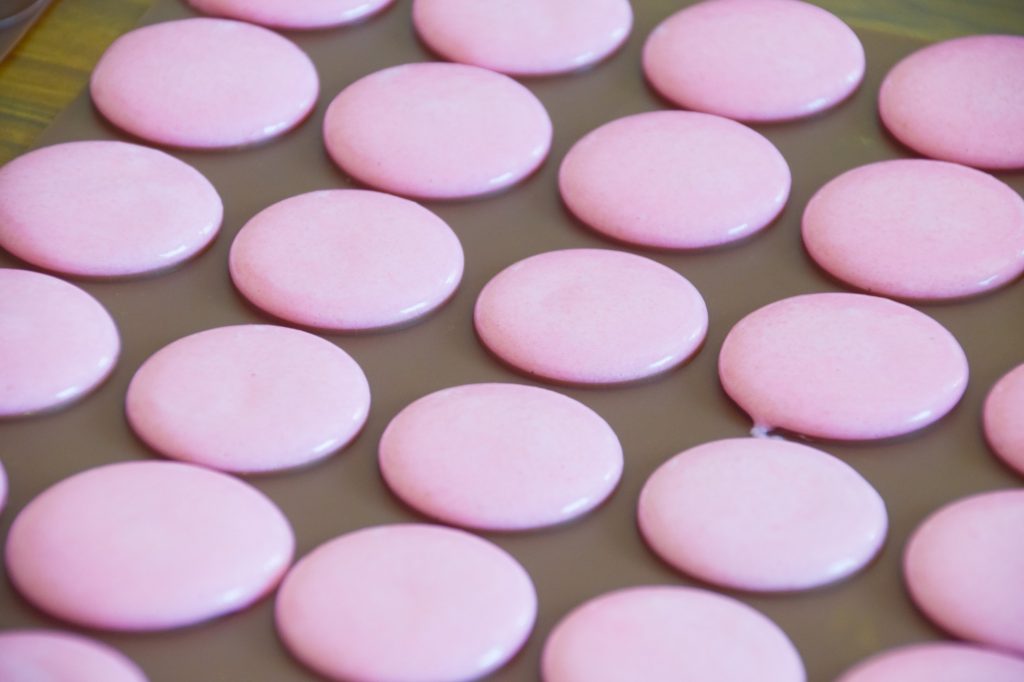
Italian-method macarons can sometimes bake successfully without resting, but humidity, coloring, and oven airflow change the result. For a reliable starting point, rest the shells until the tops look matte and a light touch does not pick up batter. This often takes 15–40 minutes.
To learn your kitchen, compare one rested tray with one tray baked immediately. Record the weather, surface, and oven setting so the test is useful.
Step 10: Bake at 115°C (240°F)
Bake one tray at a time on the middle rack in a fan/convection oven at 115°C (240°F) for about 20 minutes. If 115°C consistently leaves the shells soft, pale, or difficult to release in your oven, test 120°C (250°F) on the next tray.
Do not apply an automatic fan-to-conventional conversion to macarons. Oven calibration, heating-element position, tray color, and baking surface matter too much. If using a conventional oven, begin with a small test tray and adjust in 5°C increments.
The shells are done when the tops do not wobble on the feet and the bases feel set. Cool them completely on the tray before testing release. If they stick while warm, wait; if they still stick when cool, extend the next bake by 1–2 minutes.

Make the Vanilla Cream-Cheese Buttercream
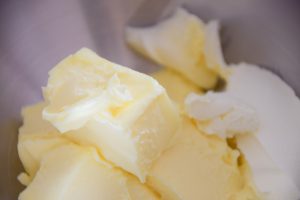
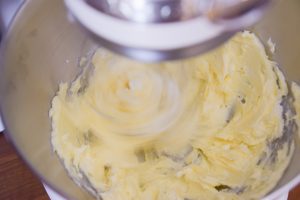
- Beat the softened butter at medium speed until smooth and pale, about 2–3 minutes.
- Add the powdered sugar gradually on low speed. Once incorporated, beat until fluffy.
- Add the vanilla and mix until even.
- Add the cool cream cheese and mix briefly at low to medium speed only until smooth. Overmixing can make cream-cheese frosting loose.
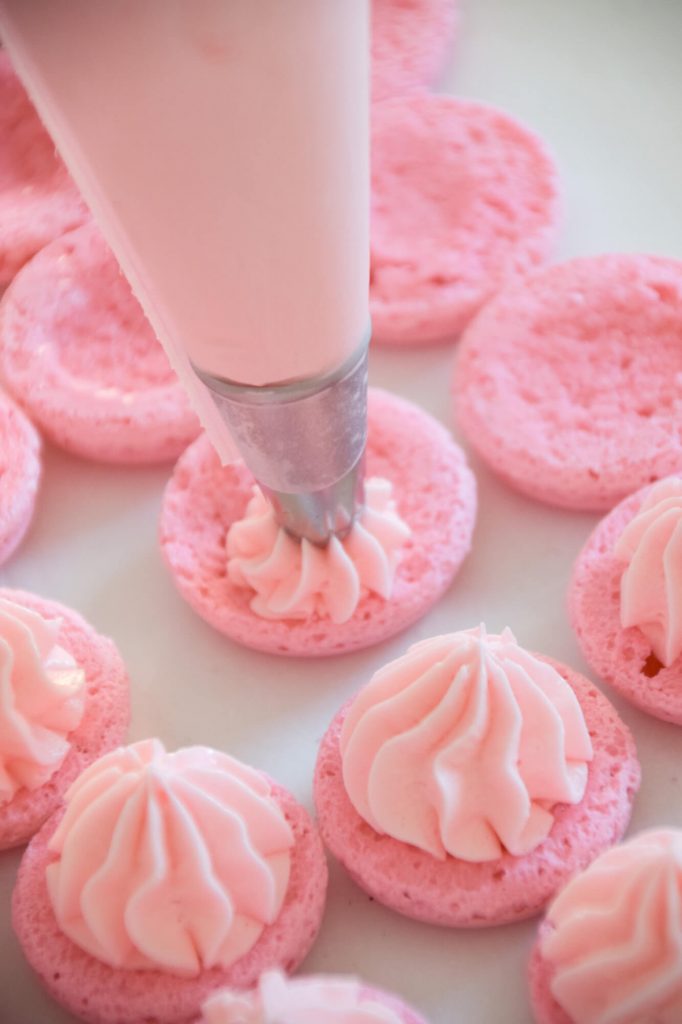
- Add concentrated gel color if desired, then transfer to a piping bag. Chill for 10–15 minutes if the filling is too soft to hold its shape.
Fill and Mature the Macarons
- Pair cooled shells of similar size.
- Pipe filling onto the flat side of one shell, leaving a small border.
- Top with the matching shell and press gently until the filling reaches the edge.
- Place the filled macarons in an airtight container and refrigerate for 12–24 hours so the filling can soften the interior slightly.
- Let the macarons sit at cool room temperature for about 15–20 minutes before serving for the best texture.
Storage
Because this filling contains cream cheese, refrigerate the macarons at 4°C (40°F) or below and do not leave them at room temperature for more than 2 hours. For best quality and conservative home food-safety guidance, use them within 3–4 days.
Unfilled shells can be frozen airtight for about 1 month without a major loss of quality. Filled macarons can also be frozen, but the result depends on the filling. Thaw overnight in the refrigerator while the container remains closed to limit condensation.
See How to Freeze Macarons and Fillings for more storage options.
Italian Macaron Troubleshooting
| Problem | Common causes | What to test next |
|---|---|---|
| Cracked tops | Air bubbles, weak skin, underwhipped meringue, or excessive heat | Tap trays, rest longer, verify meringue, and lower heat slightly |
| No feet | Weak meringue, batter too loose, or oven too cool | Stop macaronage earlier and test 120°C (250°F) |
| Hollow shells | Meringue, macaronage, or bake profile | Change only one variable; test a slightly longer bake |
| Sticky bottoms | Underbaked shells or removal while warm | Cool completely and add 1–2 minutes |
| Brown tops | Strong top heat or excessive bake | Lower the rack, shield with an empty tray above, or reduce heat |
| Lopsided shells | Uneven piping, warped tray, airflow, or slanted parchment | Use flat trays, pipe vertically, and test the fan setting |
For a deeper diagnosis, use The Ultimate Macaron Troubleshooting Guide.
Frequently Asked Questions
Do Egg Whites Need to Be Aged?
No. Fresh, cleanly separated whites can work. Consistent weight and a grease-free bowl matter more. If aging is part of your tested process, keep the whites covered and refrigerated, then follow safe handling practices.
Can I Make Italian Macarons With a Hand Mixer?
Yes, but pouring hot syrup while mixing is easier and safer with a second person. Stabilize the bowl, keep the cord away from the stove, and pour between the beater and bowl wall.
Do Italian Macarons Need to Rest?
Not always, but resting is a useful baseline when you are learning or baking in humidity. The best answer comes from a side-by-side test in your kitchen.
Why Is 115°C Too Low in My Oven?
The dial may not match the actual oven temperature, or your tray and baking surface may transfer heat slowly. Check with an oven thermometer and test 120°C (250°F) before making a larger change.
Can I Double the Recipe?
Only if the mixer and bowl can handle the larger meringue and you already know the recipe well. A larger batch changes whipping and folding times. Making two separate batches is safer for beginners.
How Do I Know the Meringue Is Ready?
It should be glossy, dense, and hold a firm peak with a slight bend. The bowl should no longer feel hot. Do not rely on a fixed number of minutes.
Success Checklist
- All ingredients are weighed in grams.
- The sugar syrup reaches 118°C (244°F).
- The syrup is streamed beside the whisk, not onto it.
- The meringue is glossy and firm before folding.
- Macaronage stops at a slow ribbon that settles gradually.
- Trays are tapped and visible bubbles are popped.
- The oven is verified, starting at 115°C (240°F) fan.
- Shells cool completely before removal and filling.
Macarons reward repetition. Keep notes on the meringue, batter flow, rest time, actual oven temperature, bake time, and finished interior. Adjust one variable per batch and you will learn your oven much faster.
Enjoy your macarons!
Belli xx