
How to Use Edible Luster Dust on Macarons Safely
Published · Updated
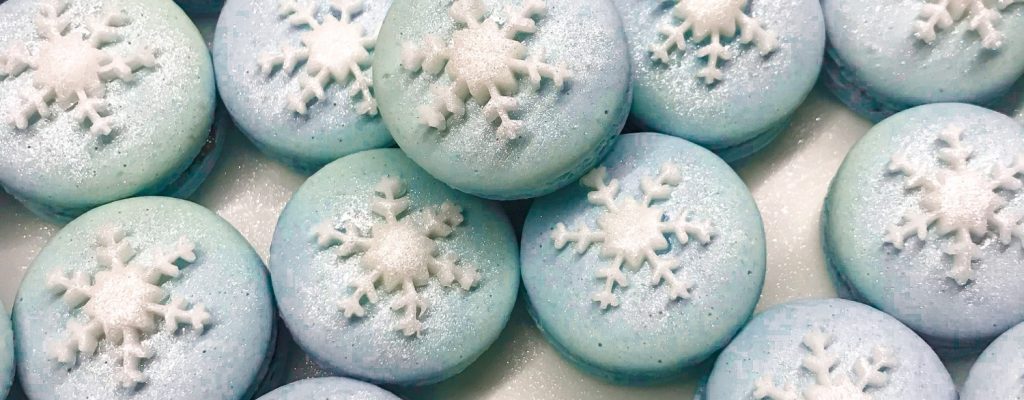
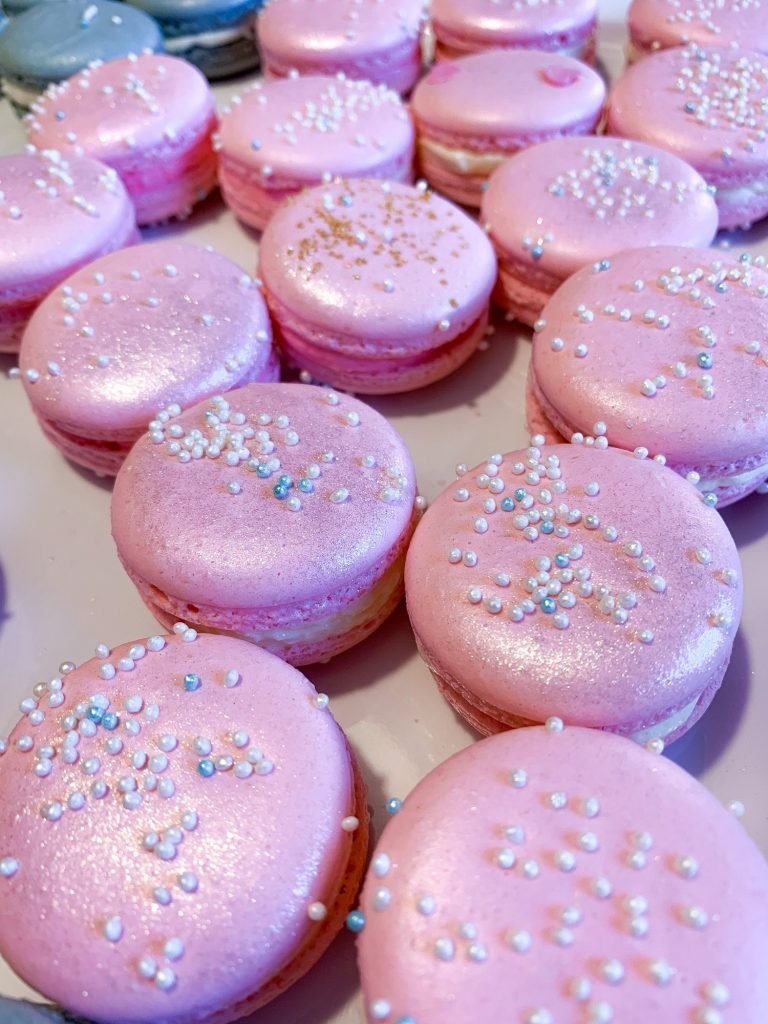
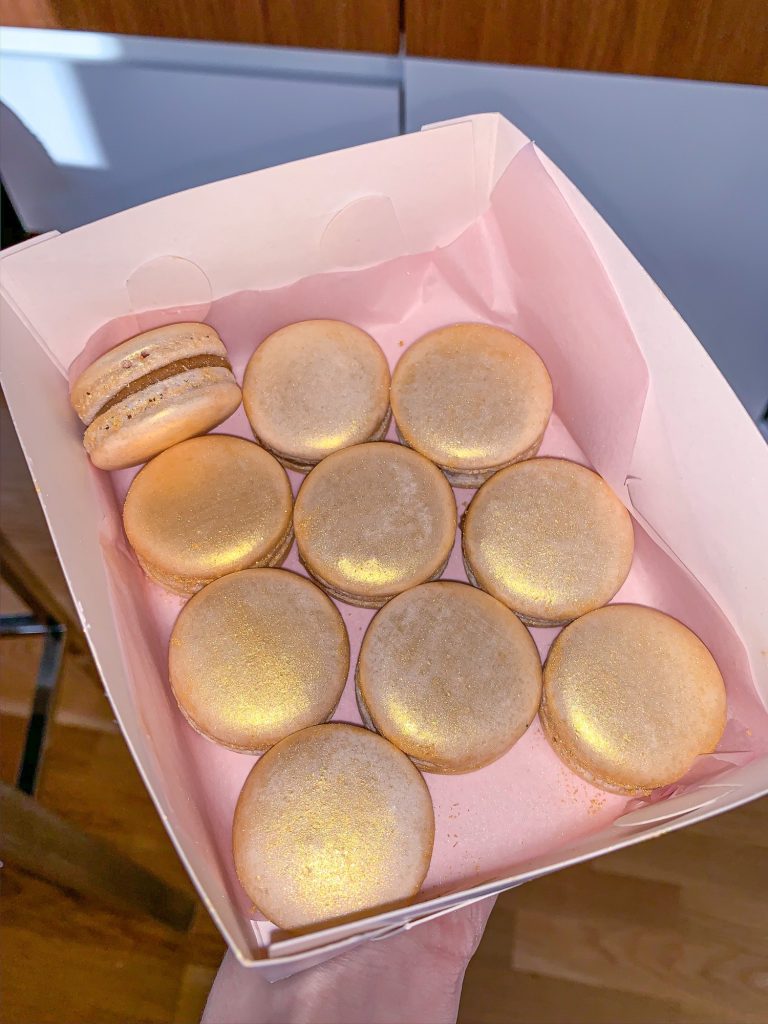
Edible luster dust can give macarons a pearl sheen, metallic accents, painted details, or fine splatter. The technique is simple, but the product label matters: edible, non-toxic, and for decorative use only do not mean the same thing.
Use only dust explicitly manufactured for eating, with an ingredient list and directions that allow direct application to food. This guide covers dry brushing, wet painting, splatter, cleanup, and regional safety considerations.
Luster Dust Safety at a Glance
| Label wording | Use directly on macarons? | What to do |
|---|---|---|
| Edible, with ingredient list | Yes, if the intended use includes food decoration | Follow the product directions and local rules |
| Non-toxic only | No | Do not apply to food that will be eaten |
| For decorative use only | No | Use only on removable decorations, if permitted |
| No ingredient list | No | Choose a clearly labeled edible product |
| Food contact only | Not necessarily | Confirm that consumption, not just contact, is allowed |
The U.S. FDA advises bakers not to use glitter or dust directly on food unless it is specifically manufactured to be edible. A label that says only non-toxic is not enough.
What Is Edible Luster Dust?
Luster dust is a fine decorating powder that creates shine or a metallic finish. Product names such as shimmer dust, pearl dust, highlighter, sparkle dust, and glitter do not prove edibility. Always use the label, ingredient list, and intended-use instructions—not the marketing name—to decide whether a product belongs on a macaron.
Ingredients vary. Edible products may contain sugar, starch, gum arabic, maltodextrin, approved colors, or mica-based pearlescent pigments. Do not rely on a universal ingredient list because formulas and regulations differ by brand and country.
Regional Rules Matter
A product sold as edible in one country may not meet another region’s rules. For example, the European Union withdrew authorization for titanium dioxide (E171) as a food additive in 2022. Check the current label and the rules where the macarons will be sold or served, especially when buying imported dust online.
If you bake professionally, keep the package and lot information so you can document the ingredients and allergens used on an order.
Tools for Decorating Macarons
- Edible luster dust labeled for direct food use
- Soft food-only brush for full-shell shimmer
- Small round or detail brush for lines and lettering
- Small food-safe palette or dish
- Manufacturer-approved painting medium, if making paint
- Parchment paper or a tray to catch excess dust
- Clean mask or good ventilation if the powder is very airborne
Keep decorating brushes dedicated to edible products. Craft brushes may contain residues or may have been used with non-food pigments.
Method 1: Dry-Brush Luster Dust
Dry brushing creates a soft pearl or satin finish and uses very little product. It works best on completely baked, cool, dry shells.
- Place the shells on parchment or a clean tray before filling them.
- Dip a clean, dry brush lightly into the edible dust.
- Tap the brush over the container to remove excess powder.
- Brush the shell with light, even strokes. Build the shine gradually instead of loading the first coat.
- Return only clean, uncontaminated excess dust to the container.
- Fill and store the macarons after the surface is finished.
Method 2: Make Edible Luster Paint
Wet paint creates more opaque lines, lettering, and metallic details. Mix a small amount of dust with the painting medium specifically recommended by the product manufacturer. High-proof clear alcohol or alcohol-based lemon extract is commonly used because it evaporates quickly, but only use it when the label permits that method.
- Put a small pinch of edible dust in a food-safe dish.
- Add the approved medium one drop at a time until the mixture resembles thin paint.
- Test the paint on a spare shell. It should flow without soaking the surface.
- Apply a thin coat with a food-only detail brush.
- Let the coat dry completely before adding another layer or filling the macarons.
Plain water may bead, soften the shell, or dry unevenly. Some products allow it and others do not, so follow the directions rather than using water as a universal substitute.
Method 3: Add Edible Gold Splatter
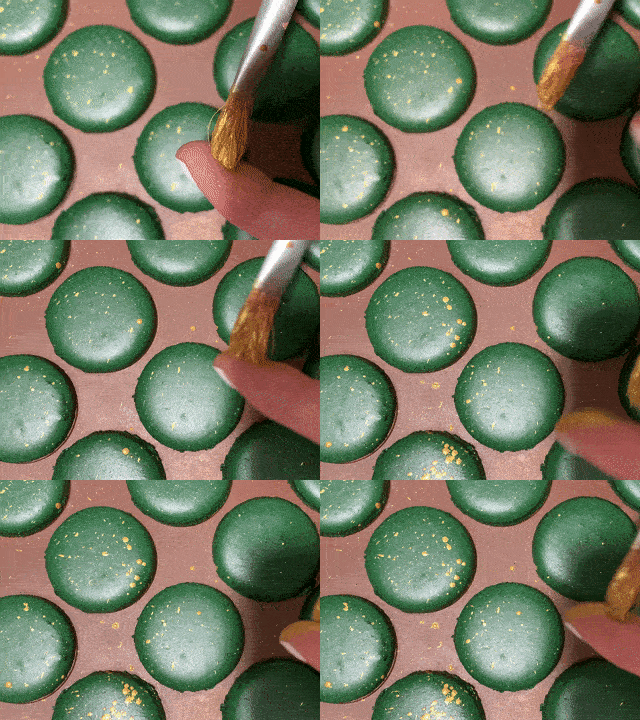
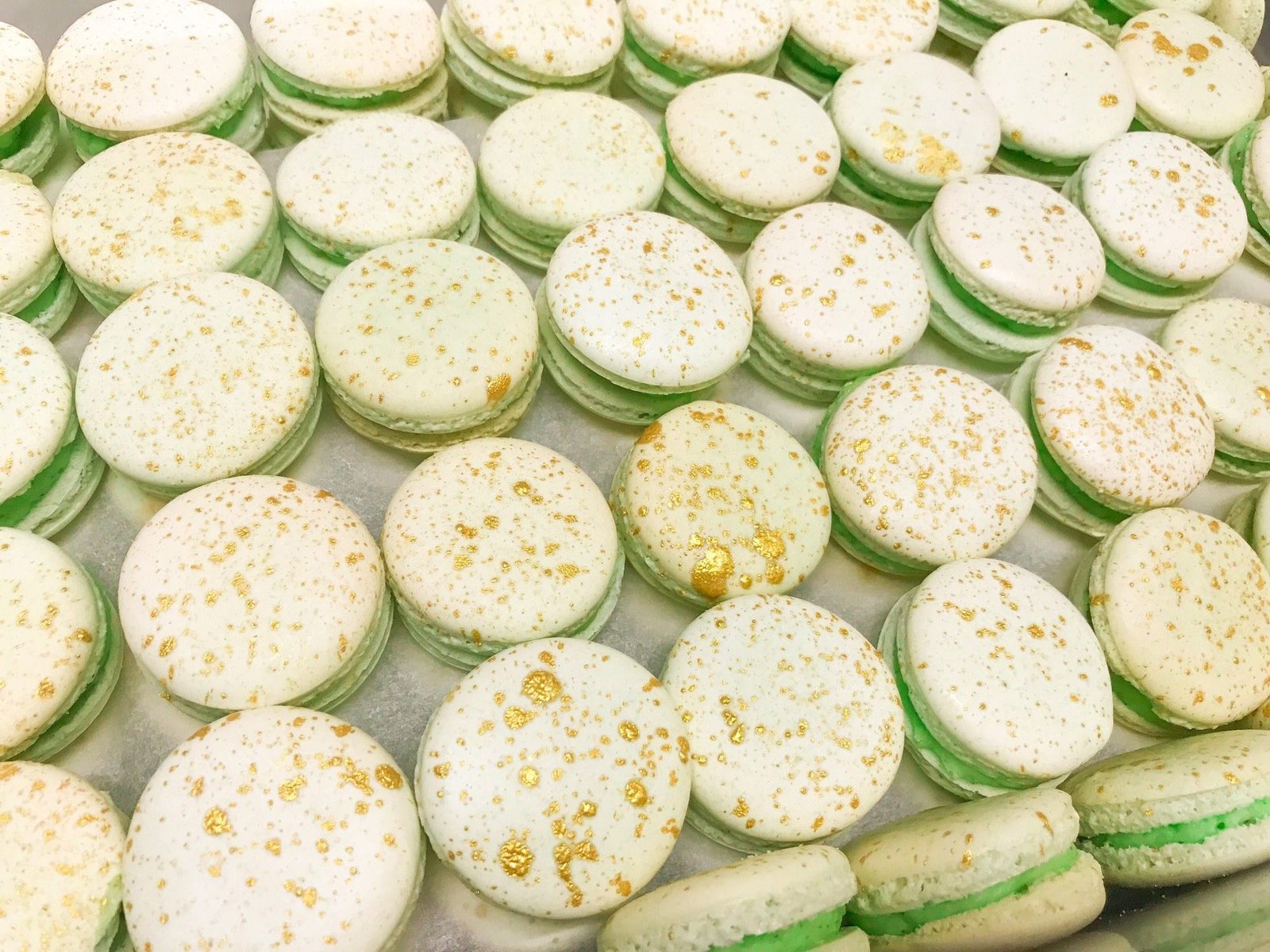
Splatter creates fine metallic droplets. Protect the work area and decorate unfilled shells when possible so the filling does not catch overspray.
- Prepare edible paint according to the product directions.
- Place the shells on a lined tray with space between them.
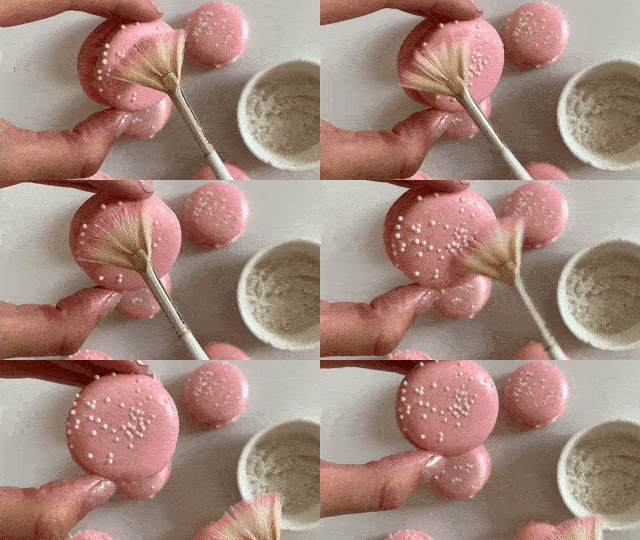
- Load a clean brush with a small amount of paint and tap it against another brush or pull the bristles back gently.
- Keep the brush close to the tray for small dots and farther away for a wider pattern.
- Let the shells dry completely before filling or packing.
Avoid creating a cloud of dry powder. Fine decorating dust should not be inhaled, and splatter should be kept away from faces, children, pets, and uncovered food that is not being decorated.
When Should You Decorate the Shells?
Decorate completely cooled shells before filling when possible. This keeps buttercream or ganache away from the brush and gives wet details time to dry. Dry brushing can also be done after assembly if the filling is firm and the macarons remain easy to handle.
The luster dust does not determine storage time; the filling does. Once decorated and filled, refrigerate or store the macarons according to the filling recipe.
Common Luster-Dust Problems
| Problem | Likely cause | Fix |
|---|---|---|
| Streaky dry finish | Too much dust on the brush | Tap off excess and apply lighter coats |
| Paint looks grainy | Mixture is too thick or not dispersed | Add the approved medium one drop at a time and remix |
| Shell softens | Too much liquid or a slow-drying medium | Use thinner coats and the recommended fast-drying medium |
| Metallic paint rubs off | Coat is too heavy or not dry | Use thin layers and allow complete drying |
| Color is dull | Dust is translucent or the base color is mismatched | Use a compatible base shell color and build thin coats |
| Product label is unclear | It may not be edible | Do not use it directly on food; choose a clearly labeled alternative |
Frequently Asked Questions
Is Non-Toxic Luster Dust Edible?
No. Non-toxic means the product is not expected to cause poisoning under certain exposure conditions; it does not mean the product is intended to be eaten. Look for the word edible and a complete ingredient list.
Can I Use Craft Glitter on Macarons?
No. Craft glitter is not made for consumption. Use edible glitter or dust whose label permits direct application to food.
Can I Mix Luster Dust With Water?
Only if the manufacturer says to. Water can soften macaron shells and may not disperse some powders evenly. A manufacturer-approved fast-drying medium is usually easier to control.
Does Luster Dust Change the Flavor?
A small amount of a properly labeled edible dust is usually used for appearance rather than flavor. Heavy coatings can affect mouthfeel, so apply the minimum needed for the effect.
Can I Airbrush Luster Dust?
Only use a product and airbrush system that explicitly support that application. Ordinary luster dust can clog equipment or create airborne particles. Follow both manufacturers’ directions.
Can I Use Luster Dust on Macarons I Sell?
Yes, when the product is authorized for that use where you sell, the ingredients and allergens are properly handled, and local labeling rules are followed. Keep the original package for verification.
Final Safety Checklist
- The label explicitly says edible.
- A complete ingredient list is present.
- The intended use allows direct application to food.
- The product complies with rules where the macarons will be served or sold.
- Brushes and dishes are dedicated to food use.
- Wet details dry completely before filling or packing.
- Dry powder is handled carefully to avoid inhalation.
For shell colors beneath the shimmer, read How to Color Macarons.
Enjoy your macarons!
Belli xx