
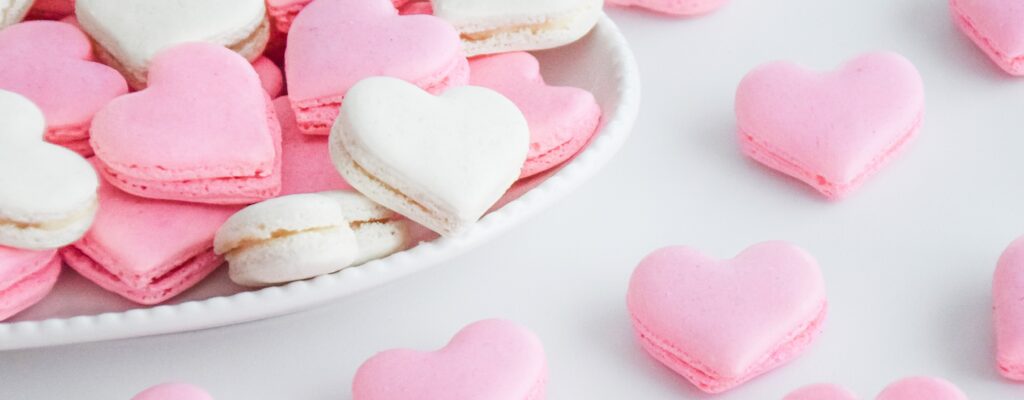
How to Pipe Heart-Shaped Macarons + Free Template
Published December 4, 2022 · Updated September 3, 2026
Heart-shaped macarons use the same batter as round macarons; only the piping pattern changes. Pipe two tapered strokes that meet at the bottom point, then refine the shape with a toothpick before the surface begins to set. A template makes the pairs more consistent.
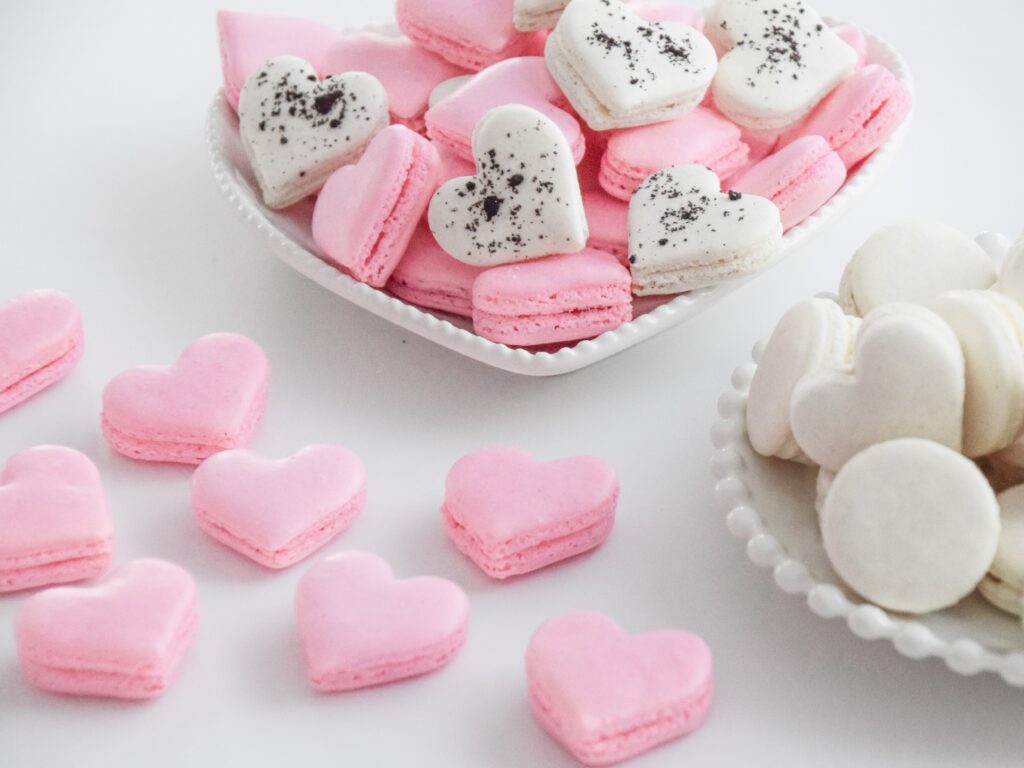
Quick method
- Prepare a stable macaron batter and transfer it to a piping bag with a round opening.
- Place a printed heart template beneath parchment or a translucent silicone mat.
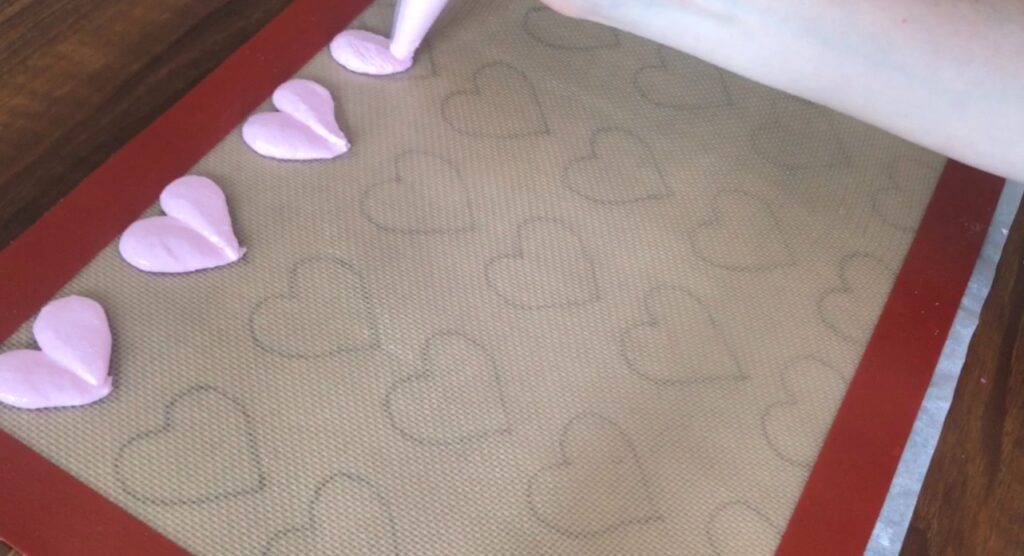
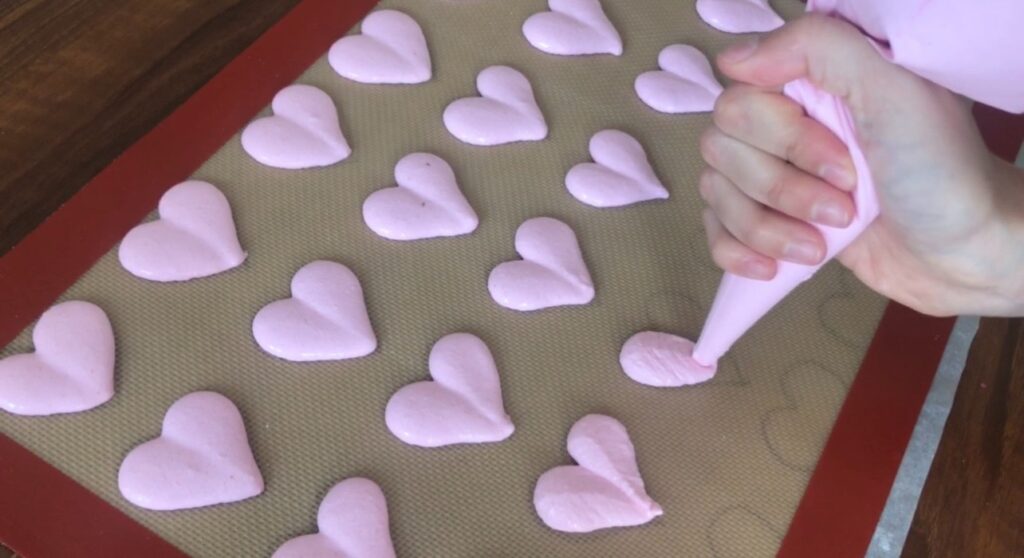
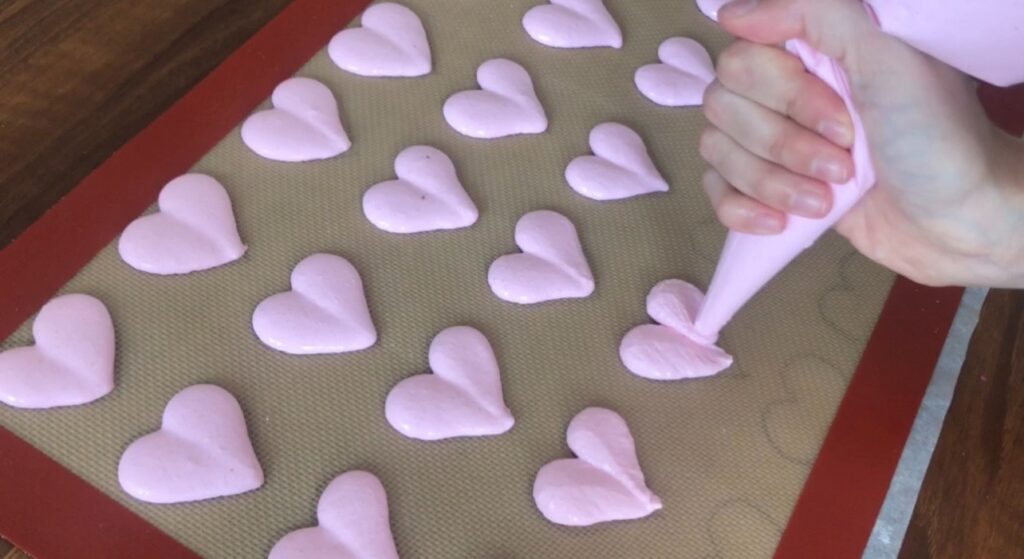
- Pipe one stroke from the upper left toward the bottom center, then mirror it from the upper right.
- Use a toothpick immediately to join gaps and sharpen the bottom point.
- Remove the paper template before resting or baking the tray.
- Rest and bake according to your tested base macaron recipe.
Before you pipe
First become comfortable making ordinary round shells. The batter should flow slowly, settle without running flat and hold enough definition for the heart point. If you need help judging the fold, read how to recognize finished macaronage.
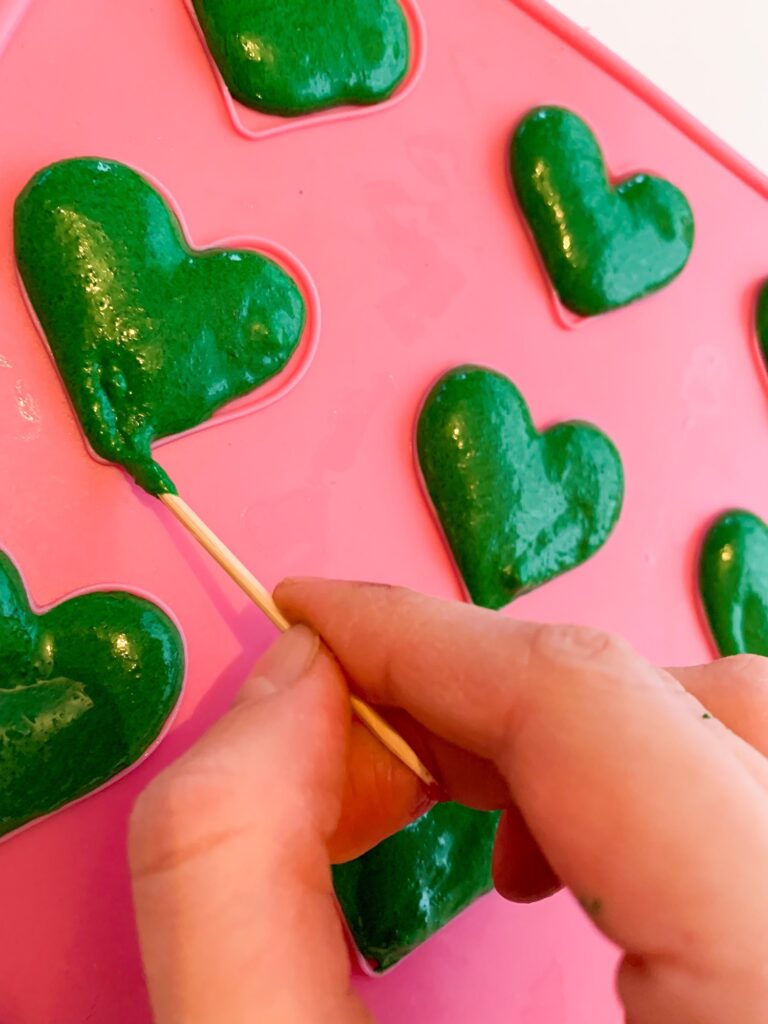
Choose a heart template
You can use a silicone mat with printed heart guides, draw your own guide or print the free template below. Built-in raised borders are not required; a flat guide makes it easier to see whether the batter itself is holding the intended shape.
Free template: download the printable heart-shaped macaron template (PDF). Print at 100% or “actual size” so the scale does not change. For more shapes, see the printable macaron template collection.
Place the paper beneath the baking surface, not in contact with the batter. Slide the paper out before the tray rests or goes into the oven. Never bake the loose paper guide beneath the mat or parchment.
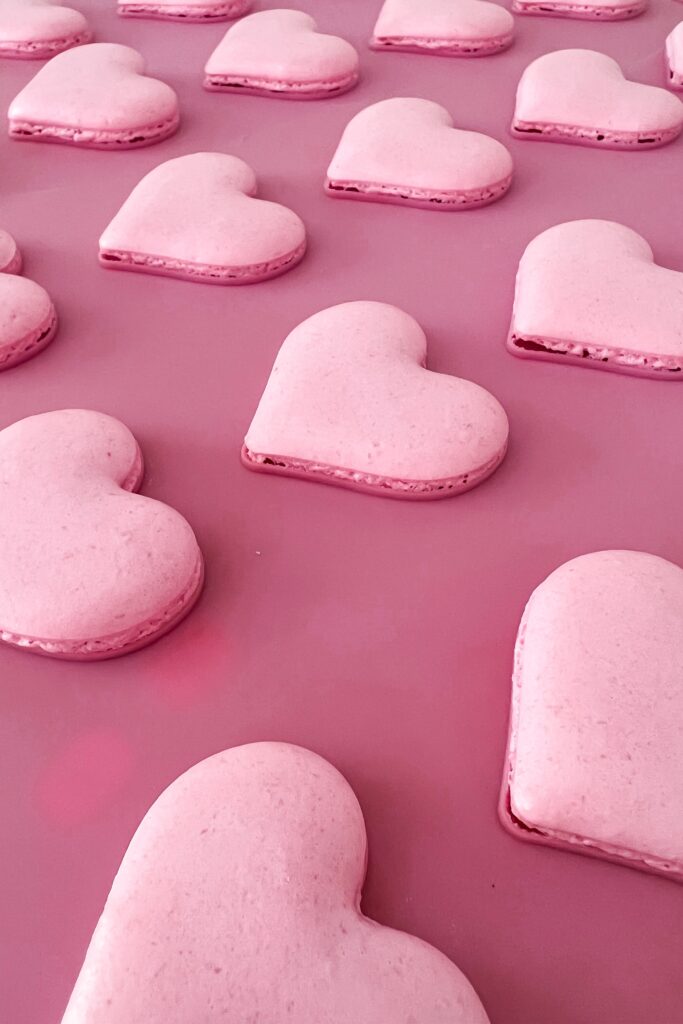
How to pipe heart-shaped macaron shells
1. Hold the bag at a slight angle
Use a round piping tip or a neatly cut bag opening. Hold it a short distance above the surface. A completely vertical bag encourages a round pool; a slight angle helps you draw each lobe toward the point.
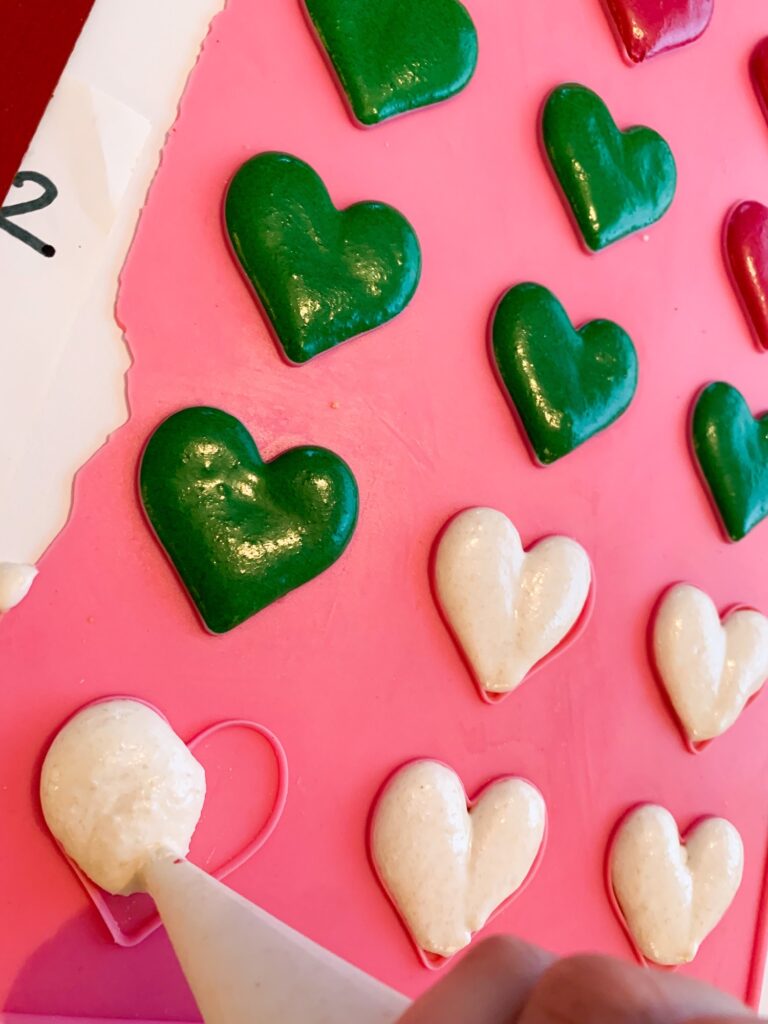
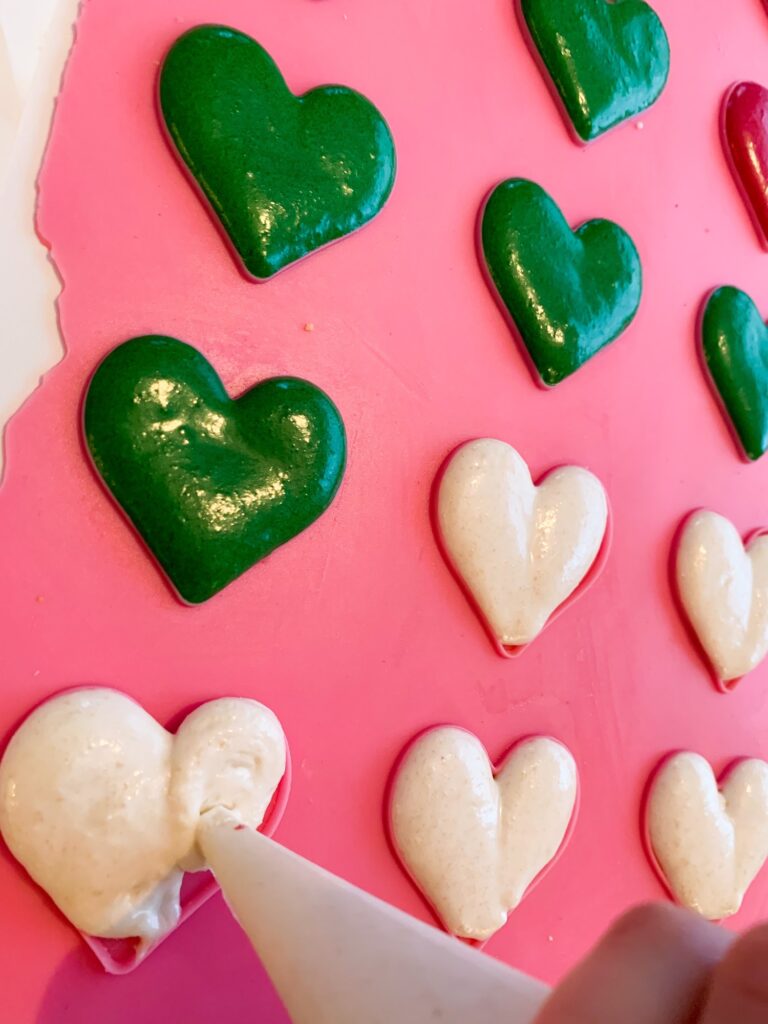
2. Pipe the left half
Start at the upper-left lobe. Apply steady pressure for the rounded top, then reduce pressure while moving diagonally toward the bottom center. Stop at the point and lift cleanly.
3. Mirror the right half
Begin at the upper-right lobe and repeat the same motion toward the identical bottom point. Try to match the pressure and stroke length so both sides contain the same amount of batter.
4. Refine the outline immediately
Use a toothpick to close the center seam, pop visible bubbles and pull a small amount of batter into the bottom point. Work promptly: once a skin starts forming, touching the surface can leave a mark.
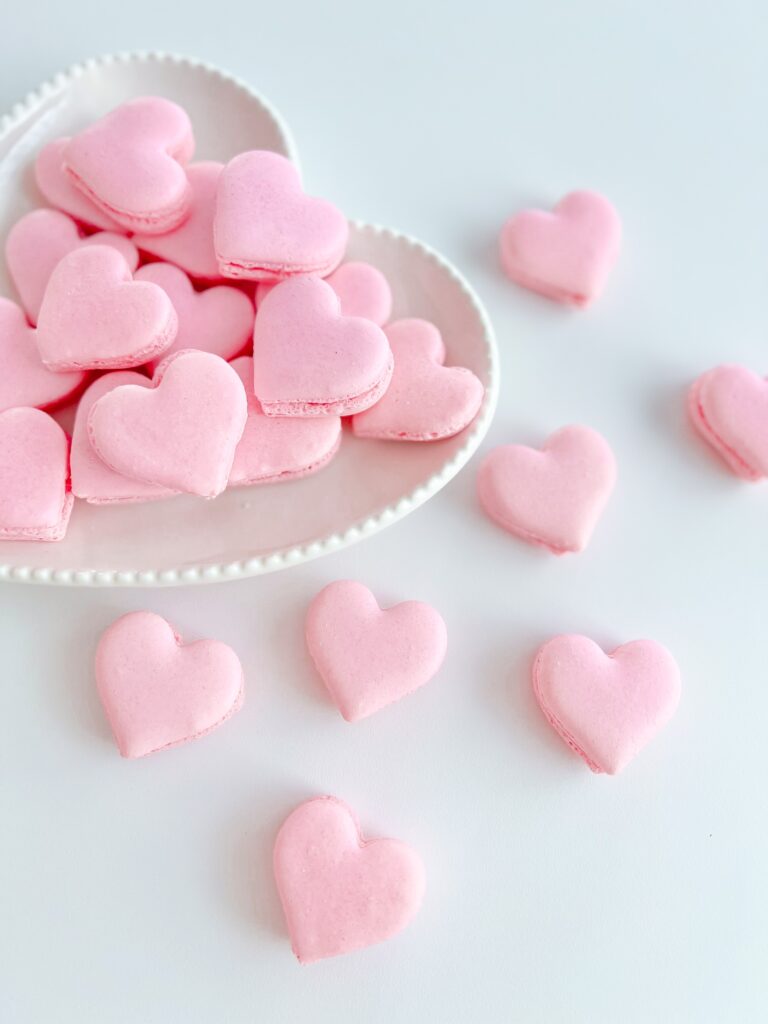
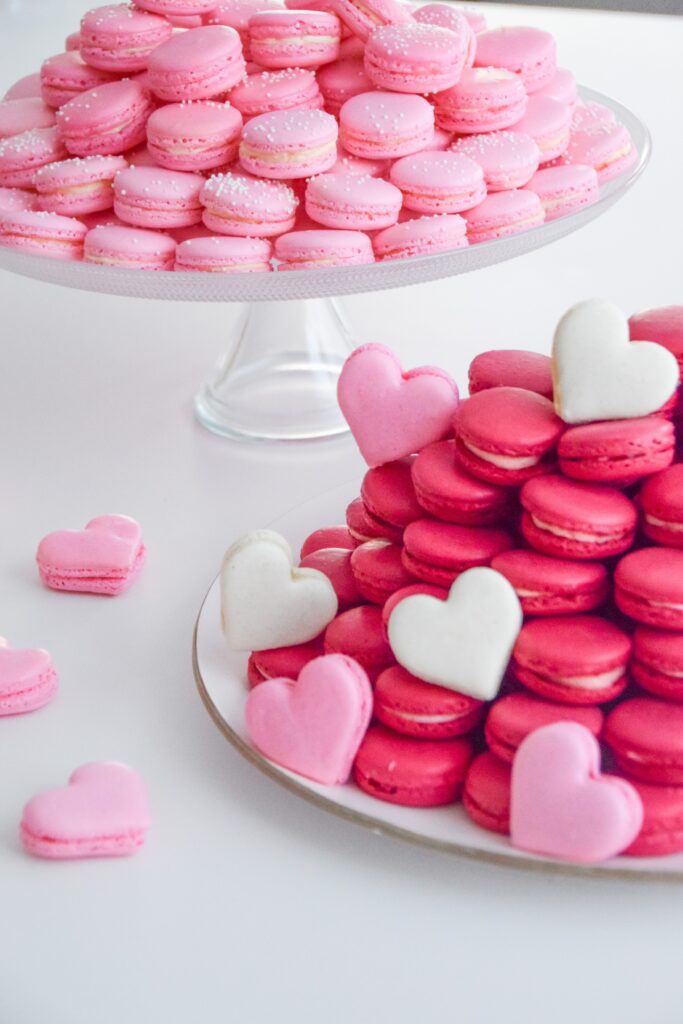
Make a reusable DIY guide
- Draw or print one heart at the size you want.
- Trace evenly spaced copies onto a clean sheet of ordinary printer paper with a dark marker.
- Keep enough space between shapes for airflow and normal spreading.
- Place the guide below your mat or parchment and pipe each pair from the same template.
- Count the shapes before piping so every top shell has a matching bottom.
- Remove the guide before resting or baking.
Troubleshooting heart-shaped shells
| Problem | Likely cause | What to try |
|---|---|---|
| The hearts become round | Batter is too fluid, the lobes contain too much batter or the strokes end too wide | Stop folding sooner on the next batch, reduce pressure toward the point and exaggerate the heart slightly. |
| A notch remains between the lobes | The two strokes did not meet or the batter began setting before correction | Join the center with a toothpick immediately after piping. |
| The halves are different sizes | Pressure or stroke length changed from side to side | Count a short rhythm for each stroke and keep the bag angle consistent. |
| The point disappears | Too much batter collected at the bottom | Release pressure earlier and pull the point with a toothpick. |
| Shells stick to the liner | Shells may be underbaked, still warm or mismatched to the surface | Let them cool fully, review bake time and temperature, and compare parchment with silicone mats. |
| Pairs do not match | Shapes were piped by eye or oriented inconsistently | Use one template and pipe every heart in the same direction. |
Do not rely on freezing an entire hot or underbaked tray to force release. A properly baked shell should release after the liner and shell have cooled. Persistent sticking is useful feedback about baking, batter or the chosen surface.
Resting and baking
Follow the rest and bake settings from the macaron formula you have already tested in your oven. Shape alone does not justify a universal time or temperature. Heart points and lobes can color faster if they are much thinner than the center, so aim for even batter distribution and evaluate one tray before changing the whole batch.
Decorating ideas
- Pipe two colors side by side for a split-color heart.
- Add small facial details with an edible marker only after the shells cool.
- Use the heart as the base for bears, pandas, trees or character faces.
- Brush only products specifically labeled edible onto the finished shell.
- Keep detailed decoration on the top shells and use plain matching shells underneath.
For strong colors without destabilizing the batter, see the guide to food coloring for macarons.
Frequently asked questions
Do I need a special heart-shaped silicone mat?
No. A printed paper guide beneath ordinary parchment or a translucent silicone mat works well. Remove the paper before resting or baking.
Should I pipe the heart in one continuous motion?
Two mirrored strokes are easier to control because each stroke forms one rounded lobe and tapers into the same point.
Why do the hearts spread after piping?
Some settling is normal. Excessive spreading usually points to overmixed batter, too much pressure at the bottom, or batter that is too warm or fluid.
Can the same template be used for top and bottom shells?
Yes. Pipe all shells with the same size and orientation, then pair the closest matches after baking.
Practice a few hearts on the first row before filling the tray. Once the pressure pattern becomes consistent, shaped shells are much easier to repeat.
Belli xx