
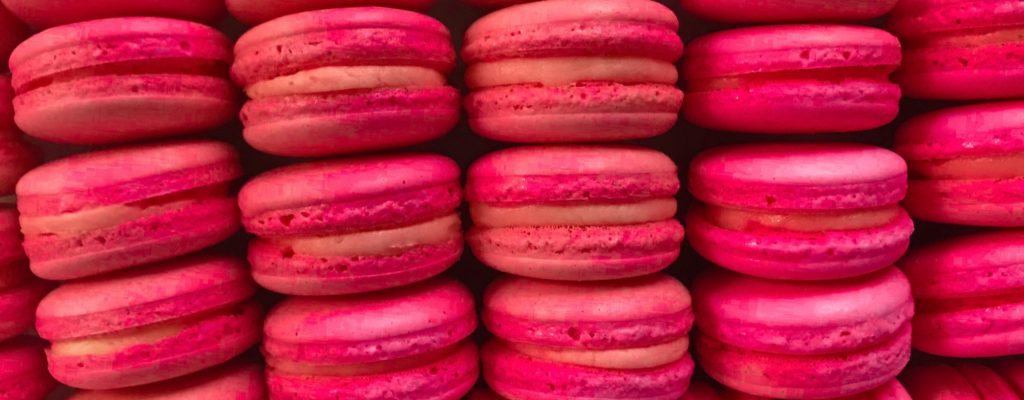
Best Food Coloring for Macarons
The best food coloring for macarons is a highly concentrated gel or paste color. It gives the batter an even, vibrant shade while adding very little liquid. Concentrated powdered food color is also an excellent choice, especially when you need a deep color without changing the batter’s moisture balance.
Avoid ordinary watery grocery-store food coloring in macaron batter. It may work in a tested recipe and a very small amount, but it is less predictable than gel or powder. Oil-based color belongs in chocolate and other fat-based mixtures, while airbrush color and edible luster dust are best used on baked shells.
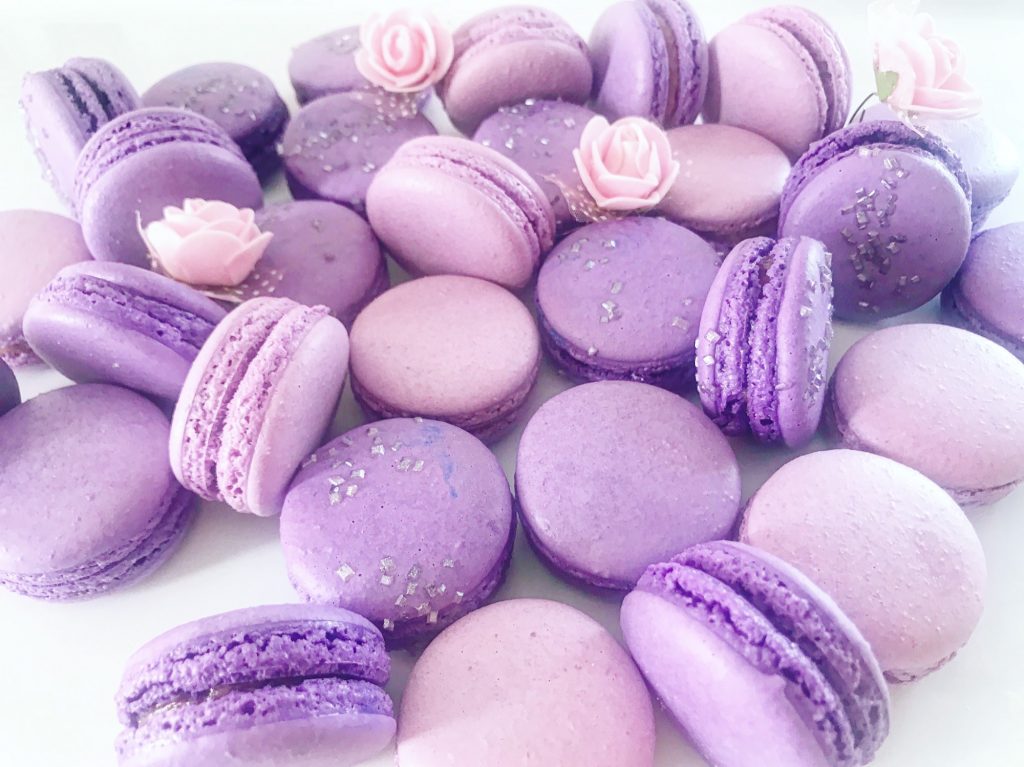
This post contains Amazon affiliate links. If you buy through one of these links, I may earn a commission at no additional cost to you.
Quick Answer: Which Food Coloring Should You Use?
| Type | Best use | Use in batter? | Important note |
|---|---|---|---|
| Concentrated gel or paste | Everyday macaron colors | Yes | Best all-around choice |
| Concentrated powder | Pastels and deep colors | Yes | Use a product intended to color batter |
| Watery liquid color | Fillings or a tested recipe | Usually avoid | Adds unnecessary moisture |
| Oil-based color | Chocolate and candy melts | No | Fat may weaken meringue |
| Airbrush color | Decorating baked shells | No | Use only in a food airbrush |
| Edible luster dust | Painting or dusting baked shells | Only if labeled for mixing into batter | Edible and non-toxic are not the same |
Best Gel Food Coloring for Macarons
Gel and paste colors are easy to measure and distribute through meringue or macaron batter. Look for a concentrated product made for baking, then begin with less than you think you need. The exact amount depends on the brand, color, batch size, and macaron method.
- AmeriColor Soft Gel Paste Kit – the best all-around option, with concentrated colors in squeeze bottles that are easy to measure by the drop.
- Chefmaster Liqua-Gel Set – a useful choice for saturated shades and color mixing.
- Rainbow Dust ProGel Set – concentrated tube colors that make it easy to dispense a very small amount.
- Wilton Icing Colors – widely available paste colors; use a clean toothpick to transfer a tiny amount from the jar.
AmeriColor specifically lists macarons among the uses for its Soft Gel Paste. Chefmaster describes Liqua-Gel as a highly concentrated baking color designed to mix evenly without altering texture. Product formulas can change, so always read the current label and allergen information.
How Much Gel Color Should You Add?
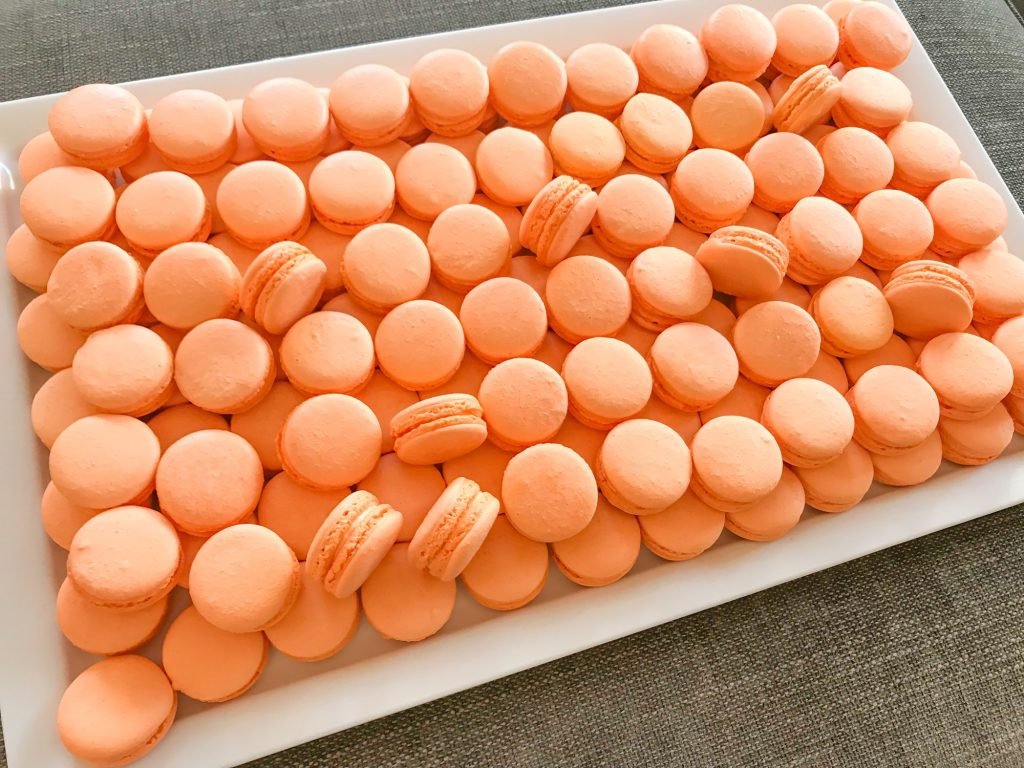
There is no universal teaspoon measurement that is safe for every macaron recipe. For a standard home batch, begin with a toothpick smear or one small drop of concentrated gel. Add more only while the meringue or batter still needs folding. Large amounts of gel can add enough moisture and dissolved solids to change how a sensitive recipe behaves.
- For a pastel shade, touch a toothpick to the color and swirl it through the mixture.
- For a medium shade, start with one or two small drops of concentrated gel, depending on the batch size.
- For a deep shade, use a product and recipe you have tested. Concentrated powder may be safer than repeatedly adding gel.
- Record the brand, color, and amount after a successful batch so you can reproduce it.
Color often looks slightly lighter after baking, but the amount of fading varies by pigment, oven temperature, and baking time. Make one test tray before producing macarons for an event.
When to Add Food Coloring
French Method
Add gel or concentrated powder after the egg whites become foamy and the sugar has started to dissolve, but before the meringue reaches its final stiff peak. This gives the color time to disperse without adding extra folds during macaronage.
Italian Method
Add color to the almond-flour paste or to the developing meringue, following your recipe. Some bakers color the sugar syrup, but that approach can make the final shade harder to judge and may create splatter. If your recipe uses that method, add the color before the syrup reaches its final temperature and follow the recipe exactly.
Swiss Method
Add the color after the sugar has dissolved and the meringue begins whipping. Stop to check the shade before the meringue reaches its final texture.
Whatever method you use, do not keep folding just to fix the color. Overmixed batter cannot be restored. My Italian-method macaron recipe shows the visual stages of meringue and macaronage.
Powdered Food Coloring for Macarons
Concentrated powdered food color can be one of the best choices for macarons because it contributes very little moisture. The important distinction is that the product must be an edible color formulated to tint batter. Decorative dusts are a separate category and may not dissolve or produce the expected color inside a macaron.
The Sugar Art Master Elite powders, for example, are marketed specifically for batters and macarons. They are moisture-activated, so the dry powder may look different from the developed color. Follow the manufacturer’s directions rather than guessing from the color in the jar.
Start with a tiny amount, sift out any lumps, and mix it into a small portion of meringue before distributing it through the batch. This helps prevent dark specks. Some powders intensify as they hydrate, so pause before adding more.
Liquid Food Coloring: Why It Is Risky
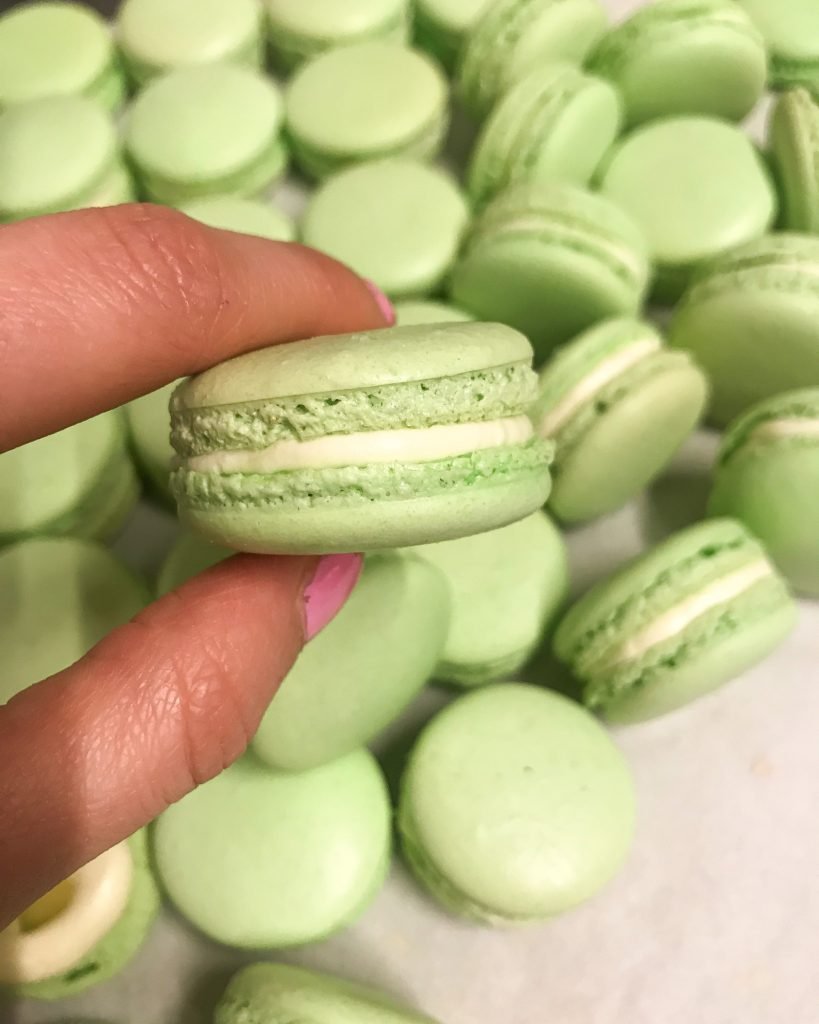
Traditional liquid food coloring contains more water and less pigment than concentrated gel. Reaching a vivid shade may require enough liquid to loosen the batter, and that can contribute to spreading, weak shells, wrinkles, or inconsistent results. A single drop will not automatically ruin a batch, but gel or powder gives you a larger margin for error.
Liquid color is more useful in fillings that can tolerate added moisture. Even then, add it gradually and account for the filling’s final consistency. For macaron troubleshooting, see my guide to hollow macaron shells.
Oil-Based Food Coloring
Oil-based color is designed for chocolate, candy melts, cocoa butter, and other fat-rich mixtures. Do not use it in egg-white or aquafaba meringue: fat can interfere with foam formation and stability. It can still be useful for coloring a chocolate ganache or chocolate decoration served with the macarons.
Airbrush Color and Luster Dust
Airbrush colors are thin enough to pass through a food airbrush and are intended for surface application. Spray light coats onto completely baked, cool shells. Do not substitute gel color in an airbrush unless the machine and color manufacturers explicitly provide instructions for doing so.
Luster dust can be brushed on dry or mixed with a manufacturer-approved painting medium. Only use products whose labels explicitly say edible and include an ingredient list. A label that says only non-toxic or for decorative use does not mean the product should be eaten.
See how to use edible luster dust on macarons for surface-decoration ideas.
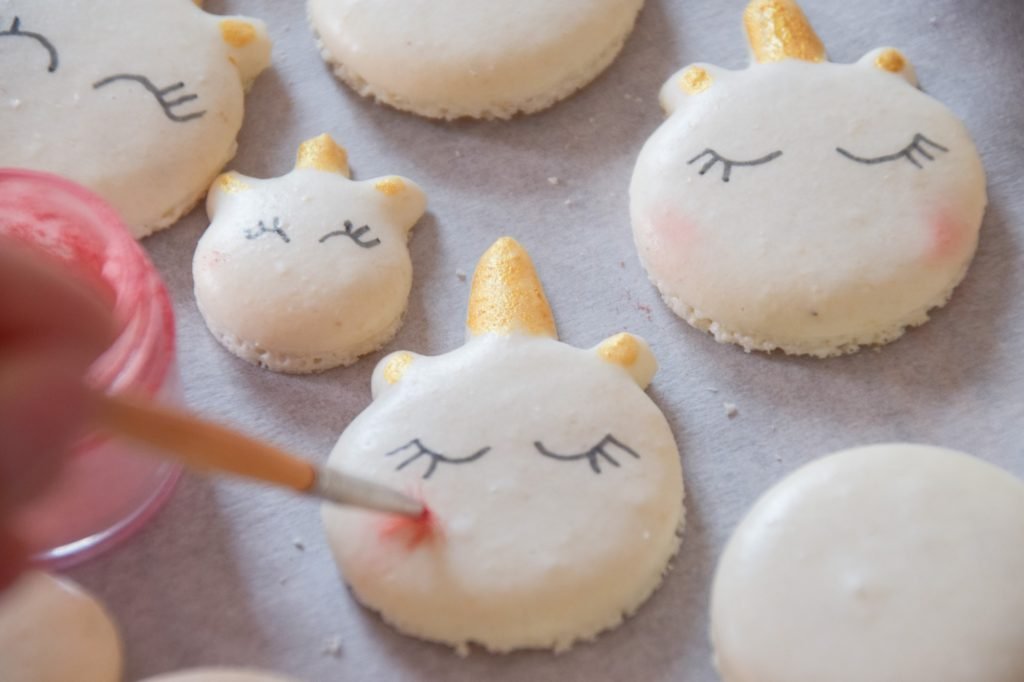
How to Make White Macarons
Macaron ingredients are naturally ivory, and heat can add more yellow or brown. For a cleaner white:
- Use finely ground, pale almond flour and a clear or very light flavoring.
- Add the tiniest touch of violet gel to neutralize yellow tones. Too much will make the shells gray or lavender.
- Bake at the lowest temperature that still produces fully set shells in your oven.
- If the tops brown before the centers bake, place an empty tray on a rack above them as a heat shield. Avoid opening the oven or laying foil directly over delicate shells unless your tested recipe calls for it.
- Use a white food color only if it is approved and labeled for food use where you live. Formulas and regional rules differ, so check the current ingredient label.
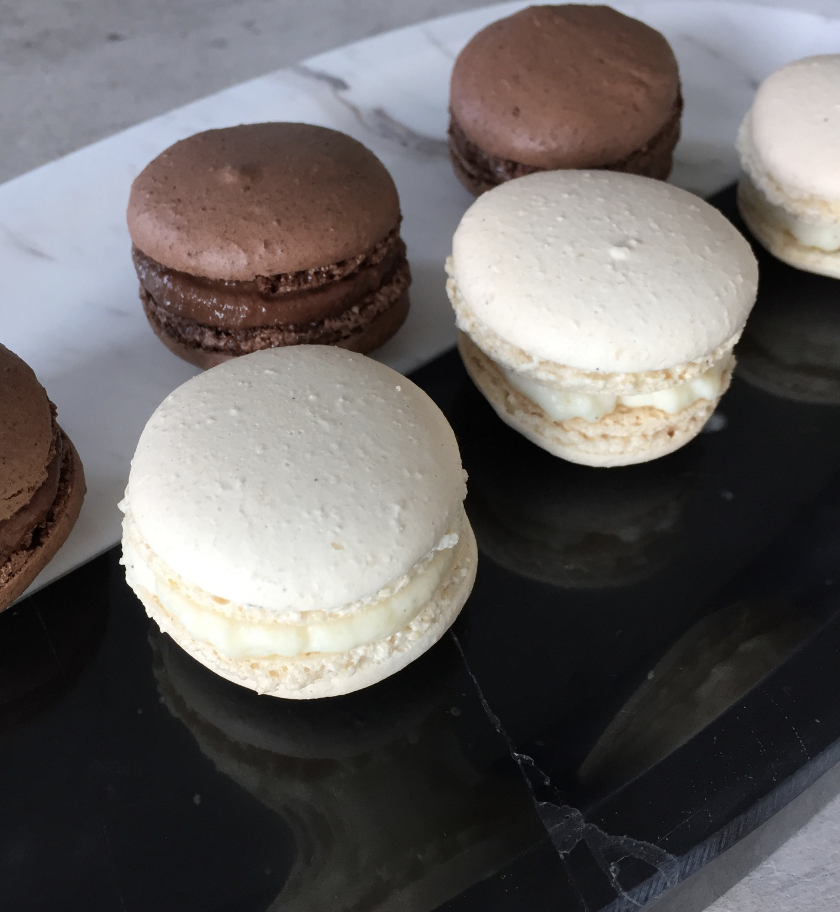
How to Make Black Macarons
Black is one of the hardest shades because adding more and more gel can destabilize the batter. Begin with a dark base color, then deepen it with a concentrated black gel or macaron-compatible powder. For chocolate macarons, a recipe developed with cocoa or black cocoa can reduce the amount of added color, but do not add cocoa to a standard recipe without adjusting the dry ingredients.
- Make dark gray batter rather than chasing a perfect black in the bowl; the color may deepen as it rests and bakes.
- Combine a small amount of black gel with concentrated black powder only if both products are labeled for batter.
- Test the flavor. Very large amounts of some black colors can leave an aftertaste.
- Wear gloves and protect the work surface because concentrated black color stains easily.
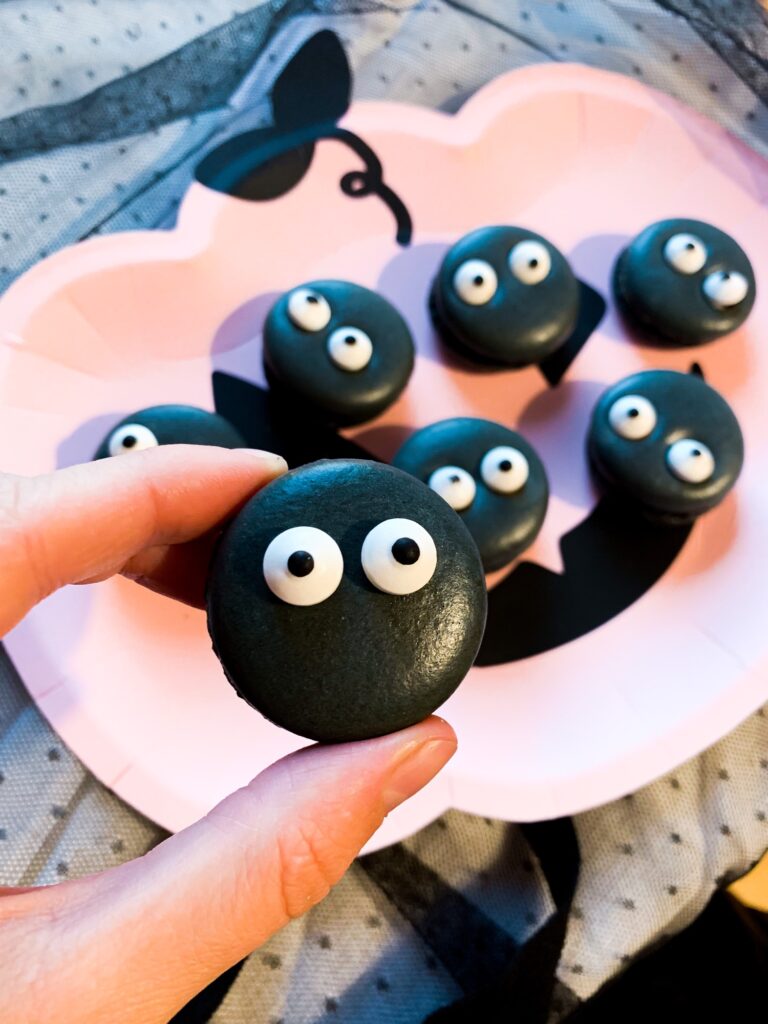
How to Get Vibrant Red, Blue, and Purple Macarons
Deep colors require more planning than pastels. Choose a concentrated shade close to the final color instead of mixing many weaker colors. Super Red or Red Red is easier to develop than starting with pink; Navy or Royal Blue is easier than building from pale blue.
Food-color formulas are changing. In the United States, the FDA revoked authorization for FD&C Red No. 3 in food, with a January 15, 2027 reformulation deadline. Check the current ingredient list when you buy or replace a red, pink, violet, or mixed-color product rather than relying on an old bottle or an old online listing.
Natural colors can work, but many are less heat-stable or produce earthier tones. Manufacturer guidance may limit certain natural blues and greens to low-heat applications. Test the exact color in your recipe before committing to a large batch.
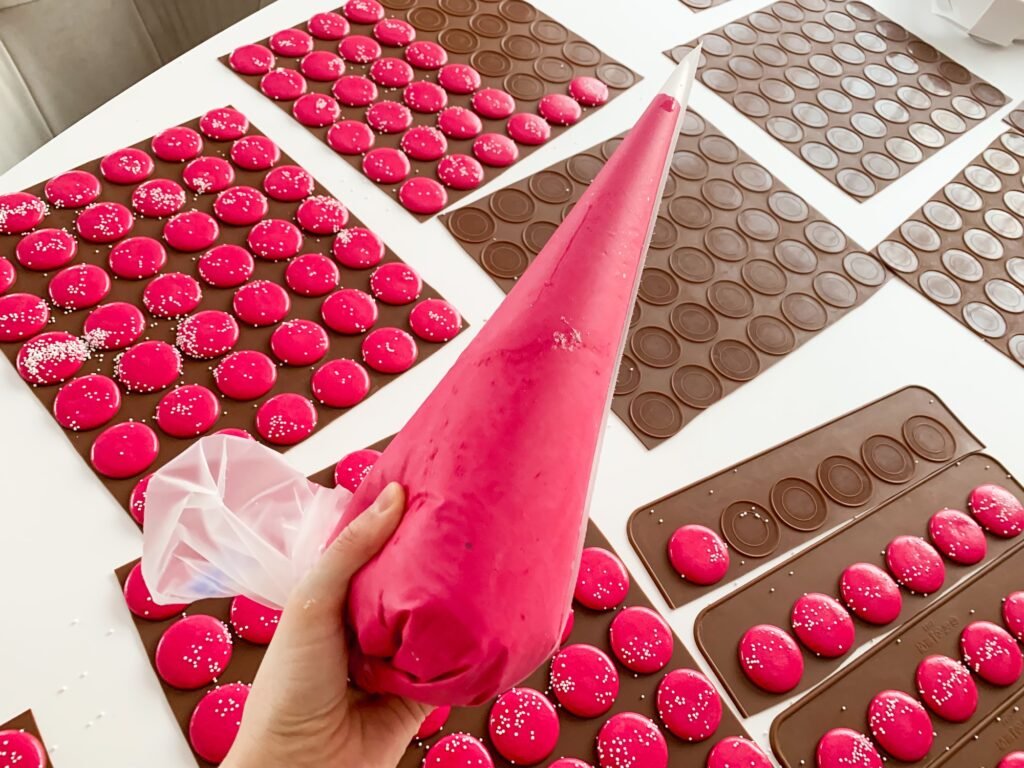
Can Beginners Add Food Coloring to Macarons?
Yes, but start with a pale shade and use the same concentrated product for several batches. Learning how uncolored batter flows makes troubleshooting easier, and a small amount of color is less likely to hide an under-whipped meringue or encourage extra folding.
- Measure the color before you begin mixing.
- Add it before the meringue or batter reaches its final texture.
- Change only one variable between test batches.
- Photograph the batter and baked result, then record the exact color and amount.
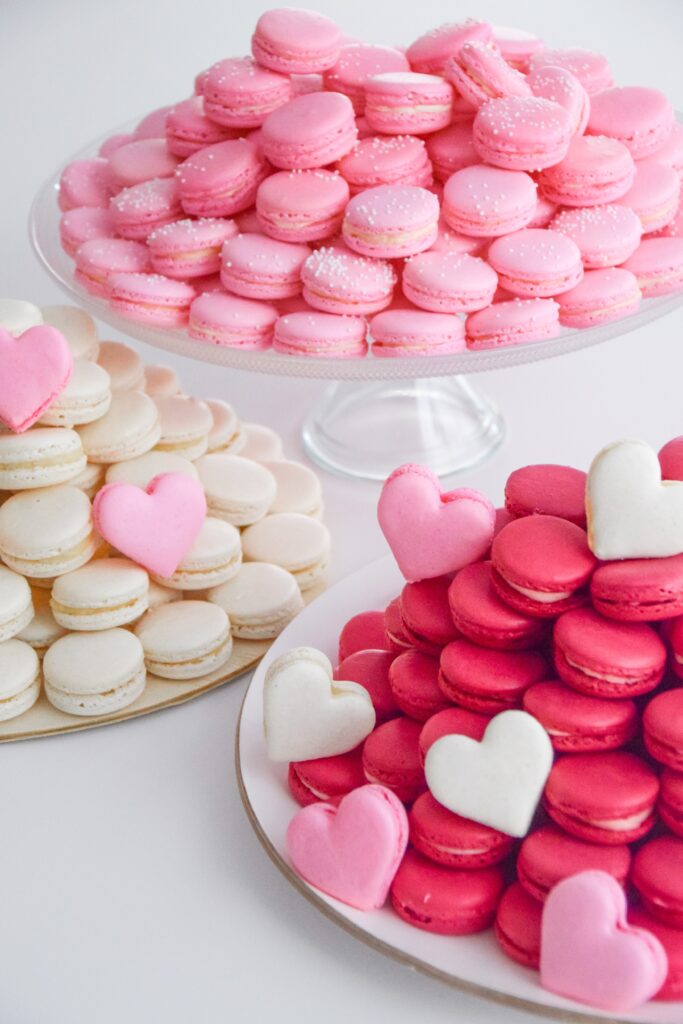
Common Food-Coloring Problems
The Shells Fade in the Oven
The pigment may be heat-sensitive, the oven may be too hot, or the shells may be baking longer than necessary. Check the oven with a thermometer and test a more concentrated or heat-stable color rather than adding a large volume of liquid.
The Batter Has Dark Specks
Powder or paste was not fully dispersed. Mix the color into a spoonful of meringue first, then fold that colored portion back into the bowl.
The Shells Are Splotchy
Uneven mixing, partially dissolved powder, or condensation can cause mottling. Disperse the color completely and avoid moving cold macarons into humid air while uncovered.
The Batter Became Too Runny
Too much liquid color or extra folding may be responsible. You cannot reliably repair overmixed macaron batter, so pipe and bake the batch, record the result, and reduce the color or folding next time.
The Color Tastes Bitter
The batch contains more coloring than the product or recipe can tolerate. Choose a more concentrated product, use a naturally dark recipe base when appropriate, or accept a slightly softer shade.
Food-Coloring Safety
- Use products explicitly labeled for food and for the intended application.
- Read the full ingredient and allergen label every time you replace a product; formulas can change.
- Observe local regulations, especially when selling or shipping macarons across regions.
- Do not use craft glitter, non-toxic dust, or decorative-only pigment on food that will be eaten.
- Keep brushes and airbrush equipment dedicated to edible products.
Frequently Asked Questions
Is Gel or Powder Food Coloring Better for Macarons?
Both work well. Gel is easier for most beginners to measure and mix; concentrated powder adds almost no moisture and can be better for deep colors. Choose a product specifically intended for batter.
Can I Use Regular Grocery-Store Food Coloring?
A tiny amount may work, but ordinary liquid color is dilute and can add unwanted moisture before the shade becomes vivid. Concentrated gel or powder is more reliable.
Can I Add Color During Macaronage?
It is possible, but not ideal. Adding color late often tempts you to keep folding after the batter is ready. Add it during meringue preparation or at the stage specified by your recipe.
Why Did My Macarons Turn Brown?
The oven may be too hot, the shells may be overbaked, or the pigment may be heat-sensitive. Verify the oven temperature and shield the tray from strong top heat without blocking the airflow needed to bake the shells.
Can I Use Food Coloring in the Filling?
Yes. Match the color type to the filling: gel or powder for buttercream and water-based ganache, and oil-based color for chocolate or cocoa butter. Add a little at a time so the texture and flavor stay balanced.
Final Recommendation
For most macaron bakers, start with AmeriColor Soft Gel Paste, Chefmaster Liqua-Gel, or Rainbow Dust ProGel. Use concentrated macaron-compatible powder when you want deeper color with minimal added moisture. Reserve oil-based color for chocolate, and use airbrush color or clearly labeled edible dust only on baked shells.
The best color is the one you can reproduce without changing the batter. Begin small, stop mixing when the batter is ready, and keep notes from every successful batch.
Enjoy your macarons!
Belli xx