
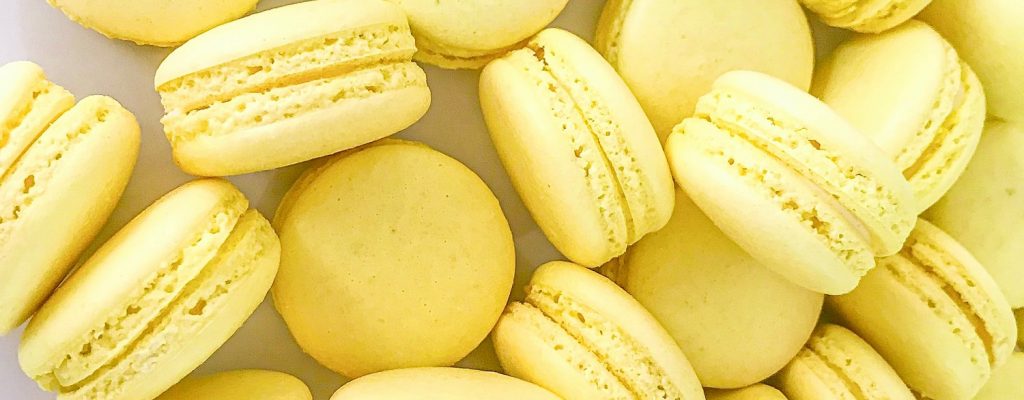
Lemon Macarons with Fresh Lemon Curd Filling
Published October 17, 2021 · Updated September 9, 2026
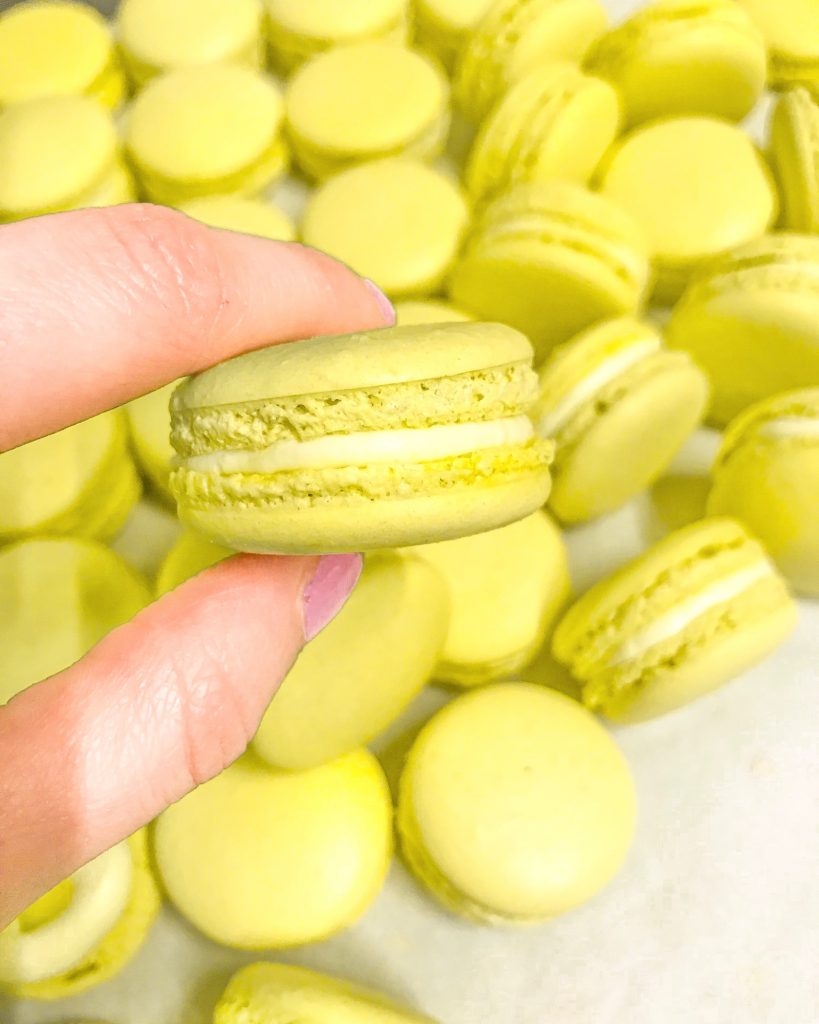
These lemon macarons combine crisp Italian-method shells with two complementary fillings: a firm lemon buttercream ring and a bright, thermometer-tested lemon curd center. The buttercream keeps the curd away from the shell edge, so the macarons are easier to fill and less likely to leak.
The recipe is written in grams for repeatable results and includes the complete shell method, a 115°C fan-oven baseline, food-safety guidance and fixes for common problems.
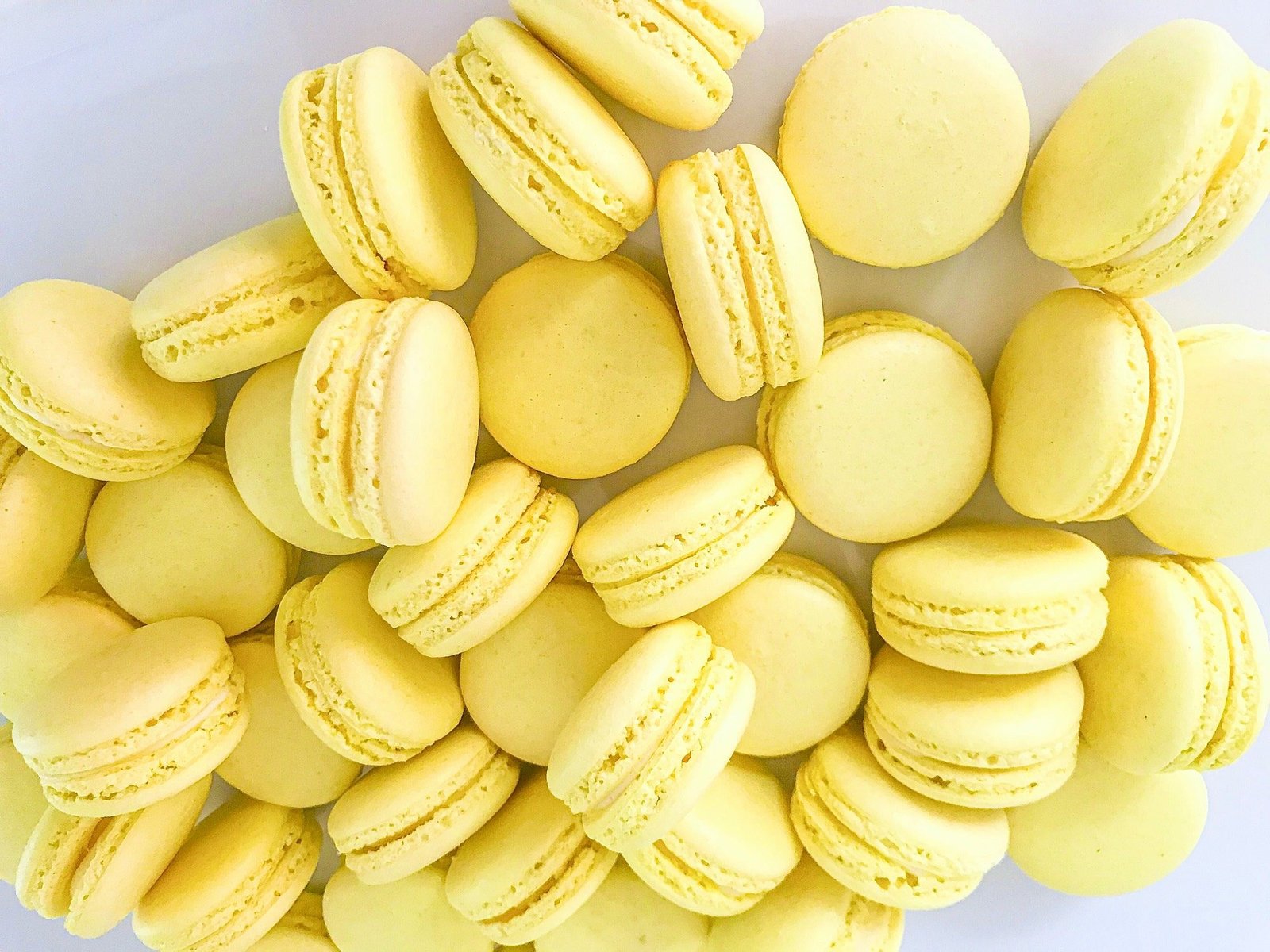
Lemon macaron recipe at a glance
| Part | Key detail | Timing |
|---|---|---|
| Italian macaron shells | Bake one tray at a time at 115°C/240°F fan; test 120°C/250°F if needed | About 20 minutes per tray |
| Lemon curd | Cook to 77°C/170°F and chill until fully set | At least 3 hours |
| Lemon buttercream | Pipe a ring to contain the curd | About 10 minutes |
| Maturation | Refrigerate filled macarons airtight | 12–24 hours |
Yield: approximately 30–40 filled macarons, depending on piping size. Macarons are sensitive to oven calibration, humidity and tray material, so bake a small test tray before changing the whole batch.
Ingredients
Italian macaron shells
- 115 g finely ground blanched almond flour
- 115 g powdered sugar
- 115 g granulated sugar
- 30 g water
- 50 g egg whites, for the Italian meringue
- 40 g egg whites, for the almond paste
- Concentrated yellow gel or powdered food color, optional
Lemon curd center
This small-batch curd uses the proportions from the King Arthur Baking School lemon-curd formula, with the tested 77°C/170°F endpoint used in established stovetop curd guidance.
- 60 g fresh lemon juice (1/4 cup)
- 75 g granulated sugar (about 6 tablespoons)
- 56 g egg yolks (about 4 large yolks)
- 28 g unsalted butter (2 tablespoons), melted
- 1 teaspoon finely grated lemon zest, optional
- A small pinch of table salt
Lemon buttercream dam
This is a half-size adaptation of King Arthur Baking’s quick buttercream, using restrained lemon juice and zest so the ring stays pipeable.
- 57 g unsalted butter (4 tablespoons), softened
- 142 g powdered sugar (1 1/4 cups), sifted if lumpy
- 1 1/2 teaspoons finely grated lemon zest
- 1 teaspoon fresh lemon juice (about 5 g), plus only a few drops more if needed
- A small pinch of table salt
- Concentrated yellow gel food color, optional
Tools
- Digital kitchen scale
- Fine-mesh sieve
- Digital sugar thermometer
- Stand mixer or hand mixer with whisk attachment
- Small saucepan and a heatproof bowl for the curd
- Flexible silicone spatula and whisk
- Flat baking sheets with parchment or macaron silicone mats
- Piping bags and a medium round tip
- Clean airtight container
How to make the lemon macaron shells
Prepare the trays and piping bag before starting. Wipe the mixer bowl and whisk with a little vinegar or lemon juice, then dry completely. Keep the two egg-white portions separate.
- Make the almond paste. Sift the almond flour and powdered sugar together. Discard unusually coarse pieces. Mix in the 40 g egg-white portion until the paste is uniform, then cover it.
- Cook the syrup. Put 115 g granulated sugar and 30 g water in a small saucepan. Heat over medium-low to medium heat. Once it boils, do not stir or scrape crystals from the pan wall into the syrup.
- Start the meringue. Put the 50 g egg-white portion in the mixer bowl. When the syrup reaches about 110°C/230°F, begin whipping the whites at medium speed until finely foamy.
- Pour at 118°C/244°F. Remove the syrup from the heat. With the mixer running, pour it in a thin stream down the inside wall of the bowl, between the whisk and bowl. Do not pour onto the whisk.
- Whip to firm peaks. Continue until the meringue is glossy, dense and holds a firm peak with a slight bend. The bowl should feel warm rather than hot.
- Combine. Fold one-third of the meringue into the almond paste to loosen it. Fold in the second third, then the remainder. Add concentrated color before the batter reaches its final consistency.
- Macaronage. Fold until the batter falls from the spatula in a slow continuous ribbon. It should make one figure eight and gradually blend back into the surface. Stop before it becomes runny.
- Pipe. Hold the bag vertically and pipe even rounds. Tap the trays firmly and pop visible bubbles with a toothpick.
- Rest if needed. A reliable starting point is to rest until the surface looks matte and does not stick to a lightly touched fingertip, often 20–40 minutes. Humidity changes the timing.
- Bake. Bake one tray at a time on the middle rack in a fan/convection oven at 115°C/240°F for about 20 minutes. If the shells remain soft, pale or difficult to release, test 120°C/250°F on the next tray. Cool completely before removing them.
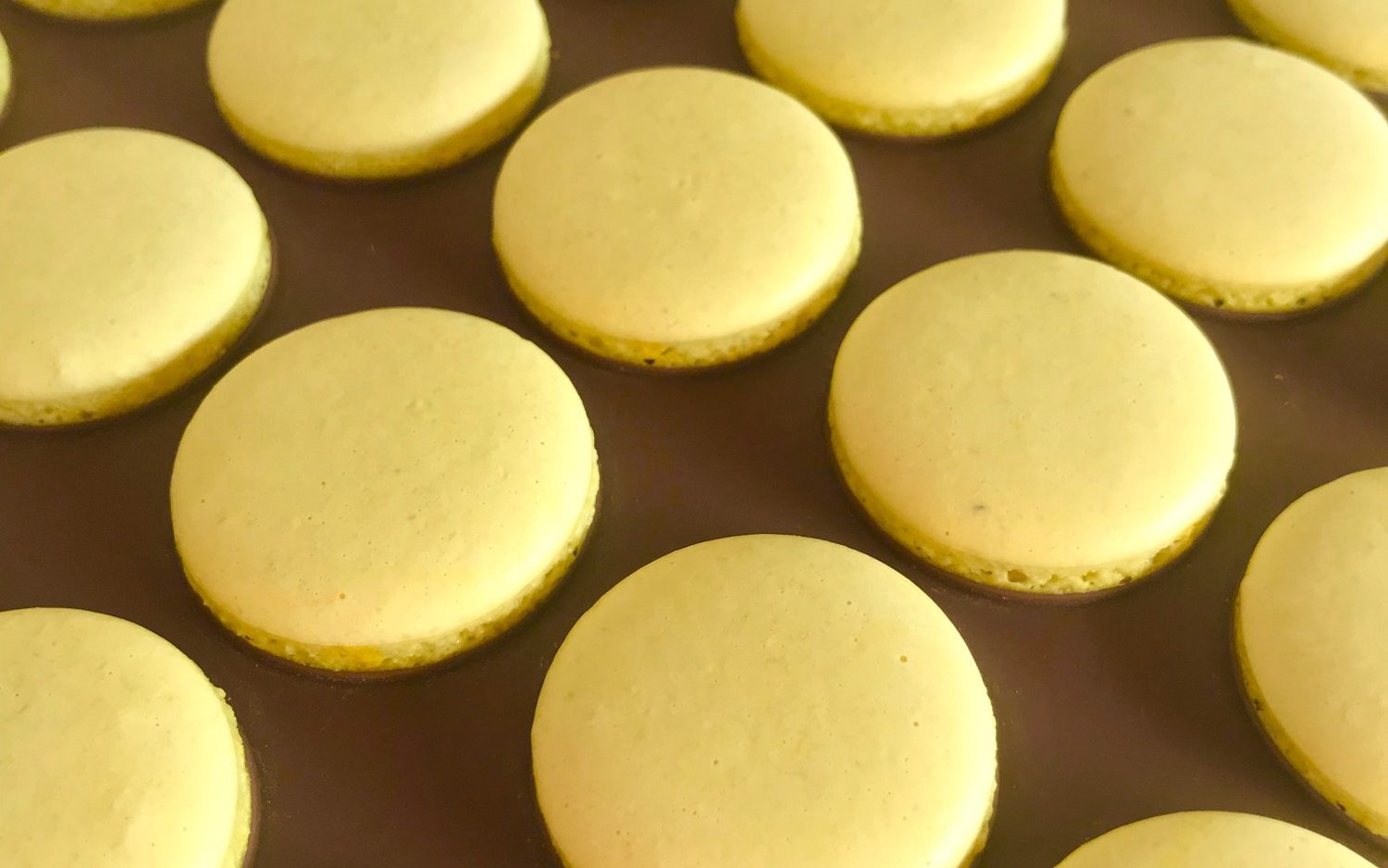
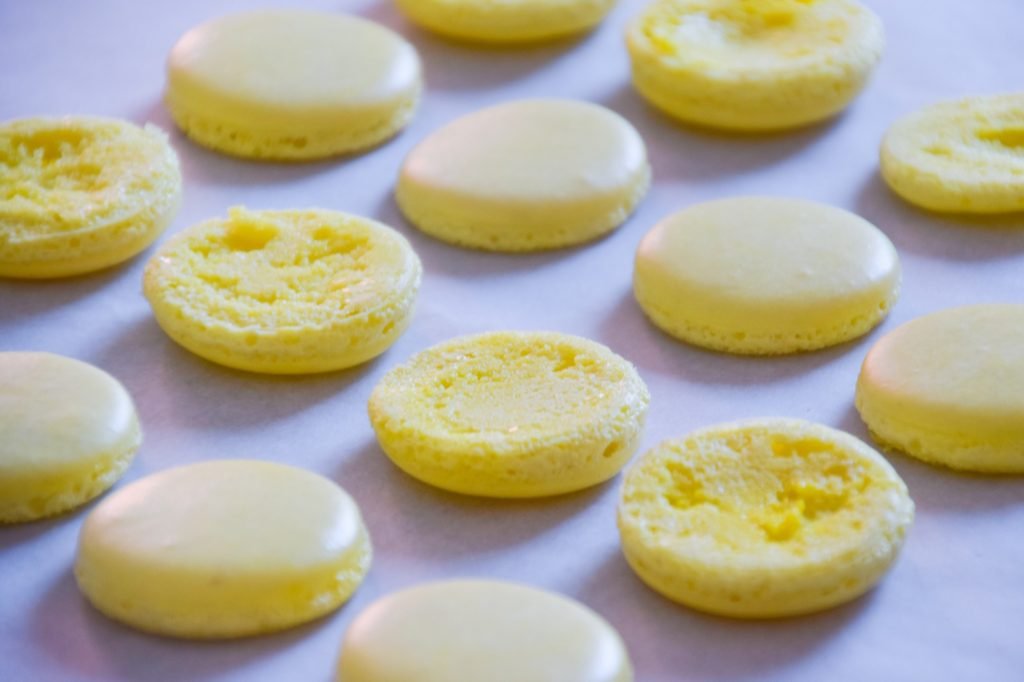
For a more detailed visual explanation of the meringue and macaronage stages, see the Italian macaron method guide. Change only one oven variable at a time and record the result.
How to make safe, thick lemon curd
Wash the lemons under plain running water and dry them before zesting. A long soak in hot water is unnecessary. The FDA recommends rinsing produce under running water and does not recommend soap or commercial produce wash.
- Bring a small saucepan of water to a gentle simmer. Choose a heatproof bowl that sits above the water without touching it.
- In the bowl, whisk the lemon juice, sugar, egg yolks, melted butter, optional zest and salt until completely combined.
- Set the bowl over the simmering water. Whisk continuously, reaching the edges, until the curd coats the back of a spoon and reaches 77°C/170°F. Do not rely on thickness alone.
- Immediately pour the curd through a fine-mesh sieve into a clean bowl. Press clean food wrap directly against the surface.
- Refrigerate until fully cold and set, at least 3 hours. Do not put warm curd into a piping bag or onto macaron shells.
How to make the lemon buttercream dam
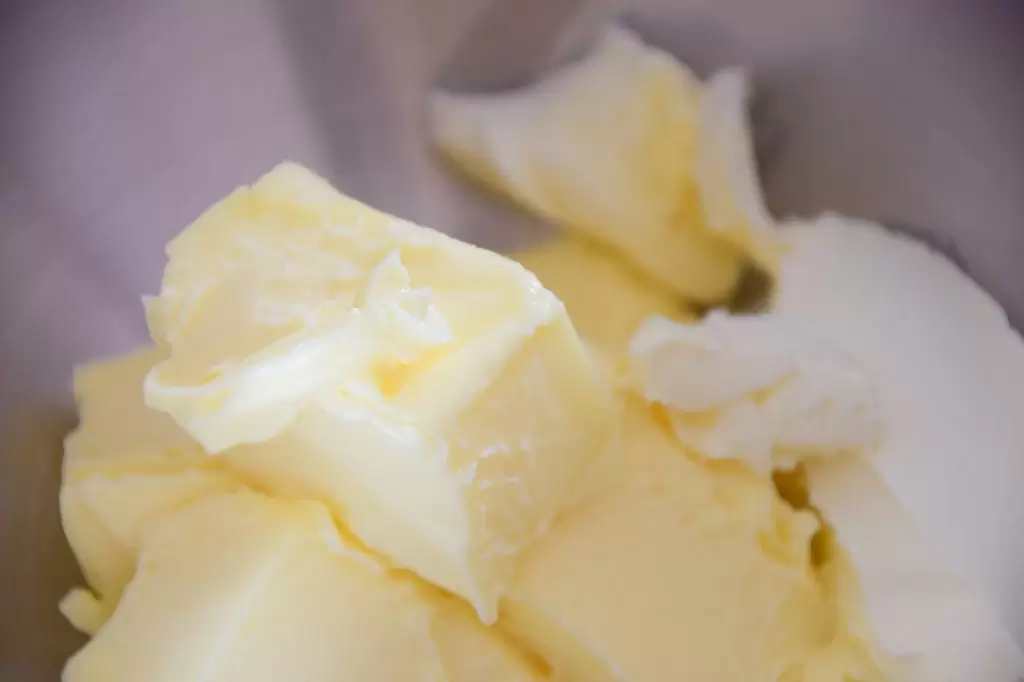
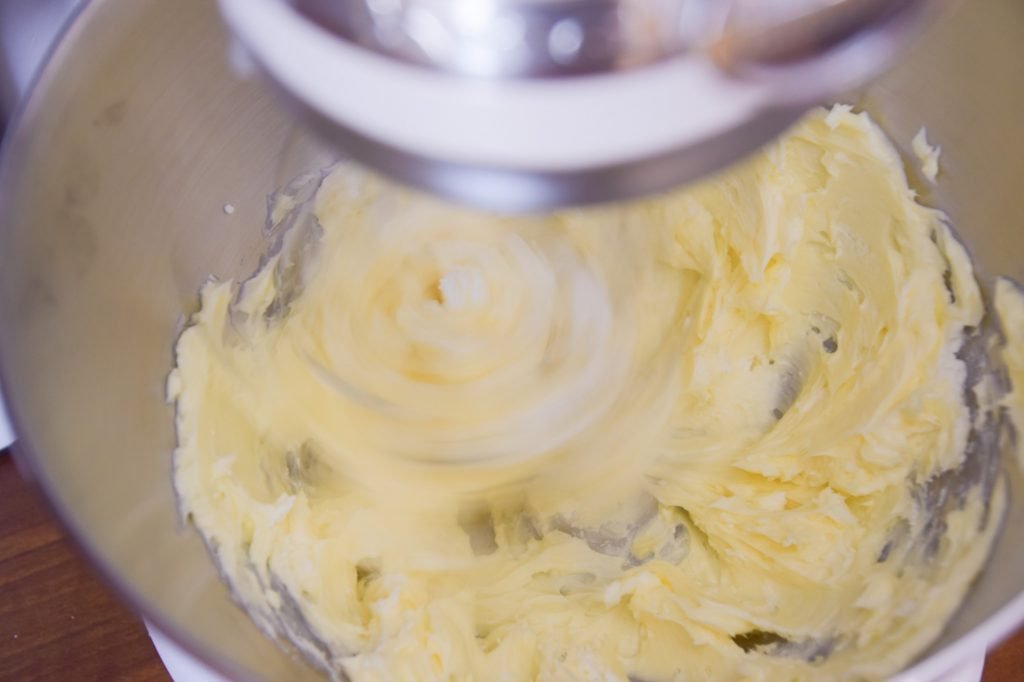
- Beat the softened butter and salt until smooth and lighter in color, about 2 minutes.
- Add the powdered sugar gradually on low speed. Scrape the bowl, then beat until fluffy.
- Beat in the lemon zest and 1 teaspoon lemon juice. If it is too stiff to pipe, add lemon juice only a few drops at a time. If it becomes soft, add a little more powdered sugar or chill it briefly.
- Add concentrated gel color if desired. Transfer the buttercream to a piping bag fitted with a medium round tip.
How to fill and mature lemon macarons
- Pair completely cooled shells of similar size.
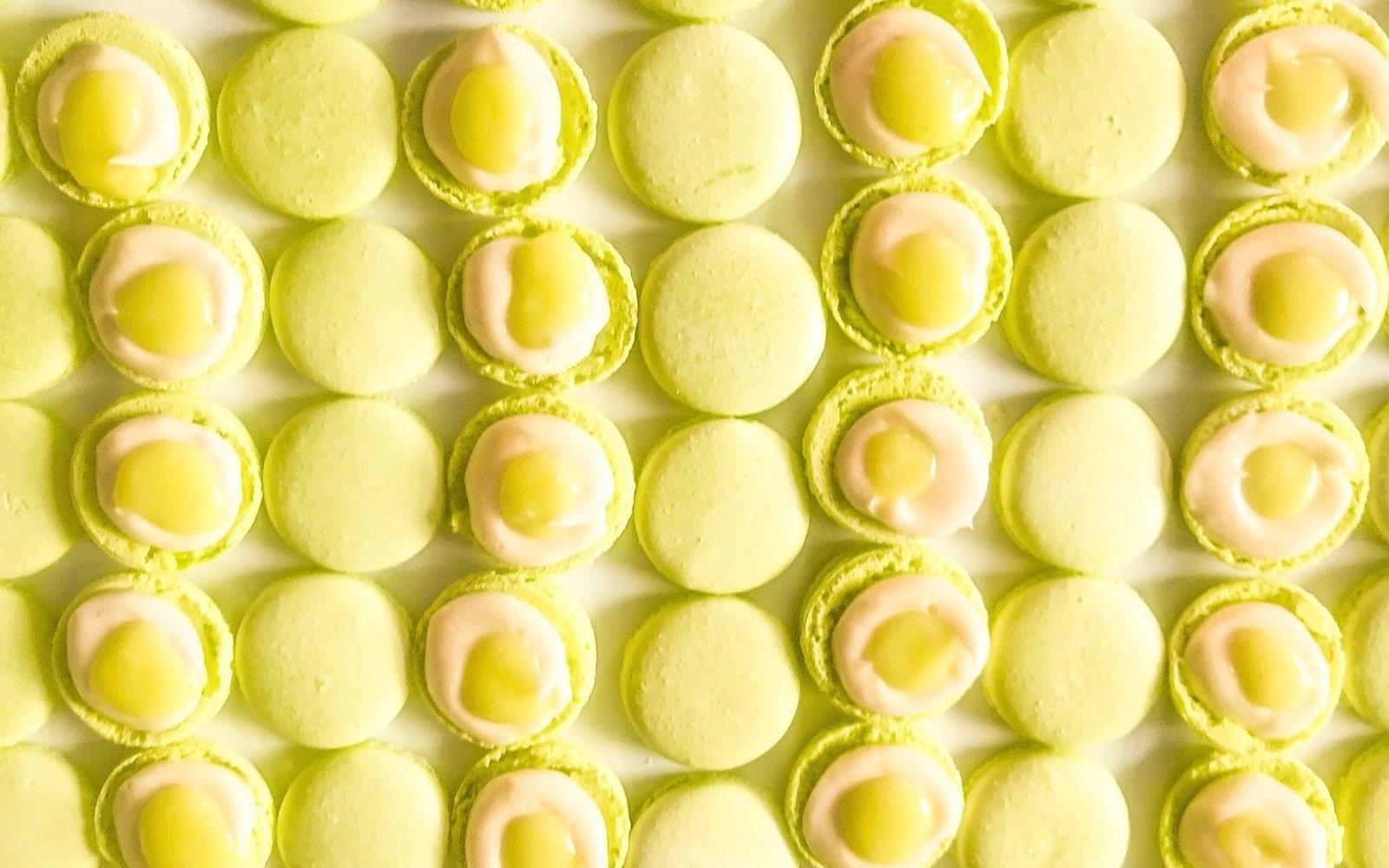
- Pipe a buttercream ring on the flat side of one shell, leaving a small border at the edge.
- Spoon or pipe a small amount of fully chilled lemon curd into the center. Keep it below the top of the buttercream ring.
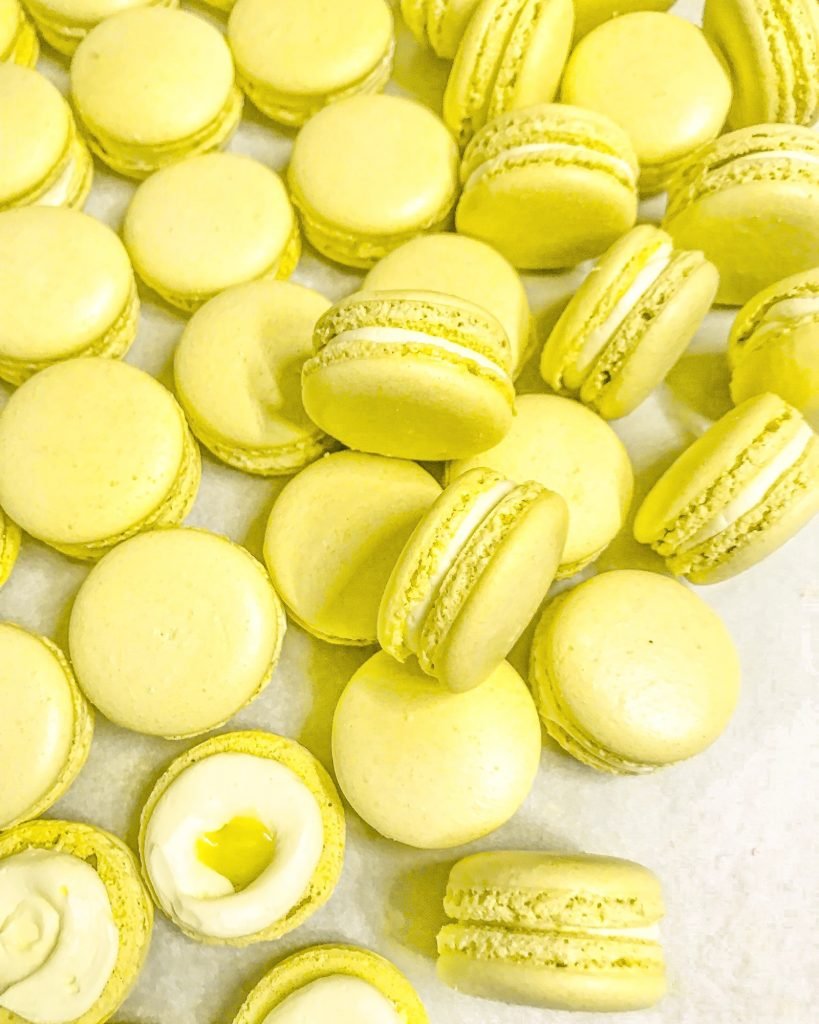
- Top with the matching shell and press gently until the filling approaches the edge. Do not overfill.
- Refrigerate the assembled macarons in an airtight container for 12–24 hours. Let them sit at cool room temperature for about 15 minutes before serving.
Troubleshooting
| Problem | Likely cause | What to change |
|---|---|---|
| Curd is runny | It did not reach 77°C/170°F or has not chilled fully | Cook to temperature and chill for at least 3 hours. |
| Curd contains egg bits | Heat was too strong or whisking was uneven | Use a gentle water bath, whisk continuously and strain immediately. |
| Filling squeezes out | Too much curd, no buttercream dam or warm filling | Chill both fillings and keep the curd below the buttercream ring. |
| Shells stick to the liner | They are warm or underbaked | Cool completely; add 1–2 minutes to the next tray if they still stick. |
| Shells crack | Trapped air, weak skin or excessive top heat | Tap the tray, rest until matte and test a slightly lower rack position. |
Storage and food safety
Lemon curd contains eggs, and filled macarons are perishable. Refrigerate the curd and assembled macarons promptly in clean airtight containers at 4°C/40°F or colder. Do not leave them at room temperature for more than 2 hours, or more than 1 hour above 32°C/90°F. These limits follow FDA cold-storage guidance.
For best quality and conservative home storage, use the lemon curd and filled macarons within 3–4 days. Freeze unfilled shells airtight for longer storage. If freezing assembled macarons, test one first because curd moisture can soften the shells. See the guides to storing filled macarons and freezing macarons and fillings.
Frequently asked questions
Can I add lemon juice to the macaron shells?
It is better to keep the shell formula unchanged. Extra liquid can alter the meringue and batter. Put the strongest lemon flavor in the zest, buttercream and curd instead.
Why use both buttercream and lemon curd?
Curd supplies bright flavor but is wetter than buttercream. The buttercream ring acts as a dam, helping the filling stay centered and slowing direct moisture transfer to the shell edge.
Can I use a conventional oven?
Yes, but do not apply an automatic fan-to-conventional conversion. Begin with a small test tray, verify the actual temperature with an oven thermometer and adjust in 5°C increments.
Can I use whole eggs in the curd?
A tested whole-egg curd can work, but do not substitute whole eggs gram-for-gram in this small-batch formula. Yolks create a thicker center that is easier to contain in macarons.
The result is a lemon macaron with a crisp shell, creamy border and concentrated tart center—without conflicting quantities or vague curd instructions.
Belli xx