
Essential Tools for Making Macarons at Home
Published October 11, 2021 · Updated September 2, 2026
You do not need a luxury kitchen to make macarons. The essentials are accurate weighing, a way to make stable meringue, suitable bowls and spatula, a sieve, flat trays with a tested liner, and piping equipment. A thermometer becomes essential for methods that cook sugar syrup; many other gadgets are optional.

Macaron tools checklist
| Tool | Essential? | What matters |
|---|---|---|
| Digital kitchen scale | Yes | Gram measurements, tare function and suitable capacity |
| Electric mixer and whisk beaters | Yes for most home methods | Reliable speed control and a bowl it can whip effectively |
| Mixing bowls | Yes | Clean, dry, grease-free and large enough for folding |
| Flexible spatula | Yes | Comfortable and able to scrape the bowl |
| Fine-mesh sieve | Usually | Removes coarse particles as the recipe directs |
| Flat baking trays | Yes | Fit the oven and stay level |
| Parchment or silicone mat | Yes—choose one | Compatible with the tray, recipe and temperature |
| Piping bags and round tip | Yes | Comfortable bag size and consistent opening |
| Sugar/candy thermometer | Method-dependent | Needed for a cooked-syrup method such as Italian meringue |
| Oven thermometer | Optional diagnostic | Useful when actual oven temperature is uncertain |
This list supports technique; it cannot guarantee perfect shells. Start with a complete tested recipe such as my Italian-method macarons, and use the troubleshooting guide when a result is inconsistent.
1. Digital kitchen scale
Use gram weights from the recipe. A practical scale should have a tare function, a stable platform, a capacity above the total bowl-and-ingredient weight and enough precision for the smallest ingredient you measure. Check that a wide bowl will not hide the display.
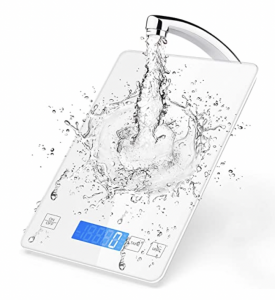
Set the scale on a level surface and tare each container. Do not assume volume conversions are exact; a cup of almond flour can vary with how it is filled. Replace weak batteries and check suspicious readings against a known calibration weight or the manufacturer’s procedure.
2. Fine-mesh sieve
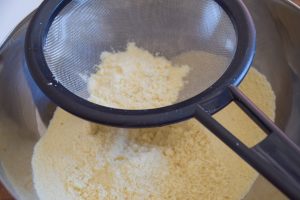
A sieve helps remove coarse almond pieces and break up dry-ingredient clumps. Choose one wide enough to work over your bowl without sending flour over the counter. Do not force unusually large pieces through the mesh, and do not keep re-processing almond flour until it becomes oily.
3. Mixing bowls
Stainless steel or glass bowls are practical because they can be cleaned thoroughly and do not retain grease easily. Plastic can hold traces of fat in scratches. The meringue bowl and whisk should be clean and dry; follow your recipe if it uses an acid to support the foam.
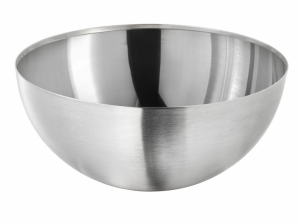
Use a separate bowl large enough for folding without throwing batter over the rim. Bowl shape affects how well beaters reach a small amount of egg white, so check your mixer’s minimum batch size.
4. Electric mixer
A hand mixer or stand mixer can both make macaron meringue. A stand mixer frees your hands; a hand mixer is compact and lets you move the beaters through the bowl. What matters is controlled whipping and recognizing the meringue stage—not brand, color or price.
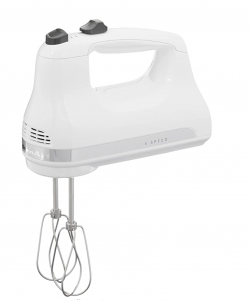
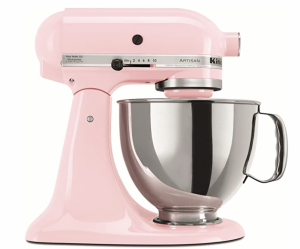
Use the whisk-style beaters intended for whipping egg whites. Keep cords and controls away from water, and follow the appliance manual. Stop to check the foam rather than treating a fixed number of minutes as universal.
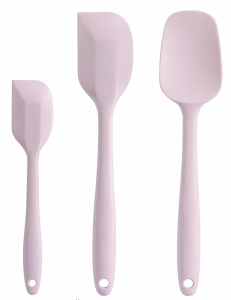
5. Flexible silicone spatula
A flexible spatula scrapes the bowl and folds the batter. It should be intact, food-safe and firm enough to move the mixture without a loose head. During macaronage, watch how the batter flows and settles; a special spatula cannot replace those visual cues.
6. Flat trays and a tested liner
Choose trays that fit your oven with room for air circulation. A visibly warped pan can distort the piped rounds and create uneven baking. If possible, use comparable trays when testing bake time; changing pan color, material and liner together makes results harder to interpret.
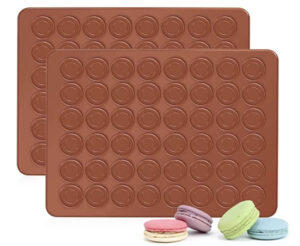
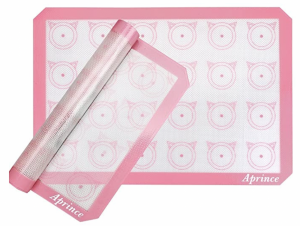
Both parchment and suitable silicone mats can work. The detailed comparison is in parchment paper vs silicone mats for macarons. Never cut a reinforced silicone mat, and keep parchment inside the tray away from exposed heating elements.
7. Piping bags and a round tip
A sturdy piping bag gives better control than a thin bag that stretches or leaks. A round tip makes the opening consistent, although experienced bakers can cut an even opening in a disposable bag. Check the recipe for its intended tip size rather than assuming one diameter fits every design.
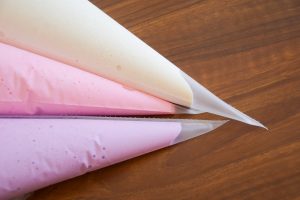
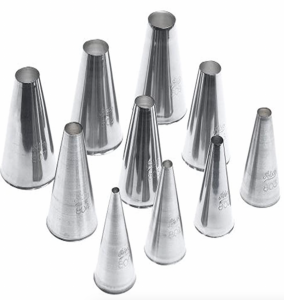
King Arthur Baking’s French macaron recipe uses a piping bag with an opening of about 13 mm (1/2 inch). That is a useful example, not a universal requirement. Small shaped details may need another bag and tip.
8. Small saucepan and thermometer for cooked-syrup methods
For Italian-method macarons, use a clean saucepan that gives the sugar syrup enough depth for a reliable thermometer reading. The thermometer must cover the recipe’s range and should be positioned so its sensor measures syrup rather than touching the pan base.
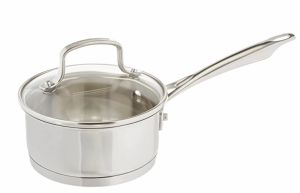
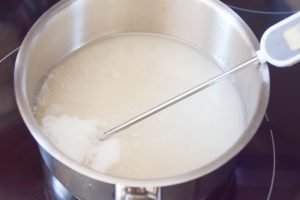
A clip-on candy thermometer or a suitable digital probe can work when used according to its manual. Verify accuracy periodically. Keep handles turned safely inward and treat hot sugar with care; splashes can cause severe burns.
Useful but optional tools
Oven thermometer
An oven thermometer is a diagnostic aid when you suspect the display and the baking zone disagree. Place and read it according to its directions. It does not measure every hot spot, and opening the door changes temperature, so compare repeated readings rather than reacting to one glance.
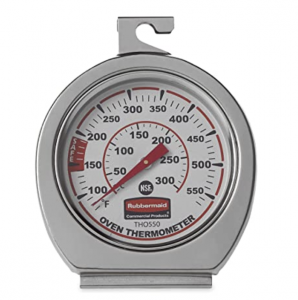
The King Arthur Baking macaron workbook includes a digital scale, oven thermometer, piping bags, large sieve and either parchment or a silicone mat in its equipment list. Your chosen recipe should still control what is essential.
Hand whisk
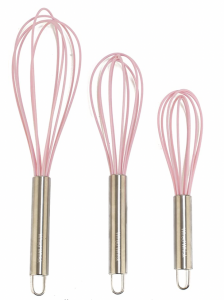
A small hand whisk is useful for combining dry ingredients, sauces and some fillings. It is not a realistic substitute for an electric mixer when the macaron recipe requires a fully whipped meringue.
Small bowls and containers
Small bowls help you weigh colors or flavorings separately and keep the main recipe organized. Airtight containers protect finished macarons during maturation or storage. Match storage to the filling; see the filled-macaron storage guide rather than assuming every filling is safe at room temperature.
Template, notebook and timer
- A removable paper template can improve spacing and size on parchment. Remove it before baking.
- A notebook lets you record tray, liner, oven mode, temperature, timing and result. This is more useful than changing several variables from memory.
- A timer prevents missed checks, but use doneness cues from the recipe as well as the clock.
Tools you probably do not need at first
- A large piping-tip collection when one round tip matches your recipe.
- Several silicone mats before you have tested one with your trays.
- A premium stand mixer solely because macarons are described as difficult.
- A separate gadget for every step when a bowl, scale and spatula already do the job.
- Affiliate bundles with duplicate tools, unknown materials or no clear care instructions.
How to build your kit without overspending
- Start with your tested recipe and mark only the equipment it actually uses.
- Buy one reliable scale, liner and piping setup before adding backups.
- Measure the oven, trays, bowls and mixer model before ordering fitted items.
- Prefer replaceable, washable tools with clear food-contact and care instructions.
- Add troubleshooting tools—such as an oven thermometer—when a repeated problem points to them.
For more ideas, see how to save money making macarons. Your skills and records improve results more than a countertop full of products.
Belli xx